
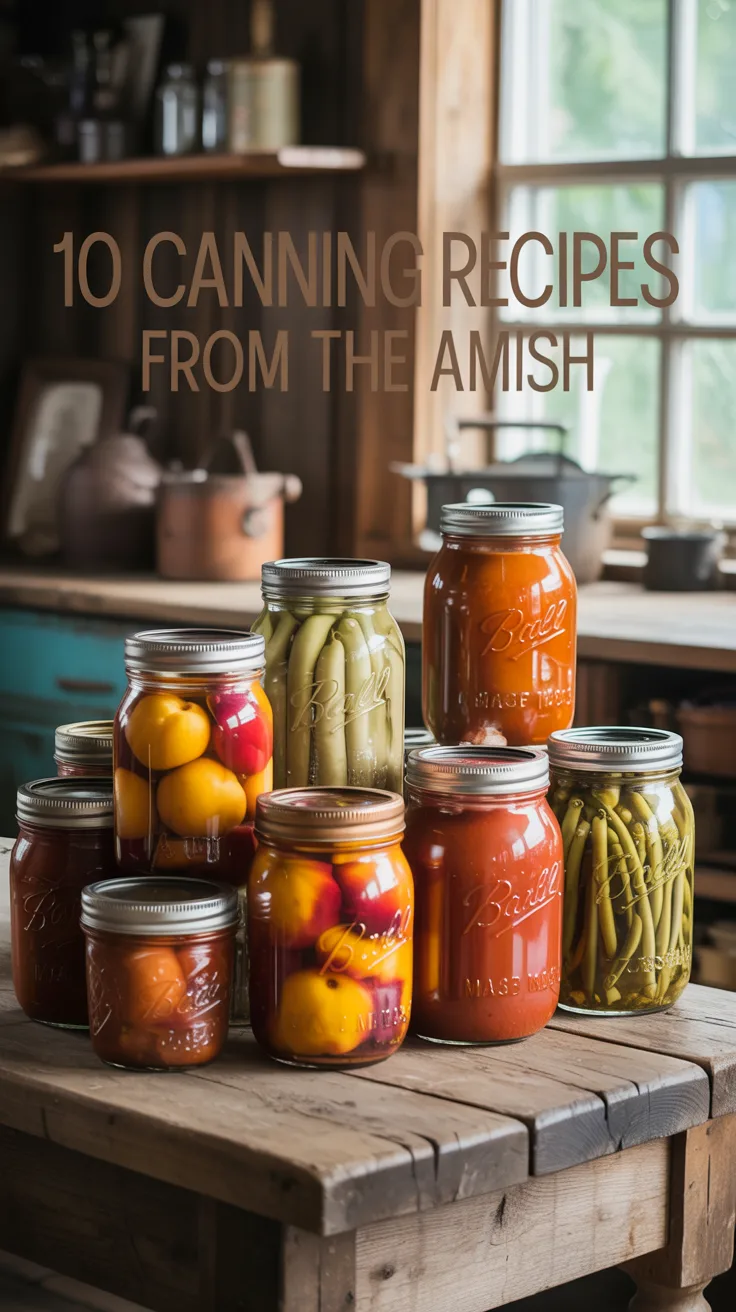
Canning is more than a way to store food—it’s a rhythm of life in Amish country. These time-honored methods preserve harvest flavors, stretch the grocery budget, and create shelf-stable meals you can rely on. In this guide to 10 canning recipes from the Amish, you’ll find classic, safe, and practical ways to fill your pantry like a pro—using ingredients you already love and techniques you can trust.
For more heritage preservation ideas and pantry-ready staples, explore The Lost SuperFoods—an old-school collection of time-tested foods and methods that pair perfectly with a canner: The Lost SuperFoods
Table of Contents
Why these 10 canning recipes from the Amish still matter
Amish canning is rooted in seasonal living: grow, gather, preserve, and repeat. The recipes below deliver reliable nutrition from common garden and farm staples: apples, tomatoes, beans, pears, beets, chicken, beef, and pantry-friendly vinegars. Each one follows modern safety guidelines and can be adapted to your taste while maintaining correct acid levels and processing times.
Before you begin, keep these safety principles front and center:
- Use a tested recipe and follow processing times precisely.
- Low-acid foods (meats, beans, corn, most vegetables) must be pressure canned.
- High-acid foods (most fruits, pickles, jams, properly acidified tomatoes) can be water-bath canned.
- Acidify tomatoes: 2 tablespoons bottled lemon juice (or 1/2 teaspoon citric acid) per quart; 1 tablespoon lemon juice (or 1/4 teaspoon citric acid) per pint.
- Adjust for altitude: For boiling-water canning, add 5 minutes at 1,001–3,000 ft; 10 minutes at 3,001–6,000 ft; 15 minutes above 6,000 ft. For pressure canning, increase pressure according to your canner’s manual.
With those basics in place, you’re ready to can like generations of Amish homesteaders.
Amish apple butter for all-season sweetness
Amish kitchens are famous for apple butter—spreadable, silky, and lightly spiced. Canning turns this cool-weather comfort into a year-round staple perfect on toast, pancakes, or with roast pork.
How it’s made
- Ingredients: apples (tart varieties hold up beautifully), apple cider or juice, sugar (to taste), cinnamon, cloves, and a pinch of salt. Some cooks add vanilla or maple syrup for depth.
- Cook down: Simmer peeled, cored apples with cider until soft; puree and return to the pot. Add sugar and spices. Cook low and slow until a spoon run through the pot leaves a trail that doesn’t immediately close—a sign of proper thickness.
- Jar up: Ladle hot apple butter into hot jars leaving 1/4-inch headspace. De-bubble, wipe rims, apply lids and rings.
Processing
- Boiling-water canner: Process half-pints or pints for 10 minutes (adjust for altitude).
- Storage: Let jars rest 12–24 hours; check seals. Store in a cool, dark place.
Amish tip: Make it a two-day project. Cook to near-thickness on day one, refrigerate, then finish the next evening to nail the perfect texture without scorching.
Bread-and-butter pickles like a roadside stand
Crunchy, sweet-tangy bread-and-butter pickles are a farmhouse classic. They’re ideal for burgers, potato salad, and charcuterie boards.
How it’s made
- Ingredients: firm pickling cucumbers, onions, 5% distilled or apple cider vinegar, sugar, canning salt, mustard seed, celery seed, turmeric, and black pepper.
- Prep: Slice cucumbers and onions. Sprinkle with canning salt and let stand with ice for 1–2 hours to draw out excess water; drain thoroughly.
- Brine: Heat vinegar, sugar, and spices to a boil.
- Pack: Load hot, sterilized jars with cucumbers and onions. Pour hot brine over, leaving 1/2-inch headspace. De-bubble, wipe rims, and apply lids and rings.
Processing
- Boiling-water canner: Process pints (and half-pints) for 10 minutes (adjust for altitude).
Amish tip: For a crunchier bite, don’t over-slice; aim for 1/4-inch rounds and avoid overcooking the cucumbers in the brine.
Pickled red beets with pantry-friendly brine
Pickled beets brighten winter plates and pair wonderfully with eggs, roasted meats, and salads. Amish cooks often keep these on hand all year.
How it’s made
- Ingredients: small to medium red beets, 5% vinegar, sugar, water, and pickling spices (clove, cinnamon, allspice).
- Prep: Boil or roast beets until tender; slip off skins and slice or quarter.
- Brine: Simmer vinegar, sugar, and water with spices for a few minutes.
- Pack: Fill hot jars with beets; cover with hot brine, leaving 1/2-inch headspace. Remove air bubbles and wipe rims.
Processing
- Boiling-water canner: Process pints or quarts for 30 minutes (adjust for altitude).
Amish tip: Keep spice levels pleasant but not overpowering—beets’ earthiness needs only gentle accents.
Crushed tomatoes with proper acidification
Tomatoes are an Amish pantry anchor in every form: juice, crushed, stewed, and sauce. Safest for water-bath canning is crushed tomatoes with proper acidification.
How it’s made
- Ingredients: ripe tomatoes, bottled lemon juice or citric acid, and optional salt.
- Hot pack: Scald tomatoes, slip skins, core, and coarsely crush in a pot; bring to a boil and simmer 5 minutes.
- Jar up: Add acid to each jar (1 tablespoon bottled lemon juice per pint or 2 tablespoons per quart—or use citric acid as noted). Ladle hot tomatoes into hot jars, leaving 1/2-inch headspace. De-bubble and wipe rims.
Processing
- Boiling-water canner: Process pints 35 minutes; quarts 45 minutes (adjust for altitude).
Amish tip: For fuller flavor, add a few meaty paste tomatoes (like Roma) to each batch to reduce watery separation.
Pressure-canned green beans for everyday meals
Green beans are a quintessential pressure-canned vegetable in Amish kitchens—perfect for casseroles, quick sautés, and soups. Because beans are low-acid, pressure canning is the only safe method.
How it’s made
- Ingredients: fresh, stringless green beans, water, and canning salt (optional).
- Raw pack or hot pack: Trim beans to uniform lengths. For raw pack, load raw beans into hot jars. For hot pack, briefly simmer beans in boiling water and pack hot. Add 1/2 teaspoon salt per pint (optional). Cover with boiling water, leaving 1-inch headspace. De-bubble and wipe rims.
Processing
- Pressure canner: Process pints 20 minutes; quarts 25 minutes at 10 PSI (weighted gauge) or 11 PSI (dial gauge). Adjust pressure for altitude per your canner manual.
Amish tip: Aim for beans harvested young and crisp. Older beans soften more during processing.
Homestead water note: Clean, good-tasting water matters, especially when canning and brining. If you’re building a self-reliant kitchen, a compact home system like SmartWaterBox helps ensure consistent water quality for cooking and preservation.
Chicken corn soup in jars, Amish-style
Chicken corn soup is a beloved Pennsylvania Dutch staple. Canning a meat-and-veg soup requires pressure canning and no thickeners—add noodles or cream when serving, not before canning.
How it’s made
- Ingredients: cooked chicken (cubed or shredded), sweet corn (fresh or frozen), carrots, celery, onion, and clear chicken broth; salt and pepper to taste.
- Prep: Simmer vegetables in broth until just tender. Add chicken and bring to a boil.
- Jar up: Fill hot jars with solid ingredients and cover with hot broth, leaving 1-inch headspace. No pasta, flour, or dairy in the jar.
Processing
- Pressure canner: Process pints 60 minutes; quarts 75 minutes at 10 PSI (weighted) or 11 PSI (dial), adjusting for altitude.
Amish tip: Keep pieces uniform for even heating. When serving, add cooked noodles and fresh parsley for authenticity.
Chow-chow relish for all-purpose tang
Chow-chow is a colorful, sweet-tart relish that uses up garden odds and ends—classic Amish thrift in a jar. It’s great with beans, sausages, sandwiches, and roasted meats.
How it’s made
- Ingredients: cabbage, green tomatoes, sweet peppers, onions, and sometimes cauliflower or beans; 5% apple cider vinegar, sugar, mustard seed, celery seed, turmeric, and canning salt.
- Prep: Finely chop vegetables. Many Amish cooks salt the chopped veg and let them drain several hours, then rinse and drain well.
- Cook: Simmer vegetables in vinegar, sugar, and spices until heated through but still bright.
- Jar up: Pack hot relish into hot jars, leaving 1/2-inch headspace; de-bubble and wipe rims.
Processing
- Boiling-water canner: Process pints for 10 minutes (adjust for altitude).
Amish tip: Make small, frequent batches through late summer to capture changing garden flavors.
Pantry salsa with proper acidity
Amish pantry salsa walks the line between fresh flavor and safe acidity. The key is a tested ratio of tomatoes to bottled lemon/lime juice or 5% vinegar.
How it’s made
- Ingredients: peeled, seeded tomatoes; onions; hot peppers (jalapeño or similar); garlic; bottled lemon or lime juice (or 5% vinegar); salt; and optional cilantro or cumin.
- Safety note: Follow a tested salsa recipe to maintain acidity. Do not increase low-acid ingredients (onions, peppers) beyond the tested ratio.
- Cook: Simmer ingredients to meld flavors.
- Jar up: Pack hot salsa into hot jars, leaving 1/2-inch headspace; de-bubble and wipe rims.
Processing
- Boiling-water canner: Process pints for 15 minutes (adjust for altitude). Quarts are generally not recommended for home-canned salsa unless a tested recipe specifies.
Amish tip: For chunkier texture, hand-chop instead of pulsing in a processor.
Pear halves in light syrup for easy desserts
Pears are a late-season treat that can beautifully and hold their shape. Amish cooks serve them as a simple dessert, in pies, or alongside cheese.
How it’s made
- Ingredients: firm-ripe pears (Bartlett, Bosc, or Anjou), water, and sugar for a light syrup; optional vanilla bean or lemon zest.
- Prep: Peel, halve, and core pears. To prevent browning, hold in water with a little ascorbic acid or lemon juice.
- Hot pack: Simmer pears briefly in light syrup.
- Jar up: Pack hot pears cavity-side down into hot jars, cover with hot syrup, leaving 1/2-inch headspace. De-bubble and wipe rims.
Processing
- Boiling-water canner: Process pints for 20 minutes; quarts for 25 minutes (adjust for altitude).
Amish tip: Choose slightly underripe pears—they hold texture better after canning.
Beef stew meat for quick suppers
Pressure-canned beef cubes deliver instant protein for stews, sandwiches, and casseroles. Amish families prize shelf-stable meats for convenience during busy farm seasons.
How it’s made
- Ingredients: lean beef cubes, beef broth or boiling water, and optional salt.
- Brown or raw pack: Many cooks brown the meat lightly for flavor. Pack hot jars with meat and cover with hot broth or water, leaving 1-inch headspace. De-bubble and wipe rims.
- Important: No thickeners or flour in jars. Add gravy after opening.
Processing
- Pressure canner: Process pints 75 minutes; quarts 90 minutes at 10 PSI (weighted) or 11 PSI (dial), adjusting for altitude.
Amish tip: Keep fat trimmed to reduce siphoning and ensure cleaner seals.
Pantry planning with 10 canning recipes from the Amish
Think of these recipes as your year-round meal kit:
- Breakfasts: apple butter on toast or pancakes; pears with yogurt.
- Lunches: chow-chow and bread-and-butter pickles on sandwiches; pantry salsa with beans for quick nachos.
- Dinners: beef stew meat with gravy and mashed potatoes; chicken corn soup with fresh noodles; green beans sautéed with garlic and bacon.
- Sides and salads: pickled beets on greens; pears with sharp cheddar; salsa over grilled fish.
Stock levels to aim for
- Tomato base (crushed): 12–24 jars
- Green beans: 12 jars
- Pickles and chow-chow: 8–12 jars
- Apple butter and pears: 8–12 jars combined
- Meats and soup: 12–18 jars combined
Rotation and labeling
- Label with batch, date, and variety.
- Store in the dark at steady temperatures (50–70°F).
- Use the oldest jars first and inspect seals before opening.
Helpful homestead resources
- Heritage preservation ideas and pantry-ready staples: The Lost SuperFoods
- Reliable household water for canning and cooking: SmartWaterBox
- Practical home medical guides for rural living: Home Doctor
- Water resilience inspiration and sourcing: Joseph’s Well
Build your self-reliant pantry
Start with one or two recipes this week—maybe apple butter and crushed tomatoes—and build from there. Small, consistent batches make canning manageable and enjoyable. If you’re ready to go deeper into old-world preservation, you’ll find dozens of pantry classics and make-ahead staples in The Lost SuperFoods. And because kitchen self-reliance is about health as well as food, a practical reference like Home Doctor can round out your preparedness library.
Conclusion
These 10 canning recipes from the Amish capture the best of seasonal living: practical, frugal, deeply flavorful food you can trust. With safe methods, clean ingredients, and a steady routine, you’ll fill your shelves with jars that simplify meals and safeguard your pantry—just like generations of Amish families have done.
FAQ
Are these 10 canning recipes from the Amish safe for modern kitchens?
Yes—provided you follow tested recipes and the processing methods noted: pressure canning for low-acid foods (meats, beans, corn, most vegetables) and boiling-water canning for high-acid foods (fruits, pickles, properly acidified tomatoes). Always adjust for altitude.Can I change ingredients, like adding more peppers to the salsa?
Only within a tested recipe’s limits. Increasing low-acid ingredients (onions, peppers, corn) can reduce acidity and make water-bath canning unsafe. If you want to customize heavily, use a pressure-canned salsa recipe or stick to tested formulas.How long do home-canned foods last?
For best quality, use within one year. Safely canned and sealed jars may last longer, but flavor, texture, and nutrients decline over time. Store jars in a cool, dark place and always check the seal and contents before use.Do I have to sterilize jars before canning?
If you’re processing in a boiling-water canner for 10 minutes or more (or pressure canning), pre-sterilization isn’t required. Jars must be clean and hot. Shorter processes (rare in tested recipes) require sterilized jars.What size jars should I use?
Most pickles, jams, and relishes use half-pints or pints; vegetables and meats are commonly packed in pints and quarts. Use sizes specified by the tested recipe for accurate processing times.Can I can noodles or dairy in chicken corn soup?
No. Add noodles, cream, or thickeners when serving. For safe canning, keep soups broth-based with meats and vegetables only, and follow pressure canning times precisely.Do I need bottled lemon juice for tomatoes?
Yes. Use bottled lemon juice (consistent acidity) or citric acid in the amounts specified. Fresh lemon juice varies in acidity and isn’t recommended for acidifying tomatoes.