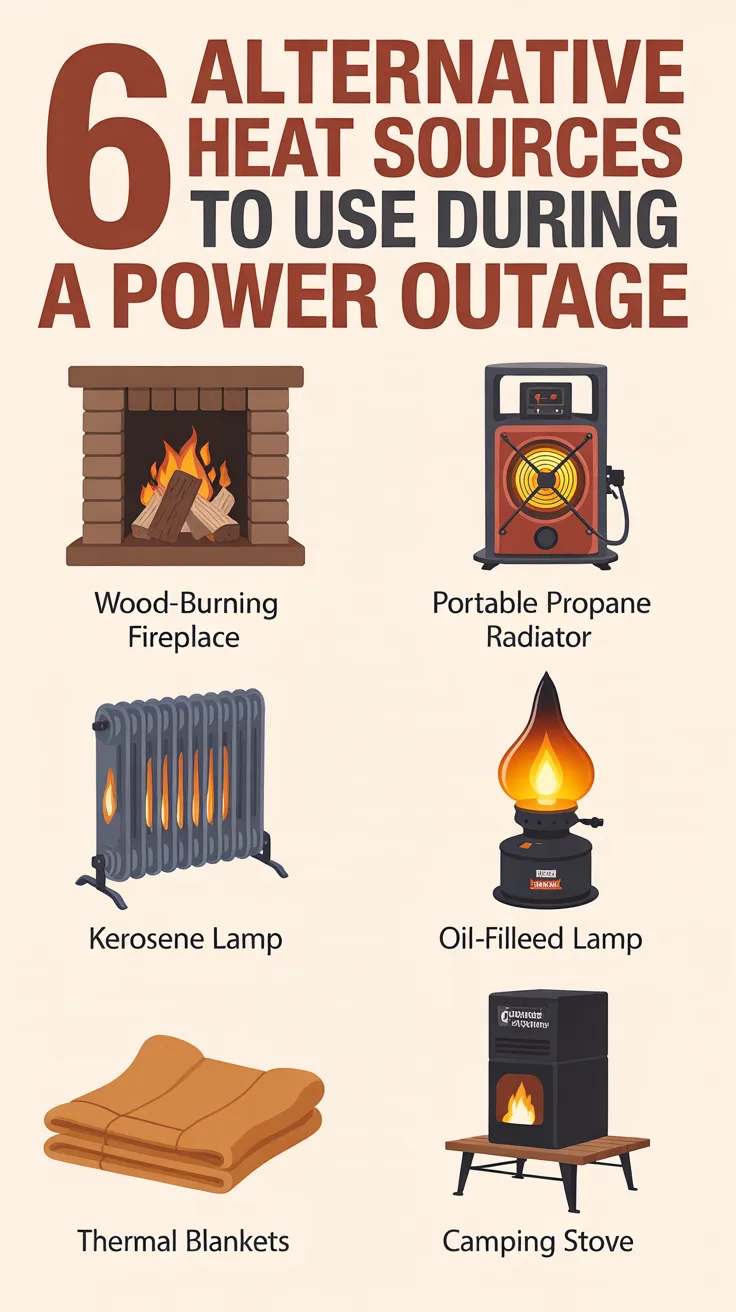
When the grid goes dark in the dead of winter, staying warm becomes more than comfort—it’s survival. This guide covers 6 alternative heat sources to use during a power outage, how to deploy them safely, and how to stretch every BTU by sealing rooms, managing fuel, and using thermal mass. You’ll find practical, step-by-step tactics you can put in place today, plus preparedness resources to help you build a resilient heat plan before the next blackout hits.
If you’re starting from scratch on outage-proofing your home, the field guide Dark Reset is a good primer for planning, stocking, and staying operational when the power stays off longer than expected.
Table of Contents
Portable propane heaters for emergency room heating
Portable propane heaters rated for indoor use are one of the most flexible options for short-term, zone-based warmth. They’re fast to set up, produce meaningful BTUs, and can run off 1 lb cylinders or a 20 lb tank with the right hose and regulator. The key is using only models listed for indoor spaces, and following their ventilation and clearance requirements to the letter.
Where they shine
- Rapid spot heat: Warm a single room (bedroom, living room) rather than the entire home.
- Flexible fuel: 1 lb cylinders for grab-and-go, 20 lb tanks for longer runtimes.
- Simple setup: No chimney or permanent install needed.
Fuel and runtime basics
- A 1 lb propane cylinder contains roughly 21,000 BTUs of energy. If your heater is set to around 4,000 BTU/hour, that’s about 5 hours per cylinder, give or take. Higher settings reduce runtime significantly.
- A 20 lb tank holds roughly 430,000 BTUs, supporting many hours or days of intermittent use, depending on output level.
- Always check your specific heater’s manual for approved tank sizes and hose types. Avoid unlisted adapters.
Safety checklist
- Use only heaters rated for indoor use with oxygen depletion sensors and tip-over shutoff.
- Crack a window 1–2 inches to ensure fresh air exchange. Propane combustion consumes oxygen and produces moisture and small amounts of carbon monoxide.
- Keep 3 feet of clearance around the heater; never drape clothing or fabric over it.
- Install and test battery-powered smoke and carbon monoxide detectors in the heating room.
- Place the heater on a level, non-flammable surface away from foot traffic and pets.
- Store propane cylinders and tanks outside or in well-ventilated spaces; do not store near heat sources.
Setup tips for better results
- Commit to zone heating: Close doors and seal gaps with towels or weatherstripping to keep heat where you need it.
- Use reflective emergency blankets on exterior walls (shiny side facing inward) to reduce radiant heat loss.
- Lay down a thick rug and dress in layers; reducing heat loss is as important as producing heat.
Propane heaters are the workhorse of emergency warmth: reliable, adjustable, and strong enough to make a sealed room comfortable—even when the rest of the house is cold.
Kerosene convection and radiant heaters for sustained warmth
Kerosene heaters come in two main types—convection (cylindrical units that radiate heat 360°) and radiant (box-style units that project heat directionally). Both can provide significant heat for medium-size rooms. Convection heaters excel at warming the air volume of a room; radiant models feel like sunshine, warming people and objects in their path.
Why choose kerosene
- High output: Many units deliver strong, steady heat suited to larger rooms or open layouts.
- Fuel stability: K-1 kerosene stores well when kept in clean, sealed containers; add stabilizer if storing long-term.
- No electricity needed: Operation is completely off-grid.
Fuel quality matters
- Use only water-clear K-1 kerosene from a reputable source. Lower grades or contaminated fuel can produce strong fumes, soot, and more carbon monoxide.
- Store in dedicated, properly labeled kerosene containers away from living spaces. Keep out of direct sunlight and temperature extremes.
Safe operation practices
- Ventilation is required: Crack a window an inch or two to supply fresh air and reduce moisture buildup.
- Wick care: Follow the manual to trim, clean, and “burn dry” the wick when needed; a dirty wick leads to odor and smoke.
- Placement: Set on a stable, heat-resistant surface, clear of drapes, bedding, and furniture. Maintain wide clearance on all sides.
- Refueling: Never refuel a hot heater; allow it to cool completely to avoid flare-ups. Wipe spills immediately.
- Sleeping areas: Avoid using any combustion heater unattended or while sleeping.
- Detectors: Keep battery-powered CO and smoke detectors in the heating room.
Comfort and condensation
- Like propane, kerosene heaters add moisture to the air. Light ventilation helps manage condensation that can otherwise promote mold or frost on windows.
Medical readiness note
- Combustion heat comes with burn and smoke risks. If you want a practical resource for handling minor burns, smoke irritation, or other medical concerns when clinics are busy or inaccessible, keep Home Doctor on your shelf as a common-sense reference.
Used correctly, kerosene heaters are a dependable, high-output option for multi-hour heating, particularly when you have a reliable fuel supply and a well-ventilated space.
Indoor-safe catalytic heaters for small spaces and RVs
Catalytic heaters generate heat through a flameless chemical reaction on a catalytic pad, meaning they typically operate at lower surface temperatures and produce fewer emissions than open-flame devices. They shine in small spaces like RVs, cabins, or a sealed bedroom, and they’re efficient at turning fuel into steady, gentle warmth.
Strengths and best uses
- Quiet, steady warmth: Great for sleeping areas when supervised—though avoid running any heater while you’re asleep.
- Fuel flexibility: Many models use propane; some small units can use butane.
- Energy efficiency: Catalytic combustion maximizes fuel use while minimizing fumes.
Space and placement
- Effective in small, well-sealed rooms; consider a 100–200 sq ft space to make the most of their output.
- Place on a stable, non-flammable surface. Maintain airflow around the heating surface—do not block the face or drape fabric over it.
Ventilation and safety
- Even “indoor-safe” devices consume oxygen and can release carbon monoxide in small amounts. Crack a window slightly and keep CO and smoke detectors present and tested.
- Keep heaters supervised, especially around children and pets. Surfaces can still cause burns if touched.
Apartment-friendly considerations
- Many renters can’t install fixed stoves or modify ventilation. If you live in a city or multi-unit building and need strategies tailored to tight spaces, egress, and building rules, the urban-focused guide URBAN Survival Code provides planning tactics for apartment dwellers managing heat, water, and security during extended outages.
Catalytic heaters excel at “background heat” in a well-prepped room. Pair them with passive heat-saving tactics—heavy curtains, rugs, door draft stoppers—to get the most from their gentle output.
Wood-burning stoves and fireplaces among the 6 alternative heat sources to use during a power outage
Wood heat is classic for a reason: abundant fuel in many regions, high output, and true off-grid independence. That said, not all wood heat is equally effective. Traditional open fireplaces, while cozy, are often net-inefficient—pulling warm air up the chimney and drawing cold air into the room. A high-efficiency wood stove or an insert in an existing fireplace is a far better choice for sustained heating.
Advantages of wood heat
- Strong radiant and convective heat to warm people and air effectively.
- Fuel redundancy when you keep a supply of dry, seasoned wood (split, stacked, and covered for 6–12 months).
- Independence from liquid fuels and cylinders.
Key setup and maintenance points
- Chimney and flue care: Soot and creosote buildup are serious fire hazards. Schedule regular inspections and cleanings; use only dry wood to reduce creosote formation.
- Clearances and hearth protection: Follow manufacturer guidelines for distances to walls and ceilings; install a proper hearth pad to catch embers.
- Draft management: Use baffles, dampers, and doors correctly for clean, efficient burns. Poor draft equals smoke and wasted heat.
- Ash handling: Store ashes in a metal bucket with a tight lid on a non-combustible surface; ashes can retain embers for days.
Reality check on other “wood” devices
- Pellet stoves are efficient but typically require electricity for augers and fans. A small battery backup can extend runtime during short outages, but don’t rely on it for days-long events unless you’ve tested your setup.
- Portable “tent stoves” are for properly vented tents and shelters, not standard homes, unless installed through a compliant flue system (which requires expertise).
Fuel management
- Keep kindling and fire starters ready: waxed cotton pads, resin-rich fatwood, or commercial starters.
- Stack wood off the ground under cover; bring in small, dry batches to avoid pests and moisture indoors.
- Avoid burning treated lumber, painted wood, or wet wood; they smoke heavily and increase creosote.
A well-installed wood stove or insert is a powerhouse heat source during outages, capable of heating multiple rooms and serving as a cooktop in a pinch.
Rocket stoves and biomass burners for outdoor heat and cooking
Rocket stoves and biomass burners are efficient, small-footprint devices that burn twigs, sticks, or small splits at high temperature. They’re outstanding for outdoor cooking and boiling water with minimal fuel, and they can be part of a broader heat strategy by warming objects you then bring indoors.
Where they fit
- Outdoor cooking: Boil water, simmer, or sauté without propane or electricity.
- Fuel flexibility: Use small, dry sticks, pine cones, or scrap wood. They burn hot and clean when fed correctly.
- Backup heat strategy: Heat bricks, stones, or water containers outdoors, then bring them inside to act as thermal mass.
Important cautions
- Do not use typical rocket stoves or biomass burners indoors. They require proper ventilation and produce carbon monoxide. Unless you have a fully vented, code-compliant mass heater system, keep these devices outside.
- Clear a safe zone: Use on non-combustible surfaces with wind shielding; keep a fire extinguisher or water nearby.
Heat synergy: warming thermal mass
- Heat bricks or stones outdoors and place them (carefully, with insulating trivets) in the room you’re occupying to release gentle heat over time.
- Heat water in metal containers and pour into sturdy hot-water bottles for bed warmth. Always wrap bottles in a towel to prevent burns and leaks.
Food resilience
- Cooking without grid power is integral to staying warm and nourished. If you want a compact library of no-power-ready foods and how to use them efficiently, check out The Lost SuperFoods for time-tested recipes that pair well with rocket stoves and wood heat.
Rocket stoves are an inexpensive way to offload cooking fuel from propane and kerosene, and they play a smart supporting role by charging thermal mass you can safely bring inside.
Thermal mass, hot water bottles, and passive solar gains
Not every “heat source” burns fuel. In an outage, reducing heat loss is just as powerful as increasing heat production. Thermal mass, hot water, and sunlight let you amplify or retain warmth from any of the combustion heaters above.
What to do immediately
- Zone your space: Pick the smallest room practical as your “warm room.” Hang thick blankets over doorways; seal window and door gaps with towels.
- Layer the interior: Lay rugs or carpets on cold floors; cover exterior walls with reflective emergency blankets to reflect heat back into the room.
- Build a micro-climate: Pitch a small camping tent inside the room and sleep inside it; your body heat will warm the tiny air volume quickly.
Thermal mass tactics
- Hot water bottles: Fill high-quality rubber or silicone bottles with hot—but not boiling—water. Wrap in a towel; place at feet or torso in bed. Replace water every few hours as it cools.
- Heat-retaining containers: Metal water bottles or canteens can double as hand warmers (wrapped). Avoid plastic containers with very hot water.
- Warmed stones or bricks: Heated outside (on a grill or rocket stove), then placed inside on a trivet; never use river stones, which can crack or pop.
Passive solar gains
- Daylight strategy: Open south-facing curtains for sun during the day; close all curtains at dusk to trap heat.
- Window insulation: Tape clear plastic film over windows in winter; even a DIY layer can reduce drafts and conduction losses.
- Humidity: Moderate humidity can feel warmer, but burning fuels often add moisture. Let the room “breathe” to prevent condensation.
Water resilience in cold weather
- Freezing temps can disrupt water supply, which complicates hot water tactics and hygiene. If you want a compact, on-hand backup for safe storage and treatment, consider SmartWaterBox to organize and protect potable water reserves you’ll rely on for heating bottles, cooking, and hydration when pipes are compromised.
By combining thermal mass with passive strategies and airtight zoning, you amplify any of the fuel-based heaters and reduce how much fuel you burn to stay comfortable.
Choosing the best of the 6 alternative heat sources to use during a power outage
Different homes, budgets, and climates call for different mixes of gear. Use this quick decision guide to pick your top two options (plus passive strategies), then build out fuel and safety supports around them.
If you rent (small space, no installs)
- Primary: Indoor-rated portable propane or catalytic heater.
- Secondary: Thermal mass and hot water bottles; rocket stove outside for cooking.
- Add-on: Urban considerations like stairwells, neighbors, and building rules make planning different; URBAN Survival Code is written for that reality.
If you own a home (room to store fuel)
- Primary: Wood stove or insert if installed; otherwise, a kerosene or propane heater for zone heating.
- Secondary: Rocket stove for cooking and heating thermal mass; passive solar and heavy insulation in a selected room.
If you already have a fireplace
- Consider a fireplace insert to improve efficiency and reduce heat loss up the chimney.
- Keep seasoned wood, kindling, and fire starters ready; schedule annual chimney maintenance.
If you need child- and pet-aware setups
- Choose lower-surface-temperature options (catalytic heaters) and use barriers or gates for any radiant unit.
- Keep hot water bottles well-insulated and out of reach when not in use.
Fuel planning and storage
- Propane: Store tanks outdoors, upright, and protected from heat sources. Keep spare hoses and an approved regulator.
- Kerosene: Store K-1 only, in sealed containers, clearly labeled; use stabilizer for long-term storage.
- Wood: Keep a dry, elevated stack with a rotation system; never burn treated or painted wood.
Safety first, always
- Carbon monoxide and smoke detectors with fresh batteries in every heating room.
- Fire extinguisher accessible; know where and how to shut off heaters quickly.
- Ventilation: Crack a window, even in cold weather, to maintain air quality.
- Supervision: Never leave heaters running unattended; avoid running heaters while you sleep.
Quick action checklist and resources
- Make a two-heater plan (primary + backup) with fuel totals for 72 hours minimum.
- Choose one outdoor cooking method you’ve tested at least once.
- Prepare your “warm room” now with insulation supplies and detectors.
If you want a compact outage playbook you can act on, Dark Reset covers grid-down strategies step by step. For at-home medical know-how during emergencies, Home Doctor is a practical reference to keep next to your first-aid kit.
Conclusion
You’ve seen 6 alternative heat sources to use during a power outage, along with the insulation tactics that make each fuel dollar go farther. Whether you choose a propane or kerosene heater for zone warmth, lean on a wood stove for whole-home heat, or use outdoor rocket stoves to charge thermal mass, the winning strategy is part gear, part preparation. Build a small “warm room,” stock the right fuels safely, and add water and medical resilience so you’re not caught off guard. When the lights go out, warmth follows preparation—not luck.
Recommended preparedness resources
- Dark Reset: A practical field guide to navigating extended blackouts and staying operational.
- Home Doctor: Common-sense medical guidance for home care when access to clinics is limited.
- URBAN Survival Code: City-specific strategies for heating, water, and safety in apartments.
- The Lost SuperFoods: Stock and cook resilient foods without power.
- SmartWaterBox: Organize and protect potable water reserves essential for cooking and hot water heating.
FAQ
What are the safest 6 alternative heat sources to use during a power outage?
- Safest options include indoor-rated portable propane heaters, catalytic heaters, and properly installed wood stoves. Kerosene heaters are safe when used with ventilation and correct fuel (K-1). Rocket stoves should be used outdoors only. Always pair any option with working carbon monoxide and smoke detectors.
Can I use a charcoal grill or gas oven to heat my home during an outage?
- No. Charcoal and outdoor gas grills produce dangerous carbon monoxide and must never be used indoors. Gas ovens are not designed as space heaters and can also produce unsafe levels of CO. Stick to indoor-rated heaters with built-in safety features and proper ventilation.
How do I heat a small apartment without installing a stove?
- Choose an indoor-rated catalytic or portable propane heater for a single “warm room,” seal drafts, and use hot water bottles and heavy curtains to retain heat. For building-specific strategies, URBAN Survival Code can help you adapt plans to multi-unit rules and layouts.
How much fuel should I store for a 72-hour outage?
- As a starting point, aim for enough fuel to run an indoor-rated portable heater on low-to-medium settings for 8–10 hours per day over 3 days, plus cooking fuel. For propane, that might mean several 1 lb cylinders or a 20 lb tank; for kerosene, several gallons of K-1. Test your gear to refine your personal baseline—actual needs vary by climate, insulation, and room size.
Can I rely on candles or DIY terracotta “candle heaters” to warm a room?
- Candles provide minimal heat and present a fire hazard. Terracotta candle heaters concentrate candle warmth but don’t meaningfully heat a typical room and still carry fire risks. Consider them only as minor, supervised spot warmers, not primary heat. Focus on proper heaters and aggressive heat retention tactics instead.
What should be in my “warm room” kit?
- Battery-powered CO and smoke detectors, a fire extinguisher, weatherstripping, door snakes or towels, reflective blankets, heavy curtains, rugs, a thermometer, headlamps/lanterns, spare batteries, hot water bottles, and your chosen heater’s manual. Keep a first-aid kit close; Home Doctor is a handy reference for common issues like minor burns.
How do I reduce condensation and stuffy air when burning fuel indoors?
- Always crack a window 1–2 inches for fresh air exchange. Run the heater per the manual (clean wicks, proper settings) to promote cleaner burns, and wipe condensation from windows. Ventilation is essential for air quality even when it’s very cold outside.
What’s the role of water storage in staying warm?
- Hot water bottles and warm beverages are effective personal heat sources. In freezing weather, water supply can fail—so keep potable water stored and organized. A system like SmartWaterBox helps ensure you have what you need to heat water safely and stay hydrated.