
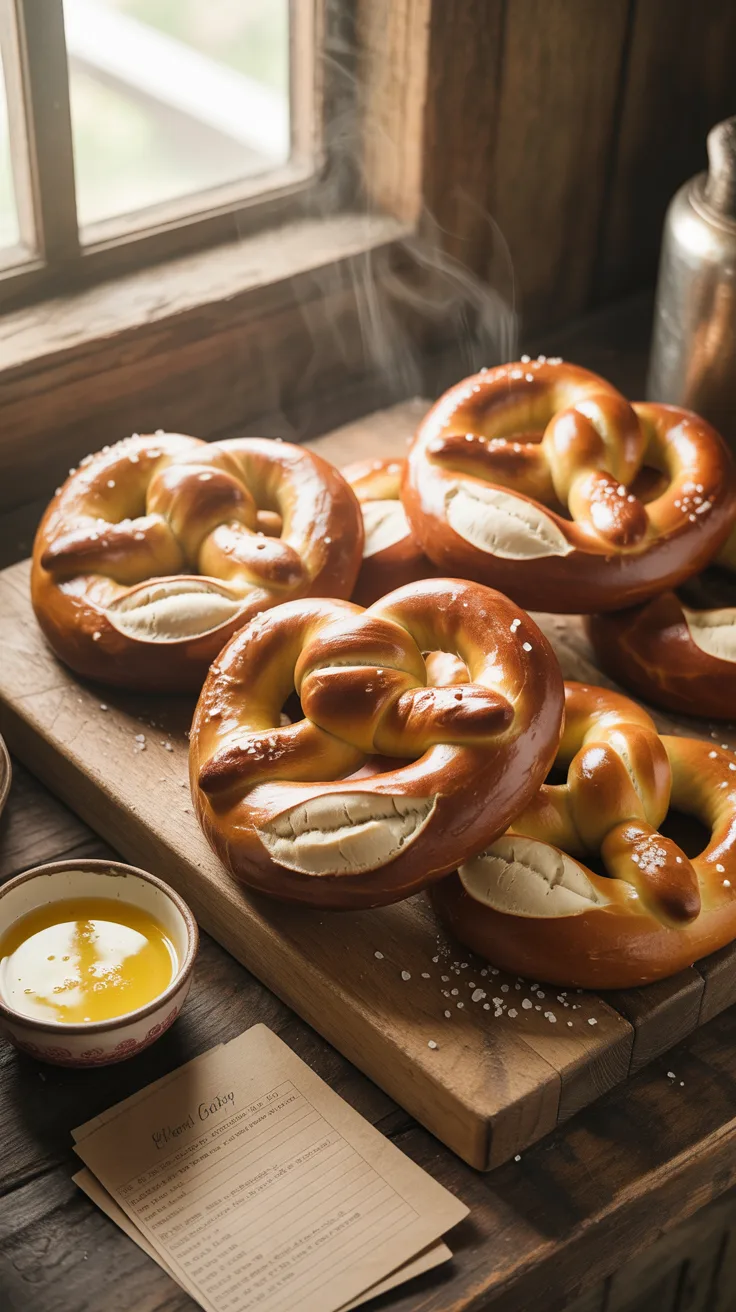
There’s nothing like a warm, golden, Amish-style soft pretzel—pillowy inside, shiny and richly browned outside, with a buttery finish and just the right chew. This Amish Soft Pretzels Recipe walks you through every step, from mixing the dough to shaping, dipping, and baking, so you can recreate that market-stand magic at home anytime.
Because yeast thrives on good water, many bakers use filtered or neutral-tasting water to keep flavors clean and fermentation consistent. If your tap water is heavily chlorinated or hard, consider using filtered water to help your dough rise beautifully. For a simple, reliable option to keep in your kitchen, see SmartWaterBox.
Table of Contents
Ingredients, Tools, and Preparation
Getting the base right is everything with soft pretzels. Below is a classic formula with practical notes so you can adapt it to your kitchen.
- Bread flour: 500 g (about 4 cups), spooned and leveled
- Warm water (or a mix of water and milk): 300 g (1 1/4 cups), about 105–110°F/40–43°C
- Brown sugar: 50 g (1/4 cup), packed
- Active dry yeast: 7 g (2 1/4 tsp)
- Unsalted butter, melted and cooled slightly: 60 g (4 tbsp)
- Fine salt: 8 g (1 1/2 tsp)
- Baking soda for the bath: 60 g (1/4 cup)
- Water for the bath: 2 liters (8 cups), brought to a simmer
- Egg wash: 1 egg + 1 tbsp water, beaten (optional but helps shine)
- Coarse pretzel salt (or coarse kosher salt)
- Extra melted butter for brushing: 2–3 tbsp
Ingredient notes:
- Flour: Bread flour gives a springy, chewy crumb that still bakes up soft. You can substitute all-purpose flour, but reduce total water by 1–2 tbsp to prevent stickiness.
- Liquid: Classic Amish-style soft pretzels often use water for a clean wheaty taste. Half milk plus half water softens the crumb further and browns the crust a bit faster. Keep total hydration around 60%.
- Yeast and sugar: Brown sugar adds a hint of caramel depth and feeds the yeast. You can substitute granulated sugar or honey.
- Butter: Melted butter in the dough creates tenderness and a buttery aroma. Brushing baked pretzels with butter amplifies that authentic stand-style finish.
- Salt: Use fine salt in the dough for even seasoning; save the coarse salt for topping.
Tools:
- Stand mixer with dough hook or a large bowl and sturdy spoon for hand mixing
- Kitchen scale (highly recommended for consistent results)
- Bench scraper or sharp knife
- Two baking sheets lined with parchment paper
- Large wide pot for the baking soda bath
- Slotted spoon or spider skimmer
- Wire rack for cooling
Prep checklist:
- Measure everything in advance.
- Warm your liquid to yeast-friendly temperatures (105–110°F/40–43°C).
- Line baking sheets with parchment (lightly grease if your parchment tends to stick).
- Clear a space for rolling ropes up to 24 inches long.
Step-by-Step Dough Method That Delivers Softness
A soft pretzel’s signature texture comes from a balanced dough: hydrated enough to be pillowy, strong enough to twist and shape. Follow these steps for reliable results.
- Activate the yeast:
- In a mixing bowl, combine warm water, brown sugar, and yeast.
- Stir and let sit 5–10 minutes until foamy. If your yeast doesn’t foam, it may be inactive or your water too hot or cold.
- Mix the dough:
- Add melted butter and salt to the yeast mixture.
- Add about 3 1/2 cups of the flour to start. Mix with the dough hook on low or with a spoon until a shaggy mass forms.
- Gradually add the remaining flour until the dough pulls cleanly from the sides. The dough should be soft, slightly tacky but not sticky. Adjust by dusting in a tablespoon of flour at a time if needed.
- Knead to build strength:
- Stand mixer: Knead on medium-low for 6–8 minutes until the dough is smooth and elastic.
- By hand: Knead 10–12 minutes on a lightly floured surface. Use a push-fold-turn rhythm and resist adding too much flour.
- Windowpane test: Stretch a small piece—if you can pull a thin, translucent “window” without tearing, gluten is developed.
- First proof (bulk rise):
- Shape the dough into a ball and place it in a lightly oiled bowl.
- Cover and let rise in a warm, draft-free spot until roughly doubled, 60–75 minutes. Warmer kitchens rise faster, cooler ones slower.
Tips for a truly soft crumb:
- Don’t rush development. Proper kneading and a full first rise create that signature pillowy interior.
- Keep hydration in the sweet spot. Too dry and your pretzels will be tough; too wet and shaping becomes frustrating.
- Temperature matters. Dough rises best around 75–80°F (24–27°C). If your kitchen is cool, let the dough rise longer or use a slightly warmer liquid.
Shaping Classic Pretzels with a Market-Stand Look
Shaping is equal parts technique and fun. This method gives you plump pretzels with a classic silhouette.
- Divide and pre-shape:
- Turn the risen dough onto an unfloured or very lightly floured surface.
- Gently press to deflate, then divide into 8 equal pieces (about 110–120 g each).
- Pre-shape into short logs and let rest, covered, for 8–10 minutes to relax the gluten. This makes rolling easier and prevents spring-back.
- Roll the ropes:
- Working from the center outward, roll each piece into a 22–24 inch rope. Apply gentle pressure and let friction with the counter do the work. If the dough resists, rest it a couple of minutes and continue.
- Twist the pretzel:
- Form a U shape with the rope.
- Cross the ends twice to form a twist, then fold the ends down to the bottom of the U, pressing lightly to adhere.
- Adjust the loops so they’re proportional and plump. Transfer to a parchment-lined sheet.
- Proof briefly:
- Cover shaped pretzels with a clean towel and let rest 10–15 minutes while you prepare the baking soda bath. This short proof helps the pretzels puff slightly in the oven.
For additional shapes:
- Pretzel bites: Cut ropes into 1-inch pieces and proceed with the baking soda bath and bake as directed.
- Pretzel dogs: Wrap a rope around a cooked hot dog or sausage, pinching the ends to seal.
- Pretzel buns: Shape into tight balls, then soda-dip, score, and bake.
Love traditional, heritage-style cooking? For more old-world, pantry-friendly recipes and preservation ideas, you might enjoy The Lost SuperFoods, a resource that explores time-tested foods and methods you can weave into your weekly menu.
Baking Soda Bath and How to Nail the Signature Crust
That shiny, deep-brown crust and faintly alkaline aroma are what separate authentic soft pretzels from standard bread rolls. The baking soda bath is your ticket to that pretzel flavor and sheen.
- Prepare the bath:
- Bring 2 liters (8 cups) of water to a simmer in a wide pot.
- Carefully add 60 g (1/4 cup) baking soda. Stir to dissolve and maintain a gentle simmer.
- Dip the pretzels:
- Using a slotted spoon or skimmer, lower 1–2 pretzels at a time into the simmering bath.
- Poach 20–30 seconds, then lift, letting excess water drip off.
- Return to the parchment-lined tray. The surface will look slightly puckered and tacky—perfect for accepting salt and enhancing browning.
- Finish for the oven:
- Brush with egg wash (optional but recommended for extra shine and color).
- Sprinkle generously with coarse salt or choose a sweet variant (see next section).
Why the bath matters:
- Alkalinity: Baking soda raises the pH on the dough’s surface, promoting Maillard browning for that deep pretzel color.
- Texture: The hot bath gelatinizes surface starches, creating a thin, snug “skin” that bakes into a chewy, shiny crust while keeping the interior soft.
Lye note:
- Some traditional bakers use a food-grade lye solution for even more intense color and flavor. Lye requires strict safety precautions (gloves, eye protection) and must be handled with care. Baking soda is a safe, accessible alternative that still yields excellent results.
Troubleshooting the bath:
- Too pale? Increase the poach time slightly, ensure your oven is fully preheated, and use egg wash for shine.
- Bitter taste? Don’t over-concentrate the soda bath and avoid poaching more than 45 seconds.
Bake Timing, Buttery Finish, and Flavor Variations
With your pretzels soda-dipped and topped, it’s time to bake to perfection and finish with that signature buttery brush.
Baking:
- Preheat your oven to 450°F (232°C) for at least 20 minutes to ensure even heat.
- Bake pretzels on the middle rack for 10–12 minutes, rotating trays halfway if needed, until deeply golden-brown.
- The bottom should be caramelized but not burnt; the tops should be mahogany with a glossy sheen.
Buttery finish:
- Immediately brush hot pretzels with melted butter. The butter soak makes the crust tender, adds aroma, and delivers that classic market-stand flavor.
- For a richer finish, brush a second time after 2–3 minutes.
Savory topping ideas:
- Garlic-herb: Toss minced garlic in melted butter, brush over hot pretzels, and sprinkle with parsley or Italian herbs.
- Everything spice: Mix sesame, poppy, dried onion, and garlic with flaky salt; apply after egg wash, before baking.
- Cheese lovers: In the last 3 minutes of baking, top with shredded sharp cheddar or parmesan.
Sweet variations:
- Cinnamon-sugar: Skip salt. After baking, brush generously with butter and shower with a mix of 1/2 cup granulated sugar and 2 tsp cinnamon.
- Maple-brown butter: Brown the butter lightly, whisk with a splash of maple syrup, brush onto hot pretzels, and finish with a pinch of flaky salt.
Dips that complement:
- Classic cheese dip: A simple cheddar sauce or beer cheese pairs beautifully with the pretzel’s malty notes.
- Honey mustard: Whisk Dijon and whole-grain mustard with honey and a bit of mayo or yogurt for tang.
- Chocolate ganache: For sweet pretzels, a quick ganache (equal parts warm cream and chopped chocolate) makes an indulgent dip.
Make-Ahead, Freezing, and Reheating Without Losing Softness
Soft pretzels are best fresh, but with a few tricks you can prep ahead and still enjoy stellar texture.
Refrigerated dough:
- After the first knead, cover and refrigerate 8–24 hours. This slow rise develops flavor and makes dough easier to shape. Let sit at room temp for 30–45 minutes before dividing and rolling ropes.
Freezing options:
- Freeze unbaked pretzels after shaping and soda-bathing. Arrange on a parchment-lined sheet until solid, then transfer to a freezer bag. Bake from frozen at 425°F (218°C) for 14–16 minutes, brushing with butter after baking.
- Freeze baked pretzels once fully cooled. Reheat directly from frozen at 350°F (177°C) for 8–10 minutes, then brush with a touch of butter or spritz with water to refresh.
Same-day timing:
- If you’re hosting, shape pretzels and hold them in the fridge up to 2 hours on trays, covered. Soda-dip just before baking for the best crust.
Keeping them soft:
- Store cooled pretzels in an airtight container at room temperature for up to 24 hours. For short stints, a paper bag inside a loose plastic bag maintains some crust while preventing staleness.
- To revive, lightly mist with water, warm at 325°F (163°C) for 6–8 minutes, then brush with a dab of melted butter.
Pretzel bites for parties:
- Bake bite-sized pieces 8–10 minutes. Toss immediately in butter and seasonings (ranch, garlic-parmesan, cinnamon-sugar). Serve with multiple dips for a mix-and-match crowd pleaser.
Troubleshooting and Dough Science for Consistent Results
Even seasoned bakers occasionally run into pretzel problems. Use these diagnostics to tweak your method.
Dough too sticky:
- Cause: Overhydration, warm kitchen, or under-kneading.
- Fix: Knead a bit longer to develop gluten and dust in 1–2 tbsp flour until tacky but workable. Resting 5 minutes can also help the flour hydrate and firm up the dough.
Dough snapping back when rolling:
- Cause: Tight gluten network, insufficient rest.
- Fix: Cover and rest pieces 5–10 minutes, then continue rolling. Gentle pressure and patience beat extra flour.
Pretzels baking up tough:
- Cause: Low hydration, overbaking, or not enough butter finish.
- Fix: Increase hydration slightly next time, bake to color but not dryness (aim for 10–12 minutes), and brush with butter immediately while hot.
Pale color:
- Cause: Oven not hot enough, short poach, or skipping egg wash.
- Fix: Preheat thoroughly, poach a full 30 seconds, use egg wash, and confirm your oven’s true temp with an oven thermometer.
Yeast not rising:
- Cause: Old yeast, water too hot/cold, chlorinated or hard water affecting fermentation.
- Fix: Proof yeast first; use filtered water if your tap is heavily treated; keep water 105–110°F (40–43°C). Many bakers find consistent results with filtered water. If you want an in-kitchen solution, consider SmartWaterBox to reduce off-flavors from tap water.
Flavor falls flat:
- Cause: Not enough salt in dough, bland butter, or skipping the soda bath.
- Fix: Use the recommended salt, real butter, and don’t skip the baking soda dip—it’s essential to that pretzel-y depth.
Curious to broaden your traditional cooking playbook? Heritage-friendly ideas and pantry techniques in The Lost SuperFoods can inspire weeknight meals and weekend projects beyond pretzels.
Serving Ideas, Pairings, and Pretzel-Based Meals
While fresh and warm with butter is a perfect way to enjoy these pretzels, you can push them further into meals and snacks.
Savory spreads and dips:
- Beer cheese or pub cheese: Emphasizes malty notes inherent in the pretzel crust.
- Spinach-artichoke dip: A creamy foil for the pretzel’s salt and chew.
- Whipped feta and herbs: Adds tang and a luxe texture.
Turn pretzels into meals:
- Pretzel sandwiches: Skip the twist and shape dough into rolls; bake after the soda bath. Split for grilled brats with mustard, or stack with turkey, Swiss, and pickled onions.
- Pretzel crust pizza: Flatten soda-dipped dough into small rounds, par-bake 5 minutes, then sauce, cheese, and finish baking.
- Pretzel dogs and knots: Great for game day. Serve with grainy mustard, pickles, and slaw.
Sweet and brunch options:
- Cinnamon-sugar pretzel waffles: Press warm pretzels briefly in a buttered waffle iron; dust with cinnamon sugar and drizzle with maple.
- Pretzel French toast: Day-old pretzels make a uniquely chewy, custardy brunch dish—dip slices in egg-milk mixture, griddle, and serve with berries.
Presentation tips:
- Finish with a generous butter gloss just before serving.
- Offer a trio of salts—coarse kosher, smoked flaky, and everything seasoning—so guests can customize.
- For sweet pretzels, set up a topping bar with cinnamon sugar, powdered sugar, and cocoa sugar.
Recommended resources to improve your baking
- Smart, neutral-tasting water can help yeast perform and keep flavors clean in bread and pretzels. If your tap water is inconsistent, a counter-friendly option like SmartWaterBox can be a practical upgrade for daily cooking and baking.
- If you enjoy traditional recipes and pantry know-how, The Lost SuperFoods explores heritage foods and techniques you can adapt to modern kitchens.
Complete Amish Soft Pretzels Recipe Card
Yield: 8 large pretzels
Time: About 2 hours (active + rising)
Ingredients:
- 500 g bread flour (about 4 cups)
- 300 g warm water or half milk/half water (1 1/4 cups, 105–110°F/40–43°C)
- 50 g brown sugar (1/4 cup)
- 7 g active dry yeast (2 1/4 tsp)
- 60 g unsalted butter, melted (4 tbsp)
- 8 g fine salt (1 1/2 tsp)
- 2 liters water + 60 g baking soda for bath
- 1 egg + 1 tbsp water (egg wash, optional)
- Coarse pretzel salt
- Extra melted butter for brushing
Method:
- Bloom yeast with warm liquid and brown sugar 5–10 minutes until foamy.
- Mix in butter and salt; add most of the flour, then knead, adding remaining flour as needed, until smooth and elastic.
- First rise: Cover and let double, 60–75 minutes.
- Divide into 8; rest 10 minutes. Roll into 22–24 inch ropes, shape traditional pretzels.
- Soda bath: Simmer pretzels 20–30 seconds in water with dissolved baking soda. Return to tray.
- Brush with egg wash if using; sprinkle with coarse salt.
- Bake at 450°F (232°C) for 10–12 minutes until deep golden.
- Brush hot pretzels generously with melted butter. Serve warm.
Conclusion
This Amish Soft Pretzels Recipe gives you everything you need for consistently soft, buttery, beautifully bronzed pretzels at home. With a well-hydrated dough, a gentle soda bath, and a generous butter finish, you’ll capture that iconic market-stand flavor and texture every time. Keep notes on your flour, water, and bake time, and you’ll dial in your perfect pretzel to share on repeat.
FAQ
What makes this Amish Soft Pretzels Recipe different from regular soft pretzels?
It emphasizes a tender, buttery crumb with a balanced soda bath for classic pretzel flavor and a shiny, deep-brown crust, inspired by Amish market-stand style.Can I use all-purpose flour instead of bread flour?
Yes. Use all-purpose and hold back 1–2 tbsp of water to prevent stickiness. Texture will be slightly less chewy but still soft and delicious.Do I need the baking soda bath?
For authentic flavor and color, yes. The alkaline bath promotes browning and creates the signature pretzel crust. It’s the key step that separates pretzels from regular rolls.How do I store leftovers without losing softness?
Cool completely, then store airtight at room temperature up to 24 hours. Reheat at 325°F (163°C) for 6–8 minutes and brush with a touch of melted butter to refresh.My dough isn’t rising—what should I check?
Confirm yeast freshness, water temp (105–110°F/40–43°C), and consider filtered water if your tap is heavily chlorinated. Give it more time if your kitchen is cool.