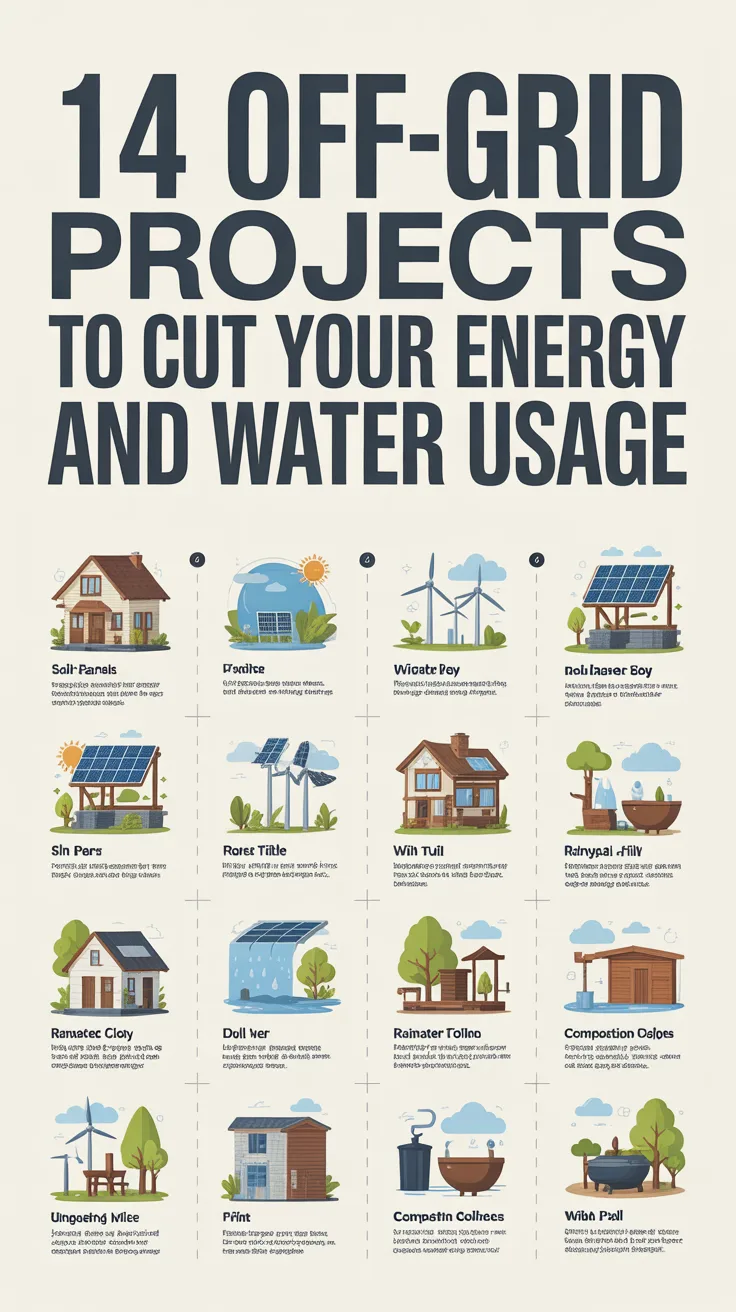
Reducing dependence on the grid doesn’t have to mean radical lifestyle changes. With the right plan, you can phase in practical upgrades that immediately shrink your bills and build resilience. This guide outlines 14 off-grid projects to cut your energy and water usage with step-by-step tips, realistic scope, and safety notes so you can start from any skill level. You’ll see how simple additions like rainwater harvesting, DC lighting, and solar heat work together to lower consumption and boost self-reliance—even in small homes or urban spaces.
If you’re looking for a compact, modular water solution that complements several of the projects below, consider the SmartWaterBox. It’s a flexible way to store and handle water off-grid without overhauling your entire plumbing.
Table of Contents
Power core for 14 off-grid projects to cut your energy and water usage
Project 1: Off-grid solar power starter system
The sustainable way to start is to size your system for “critical loads” rather than trying to cover everything at once. Identify essentials like lights, internet router, phone charging, a small DC fridge, and a well pump if you have one.
- Assess: List devices, their watts, and hours/day. Target 1–3 kWh/day for a beginner system.
- Components: 2–4 solar panels, MPPT charge controller, 12V/24V battery bank (lithium or deep-cycle), pure sine inverter for AC loads, fuses/breakers, and appropriately sized wire.
- Layout: Mount panels with a secure tilt, route to the charge controller, connect to batteries, then inverter. Label everything and add a shutoff switch.
- Safety: Follow local codes. Use proper wire gauge, fusing, and grounding. If unsure, consult a pro.
Pro tip: Prioritize daytime use to avoid draining batteries. Run power tools or laundry while the sun is producing, not at night.
Project 5: DC microgrid for lighting and critical loads
DC circuits cut conversion loss and make your battery storage go further.
- Convert your most-used lights to 12V/24V LED fixtures on a dedicated DC circuit.
- Add 12V USB-C outlets near desks and beds for device charging.
- For fridges, look for high-efficiency DC models or consider a super-insulated chest-style unit.
Benefits: Fewer conversion steps, reduced standby loss, simpler wiring, and better battery longevity. Keep your AC inverter off when not needed to save energy.
Resource add-on: For broader preparedness that complements a power-down scenario, the URBAN Survival Code focuses on practical urban survival routines you can adopt without moving off-grid.
Solar heat for showers and cooking without utility bills
Project 2: DIY solar water heater
Hot water is a major energy load. A simple batch (integral collector storage) heater or a thermosiphon collector can slash electricity or gas use for showers and dishwashing.
- Batch heater basics: A black-painted tank in an insulated box with glazing (polycarbonate or tempered glass), plumbed as a preheater before your water heater.
- Thermosiphon: A flat-plate collector below an insulated storage tank; hot water rises into the tank naturally—no pump needed.
- Tips: Add tempering/mixing valves to prevent scalding, insulate hot water lines, and use a freeze strategy (drainback or glycol loop) if you’re in a cold climate.
Even a modest preheat from 55°F to 95°F displaces significant energy, making your existing heater sip, not chug.
Project 6: Solar oven and passive food dehydrator
Cooking and preservation don’t need grid power.
- Solar oven: Build a box oven with reflective panels and a dark interior, or use a parabolic cooker for high heat. Great for stews, rice, and baking with zero fuel.
- Passive dehydrator: A screened rack system with a solar-heated air channel dries fruits, herbs, and vegetables gently.
- Kitchen synergy: Pair with a pressure cooker on sunny days to reduce total cooking time if you still use a stovetop.
Bonus resource: If you’re building a pantry of shelf-stable staples made the old-fashioned way, The Lost SuperFoods offers ideas for nutrient-dense foods that store well without a fridge.
Keep heat in and burn less fuel
Project 3: Rocket mass heater for space heating
A rocket mass heater (RMH) gives clean, efficient burn and captures the heat in a thermal mass bench or floor channel. It’s a favorite for cabins and workshops.
- How it saves: Intense, complete combustion and heat storage in cob or masonry release warmth over hours with minimal wood.
- Build notes: J-tube or batch box design, insulated riser, robust chimney, and a well-cured mass. Use refractory components for high-heat zones.
- Safety: Follow proven plans, include a CO detector, and observe clearances. Check code constraints and consider a permitted masonry heater alternative if required.
Project 4: Superinsulation and air sealing
The cheapest energy is the energy you never buy. A targeted weatherization weekend can cut heating and cooling loads dramatically.
- Start with an energy audit: Find drafts around doors, windows, baseboards, attic hatches, and electrical penetrations.
- Seal first: Weatherstrip doors, caulk gaps, seal attic penetrations, insulate rim joists, and add door sweeps.
- Insulate smartly: Top off attic insulation to recommended R-value, insulate hot water pipes, and add thermal curtains or cellular shades.
- Ventilate right: Add controlled ventilation (trickle vents or an HRV/ERV) to maintain air quality without leaks.
Outcome: Your heater runs less; your solar system can be smaller; and your home stays more comfortable.
Capture local energy with microgeneration
Project 7: Micro wind turbine
If your site has consistent wind (check data or a weather station), a micro turbine can complement solar by producing at night and in winter.
- Siting: Elevate well above roofline turbulence. A tower with guy wires or a monopole improves smooth airflow.
- Electrical: Turbines feed a charge controller suitable for wind, then into your battery bank.
- Expectations: Small rotors produce modest power; it’s best as a hybrid with solar.
Project 8: Micro-hydro generator
Stream on your property? Even a modest head and flow can yield 24/7 trickle charging that adds up.
- Types: Turgo, Pelton, or crossflow turbines depending on head and flow.
- System: Intake screen, penstock pipe, turbine, rectifier/charge controller, and battery integration.
- Considerations: Permits, fish safety, seasonal variability, and debris management.
Both wind and water generation require robust charge control and overvoltage protection. Blend sources so you’re not reliant on any single weather pattern.
Garden and landscape tactics to cut your energy and water usage
Project 9: Rainwater harvesting with first-flush and storage
Rainwater is ideal for irrigation and, with treatment, household non-potable uses.
- Catchment: Gutters with leaf guards feeding a downspout diverter.
- First-flush: A small vertical pipe that captures the initial dirty runoff before clean water enters your main tank.
- Storage: Barrels or IBC totes on a sturdy stand for gravity feed. Paint or wrap tanks to block light and prevent algae growth.
- Distribution: Hose bibs, drip lines, or a simple gravity-fed manifold.
Pair your storage with filtration as needed. For a modular tower-style setup that can integrate with harvest or storage, look at the Aqua Tower as a compact way to manage off-grid water.
Project 11: Drip irrigation and mulch basins
Efficient irrigation puts water where roots need it.
- Drip tape or emitters deliver slow, targeted watering with minimal evaporation.
- Mulch basins around trees and beds capture and infiltrate water.
- Add timers or simple manual valves, then water at dawn or dusk.
- Combine with swales on contour in larger spaces to slow, spread, and sink rainwater.
Result: Less water lost to wind and sun, healthier plants, and fewer weeds due to dry inter-row areas.
Reuse water safely and efficiently
Project 10: Greywater “laundry-to-landscape” system
Reuse water from your washing machine to irrigate trees and shrubs.
- Basics: A 3-way valve lets you send water to the sewer/septic or to your yard, meeting codes and seasonal needs.
- Route: 1-inch tubing downhill to mulch basins; include an air break and clean-out.
- Soaps: Use plant-friendly detergents (biodegradable, salt- and boron-free).
- Safety: Do not store greywater; distribute the same day. Avoid edible leaves/roots contact.
This project often requires minimal permits if it remains gravity-fed and simple. Check your local regulations before starting.
Project 12: Gravity-fed water filtration and distribution
Whether it’s rainwater prepped for household use or emergency supply, a gravity system needs no power.
- Setup: Elevated raw water container, prefilter (sediment screen), and a gravity filter unit.
- Distribution: Tap or tubing to sinks or a dedicated spigot.
- Maintenance: Replace or clean filter elements per manufacturer guidance; sanitize storage periodically.
A modular kit like the SmartWaterBox can slot into this approach with minimal tools and keeps water handling straightforward during outages.
Sanitation and well access that cut your energy and water usage
Project 13: Composting or urine-diverting toilet
Flush toilets waste potable water and require pumps or septic capacity. A purpose-built composting or UDDT system can be safe and odor-free when designed correctly.
- Design: Proper ventilation stack, sealed solids container, absorbent cover material (sawdust, chopped straw), and leach/collection for liquids if diverted.
- Operation: Keep it dry and aerobic; add carbon-rich cover after each use.
- Compliance: Choose a certified unit where required or build to guidelines that meet local rules.
This change alone can save thousands of gallons per person each year and eliminate a major dependency during grid or water outages.
Project 13 synergy: Hand hygiene and first aid are essential parts of sanitation. A practical reference like Home Doctor can help you handle minor medical issues at home when access to care is limited.
Project 13 add-on: Responsible waste handling and compost maturation timelines must be respected. Label, age, and keep humanure separate from immediate food-growing areas unless your local regulations and best practices explicitly allow matured compost use.
Project 13 also supports household resilience during disasters when municipal systems fail.
Project 13.5 (still part of sanitation): Low-water fixtures
If you’re not ready for a full composting setup, install high-efficiency toilets, faucet aerators, and low-flow showerheads. These are quick wins that reduce demand on your harvesting and filtration systems.
Project 13.5 note: While not fully off-grid, these retrofits are an easy bridge toward deeper independence.
Project 13.5 bonus: Leak detection
Silent leaks undo water savings. Check your meter with all taps off; a slow creep indicates a hidden leak. Repair quickly to protect your tanks and filters.
Project 13.5 wrap-up: Small fixes compound your water resilience, making storage stretch further.
Project 13.5 resource: To prepare for extended outages that impact both energy and water systems, the New Survival Offer: Dark Reset focuses on step-by-step readiness for grid-down scenarios.
Project 13.5 final reminder: Always comply with plumbing and health codes.
Project 13 (the original two under this heading): We’ve covered composting toilets and the importance of sanitation upgrades. Now, the second key project in this category:
Project 13 (second): Hand pump or well backup system
Grid-down wells need a non-electric way to bring up water.
- Options: Manual hand pumps, lever-action deep well kits, or a separate surface pump powered by your DC system.
- Plumbing: Install parallel to existing pressure systems with a check valve and isolation valves.
- Winter: Insulate and drain back to prevent freeze damage.
If you’re exploring practical well solutions, Joseph’s Well offers a focused pathway to water independence when the power is out.
How these 14 off-grid projects to cut your energy and water usage work together
A powerful way to think about off-grid progress is systems thinking, not single gadgets. Each project compounds the effects of the others:
- Superinsulation reduces your heating load, which means a smaller battery bank and fewer solar panels can cover your needs.
- DC lighting and device charging minimize inverter runtime, stretching battery life and making microgeneration sources like wind and hydro more useful.
- Rainwater capture plus greywater reuse means less demand on well pumps and less energy consumed moving water.
- A solar water heater preheats domestic hot water so your electric or gas backup only tops up, cutting energy spikes.
- Composting toilets eliminate flushes and septic pumping cycles, minimizing both water and energy demand.
You don’t need to do everything at once. Start with one weekend project per month, track the savings, and use those wins to fund the next upgrade.
Planning, safety, and code considerations that cut your energy and water usage
- Start with an audit: Measure your baseline kWh and gallons used. After each project, record usage for 30 days to quantify reductions.
- Phased investments: Begin with low-cost, high-impact steps (weatherization, LED/DC lighting, faucet aerators), then move to harvesting and generation.
- Redundancy: Aim for at least two ways to heat water, two ways to cook, and two sources of potable water.
- Maintenance plan: Filters, tanks, batteries, and seals need periodic checks. Set calendar reminders.
- Permits and safety: Some projects (structural mounts, plumbing changes, wood heaters) require permits. Respect clearances, install CO/smoke detectors, and use GFCI protection where water and electricity meet.
When in doubt, bring in a licensed pro for inspection and testing. Stewardship and safety go hand in hand with independence.
Troubleshooting and optimization notes for off-grid performance
- Solar underperforming? Check shading, panel tilt/azimuth, dirty glass, and wiring losses. Ensure your MPPT settings match battery chemistry.
- Batteries sag at night? Shift more loads to daylight and review phantom loads. Consider adding a small second battery string rather than oversizing panels first.
- Greywater backing up? Increase pipe diameter, reduce elevation changes, and ensure an air gap. Use mulch basins to avoid surface pooling.
- Low rain capture? Add gutter guards, increase catchment area, and raise tank height to improve gravity pressure.
- Drip irrigation clogging? Use a sediment prefilter and flush lines seasonally.
Small tweaks can reclaim 10–30% efficiency at little cost, often more than a hardware upgrade would.
Realistic expectations and right-sizing your path
Going off-grid doesn’t require a remote homestead. Many of these projects fit urban and suburban settings:
- Apartments: Window herb gardens with drip, solar oven on a balcony, faucet aerators, DC device charging from a compact battery/solar setup.
- Small homes: Rain barrels, laundry-to-landscape, DC lighting circuits, solar water preheat.
- Acreage: Full microgeneration (wind/hydro), composting toilet, large IBC storage tanks, and wood heat.
Adapt the principles to your property, climate, and budget. The goal is progress, not perfection.
Conclusion: Momentum from 14 off-grid projects to cut your energy and water usage
The fastest route to resilience is stacking small, proven wins. Start with weatherization and DC lighting, add a solar water preheater, then branch into rainwater capture and greywater. Layer in microgeneration where your site allows, and finish with sanitation and well backups. These 14 off-grid projects to cut your energy and water usage reinforce one another, lowering bills while giving you confidence in the face of outages. As you implement, keep safety first, track your results, and build a system that fits your life.
If you’re adding water resilience this season, the Aqua Tower, SmartWaterBox, and Joseph’s Well are practical resources to explore for collection, storage, and access. For broader readiness, consider Home Doctor and Dark Reset as part of your planning library.
FAQ
What are the easiest off-grid projects to start with?
Begin with air sealing and insulation touch-ups, swapping to LED/DC lighting, installing faucet aerators and low-flow showerheads, and setting up a basic rain barrel with a first-flush diverter. These are low-cost, high-impact, and build skills for bigger steps.How much can the 14 off-grid projects to cut your energy and water usage reduce bills?
Results vary by climate and baseline, but many households see 20–50% reductions within a year by combining weatherization, solar hot water, rain/greywater systems, and efficient lighting. The compounding effect is what drives larger savings.Do I need permits for these projects?
Some do. Structural solar mounts, wood-burning heaters, significant plumbing changes, and greywater systems may require permits or inspections. Always check local codes, use listed components where required, and follow manufacturer guidelines.Can I use rainwater for drinking?
Yes, with proper treatment. Pre-filtration, fine filtration, and disinfection are needed to meet potable standards. A gravity-fed filtration station can be part of your solution. Sanitize tanks periodically and protect them from light and contamination.What if my site doesn’t have good sun or wind?
Focus on conservation (air sealing, insulation), DC lighting, solar oven/dehydrator on the best days, and water systems (rain capture, greywater, drip). Micro-hydro can work even in cloudy climates if you have a suitable stream. If none apply, prioritize storage and efficient use.Is a composting toilet practical in a city?
It can be, but compliance is key. Select a certified unit if DIY isn’t an option, ensure proper venting, and verify local regulations. If not allowed, adopt low-flow fixtures and leak controls to still reduce water use significantly.How big should my battery bank be for a starter solar system?
Size for one to two days of your critical loads. Start small, track performance, and expand as needed. Many beginners overbuy panels and underinvest in conservation—optimize the home first to minimize battery requirements.Where do the 14 off-grid projects to cut your energy and water usage fit in a year plan?
Seasonally: Weatherize in fall, install solar water preheat in spring, build rain/greywater and drip systems before planting season, and tackle microgeneration and sanitation projects in summer when outdoor work is easiest.