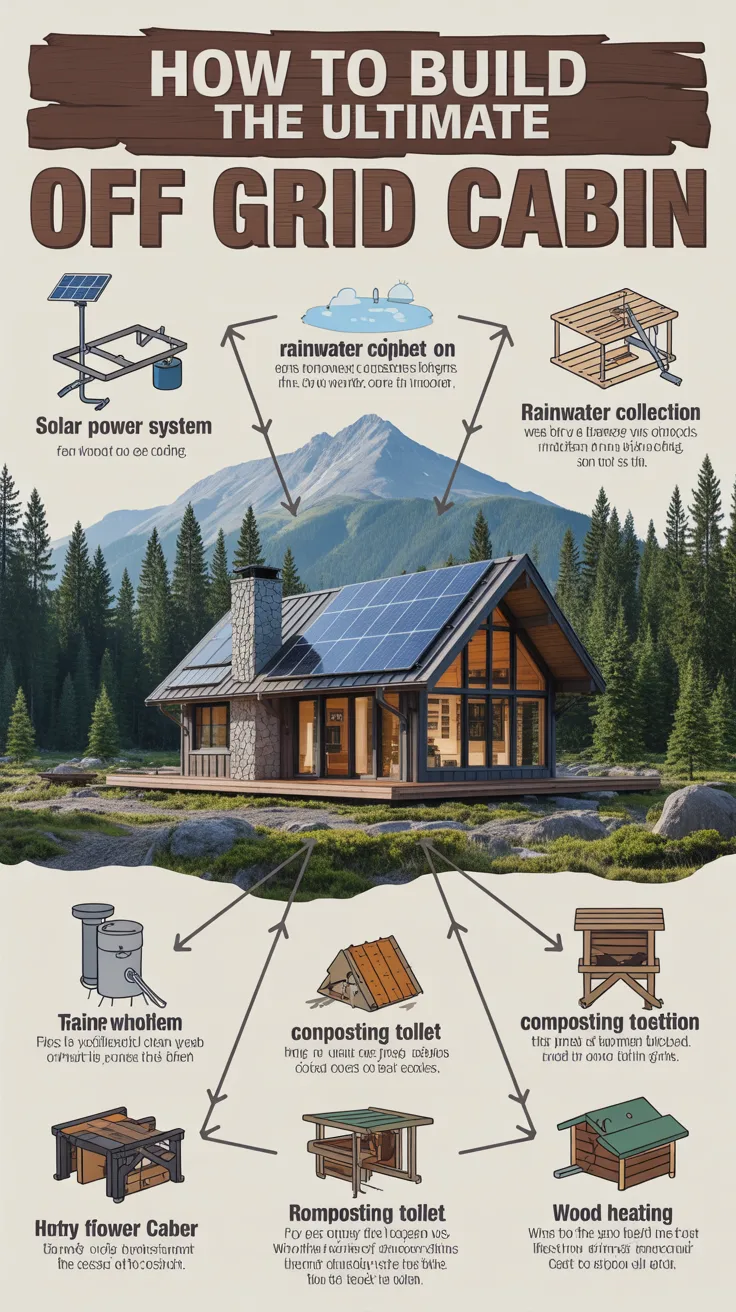
A well-planned off-grid project starts long before the first board is cut. If you want to know how to build the ultimate off grid cabin, think of the cabin as a system—land, energy, water, heat, waste, food, and safety—each optimized to work together. This guide walks you through site selection, design, construction, and the essential systems that make an off-grid home reliable, comfortable, and sustainable.
For a head start on dependable water planning for homesteads, explore Aqua Tower as a compact, flexible solution to organize storage and filtration workflows.
Table of Contents
Finding the right land and understanding the rules
Building the ultimate off-grid cabin begins with the right parcel. The ground you build on will determine how easily you can power, heat, and supply your home for decades. Evaluate these factors before you buy or break ground:
- Access and orientation: You need dependable year-round access plus good southern exposure for passive solar and photovoltaics. A south-facing slope with winter sun access reduces heating needs and boosts solar output.
- Water potential: Confirm legal water rights and assess sources—well depth estimates from neighbors’ wells, springs, surface water, and rainwater catchment potential (based on roof area and average rainfall). Walk the land after a storm to see natural drainage and where you might place a cistern.
- Soil and drainage: Soil type and percolation influence foundation options and septic. Sandy or gravelly soils drain well; heavy clays may require engineered foundations and careful drainage. Avoid floodplains and check local flood maps.
- Wind and microclimate: Tree lines, terrain, and open exposure create microclimates. You want good summer breezes, windbreaks for winter, and defensible space in wildfire zones.
- Timber and materials: On-site timber can offset lumber needs for rustic builds. Reclaimed materials availability nearby can save money and reduce your footprint.
- Neighbors and noise: Off-grid doesn’t mean isolated. Consider the distance to services and the noise profile (roads, ATVs, hunting seasons).
Zoning and permitting matter even off-grid. Research:
- Zoning and minimum dwelling size: Some jurisdictions have minimum square footage or restrict “accessory dwellings.” Verify tiny home and cabin rules.
- Building codes: Even off-grid cabins may need permits for structural, electrical, septic, and solid-fuel appliances. Code compliance is not the enemy—done right, it improves safety and resale value.
- Septic and sanitation rules: Composting toilets may be allowed, but greywater reuse can be restricted. Obtain a perc test if using a septic system.
- Fire and defensible space: In wildfire-prone regions, check roofing material requirements, spark arrestors for chimneys, and vegetation management rules.
Before you commit, draft a preliminary site plan that places the cabin, driveway, solar array, water system, and garden. This reduces surprises and helps you price the full project, not just the structure.
Designing a resilient, efficient cabin layout
Design is the backbone of comfort and lifetime operating costs. Use a plan that prioritizes passive gains and low-maintenance durability:
- Right-size the footprint: Smaller, smarter footprints save on materials, heating, and maintenance. Open-plan living with a loft can feel roomy without adding square footage.
- Passive solar design: Orient the long side of the cabin south. Add ample south-facing windows with proper overhangs to invite winter sun and block summer heat. Place thermal mass (stone or concrete floor, interior masonry) in sunlit areas to even out temperature swings.
- Air sealing and insulation: Air leaks waste more energy than low R-values. Commit to a detailed air-sealing plan first, then add continuous insulation. Consider dense-pack cellulose, rock wool, or SIPs for high-performance envelopes.
- Durable materials: Metal roofing, fiber-cement siding, and rot-resistant trim survive harsh climates and wildfire embers better than conventional options. Use raised foundations or capillary breaks to keep wood dry.
- Mudroom and utility core: Combine kitchen, laundry, mechanicals, and bathroom in a central “service core” to shorten plumbing and duct runs, simplifying freeze protection. A dedicated mudroom controls dirt and moisture.
- Ventilation strategy: A tight cabin needs planned ventilation. A small HRV/ERV or passive stack ventilation keeps air fresh, reduces humidity, and protects air quality during winter.
- Multi-use spaces: Built-ins, foldaway desks, and storage under stairs or beds cut clutter. A covered porch or three-season room extends living space outdoors.
Consider build methods that fit your skills and climate:
- Timber frame or post-and-beam: Long lifespan and open interiors for flexible layouts; pairs well with structural insulated panels (SIPs).
- Conventional framing: Widely accessible skills and materials; easy to modify in the future.
- Cordwood, straw bale, earthbag: Niche methods that offer thermal mass or high insulation, but require attention to moisture details and local code approvals.
Draft your energy model and water plan alongside the floor plan so penetrations, chases, and equipment rooms are baked in. You’ll avoid costly late-stage changes, a common pitfall in off-grid builds.
Foundations, framing, roofing, and weatherproofing that last
A cabin that shrugs off decades of weather starts with a dry, stable foundation and a well-detailed shell. Sequence your build to protect the structure as you go.
- Foundation choices:
- Concrete piers or helical piles are fast, minimize site disturbance, and work well on sloped sites. Ensure piers extend below frost line and are properly braced for lateral loads.
- Slab-on-grade with frost-protected shallow foundation offers thermal mass and excellent air-sealing but needs good drainage and insulation details.
- Crawlspaces demand rigorous moisture control: ground vapor barrier, perimeter insulation, and mechanical ventilation or conditioning.
- Drainage and site work:
- Maintain positive slope away from the cabin.
- Install perimeter drains in wet soils.
- Use capillary breaks under sill plates and between concrete and wood.
- Framing details:
- Advanced framing can reduce thermal bridging and material use.
- Create continuous exterior insulation (e.g., rigid boards) to keep structural members warm and dry.
- Roofing that works off-grid:
- Metal standing-seam roofs shed snow, harvest rainwell, and resist embers.
- Oversized eaves and gutters protect siding and offer shade.
- Use proper underlayment, ice-and-water shield in cold climates, and meticulous flashing at every penetration.
- Weather barriers:
- A continuous water-resistive barrier (WRB) with taped seams keeps bulk water out.
- An interior air barrier—carefully sealed around outlets, windows, and top/bottom plates—preserves heat and keeps humidity from entering walls.
- Windows and doors:
- High-performance glazing on the south side and modest glazing elsewhere balances daylight and heat loss.
- Proper shims, back dams, and flashing pan details prevent leaks.
Fire resilience and safety should be non-negotiable:
- Specify Class A roof materials, noncombustible cladding, and 1/8-inch mesh vents in fire zones.
- Maintain defensible space: Clear brush, limb trees up, and store firewood away from structures.
- Install CO and smoke detectors and plan egress windows in sleeping spaces.
By aiming for a tight, well-insulated envelope with excellent water and air control layers, you reduce the size and cost of your heating system, battery bank, and generator—everything downstream gets easier.
Powering your cabin with reliable off-grid energy
Energy independence relies on a balanced system: generation, storage, and backup. Oversizing one component and undersizing another is the fastest path to disappointment. Start with a realistic load calculation:
- Inventory loads by season: lighting, fridge, well pump, fans, laptops, tools, water heater, and, if needed, a mini-split for shoulder seasons. Consider winter vs. summer solar availability.
- Reduce then produce: LED lighting, efficient appliances, and right-sized pumps can cut your system size dramatically.
Core components:
- Solar PV array: Ground mounts are easy to clean and snow-shed; roof mounts use less footprint but can be harder to service. Size for winter sun if you’re in northern latitudes, or plan a generator assist.
- Charge controller and inverter: Choose quality components with room for expansion. In cold climates, keep electronics in conditioned utility spaces for longevity.
- Battery bank: Lithium systems offer deep cycling, compact size, and low maintenance. Lead-acid remains viable for budget builds if ventilated and maintained. Protect batteries from temperature extremes to preserve capacity.
- Backup generation: A quiet, efficient generator bridges prolonged storms and seasonal deficits. Wire an auto-start function for battery protection and convenience.
- Alternative sources: Micro-hydro can deliver 24/7 power from a modest head and flow—transformative if your site allows. Small wind can work in steady, open wind fields but requires realistic production estimates and robust towers.
Safety and resilience:
- Proper grounding and surge protection shield your system from lightning and static.
- Dedicated, labeled subpanels for critical loads make it easy to prioritize during low generation periods.
- Consider storing critical spares: fuses, breakers, extra MC4 connectors, a backup charge controller, and essential tools.
Plan for blackouts beyond your property line as well. Training, organization, and a layered redundancy mindset make your system easier to run and recover after extreme events. If preparing for grid-down scenarios or electromagnetic disruptions is part of your strategy, a step-by-step preparedness framework like New Survival Offer: Dark Reset can help you think through contingencies for communications, power, and critical routines without relying on public infrastructure.
Water sourcing, storage, and purification for an ultimate off-grid cabin
Water is the system you feel every day, and it has to be safe, simple, and winter-proof. Blend sources for redundancy:
- Wells: A drilled well paired with an efficient pump is the gold standard for many homesteads. Use a small pressure tank or a cistern to reduce pump cycling. In cold climates, bury lines below frost depth and insulate wellheads.
- Springs and surface water: Developed springs can be incredibly reliable; capture water uphill and gravity-feed to a cistern. With surface water, plan for multi-stage filtration and robust disinfection.
- Rainwater harvesting: Metal roofs, screened gutters, first-flush diverters, and food-safe tanks create high-quality catchment. Size storage to bridge your longest dry spell.
Treatment and distribution:
- Layer filtration: Start with sediment control before finer filters, then disinfect (chlorination or UV) as needed. Place a point-of-use filter at the kitchen for drinking water as a final safeguard.
- Hot water: Batch solar heaters, on-demand propane units, or wood-fired water heaters each fit different climates and lifestyles. Insulate piping and use recirculation judiciously to save energy.
- Freeze protection: Slope lines to drain, insulate and heat-trace vulnerable runs, and keep treatment gear in conditioned spaces.
Smart layouts and gear simplify operation:
- Gravity-first design removes dependence on pumps for basic needs. Place cisterns upslope or in a loft where feasible.
- A dedicated water room (or cabinet) keeps filters, valves, and meters accessible for quick service.
If you’re starting from scratch, consider resources that shortcut the learning curve:
- Aqua Tower can help you structure a compact storage and filtration workflow for reliable, day-to-day use.
- Joseph’s Well offers guidance suitable for homesteaders exploring wells and groundwater basics.
- New Water Offer: SmartWaterBox provides a streamlined way to organize household water management so you always know tank levels, flow paths, and maintenance intervals.
Waste and reuse:
- Greywater: Where allowed, route laundry and shower water to subsurface irrigation using mulch basins or engineered systems. Keep it simple and soap-compatible.
- Blackwater: Composting toilets reduce water demand and septic costs; otherwise, a conventional septic system sized for your occupancy may be required by code.
With a layered approach—source, storage, filtration, and distribution—you’ll build a water system that’s dependable in every season.
Heat, cooking, and healthy indoor air
Off-grid comfort depends on steady heat, safe cooking, and clean air that won’t rot your cabin or harm your lungs.
Primary heating options:
- Wood stove: Time-tested and fuel-flexible if you have timber on-site. Choose a properly sized, efficient model with outside air kit and a well-supported, insulated chimney. Maintain clearances and hearth protection to code.
- Rocket mass heater: Extremely efficient for those comfortable with alternative builds. Great for long, gentle heat in cold, dry climates.
- Propane or diesel heaters: Reliable backup heat and ideal for shoulder seasons or when you’re away. Store fuel safely and ventilate properly.
- Mini-split heat pump: In milder climates with good solar, a small, efficient unit can provide heating and cooling at a low energy cost, especially during sunny afternoons.
Cooking:
- Wood ranges combine heating and cooking. They shine in winter but can be too hot in summer.
- Propane stoves and ovens are easy to control year-round; pair with a proper vent hood to manage moisture and combustion byproducts.
- Outdoor kitchens extend comfort: a covered grill or gas cooktop reduces indoor moisture and heat during summer.
Hot water and humidity:
- On-demand propane heaters provide endless hot water with minimal standby losses. Vent them correctly and install condensate drains where required.
- Manage humidity through spot ventilation: bath fans, range hoods, and an HRV/ERV keep the envelope dry, preventing mold and improving comfort.
Air quality and safety must be designed in:
- Carbon monoxide alarms and smoke detectors are mandatory in all sleeping and living areas.
- Combustion appliance zones need adequate make-up air.
- Plan a sealed mechanical room for inverters, batteries, and fuel-fired appliances, with fire-rated assemblies where required.
Wildfire and cold-weather considerations:
- Ember-resistant vents and metal mesh help in fire-prone regions.
- In extreme cold, insulate and heat-trace vulnerable plumbing near exterior walls and use interior chases for vertical runs.
Right-sizing heat, cooking, and ventilation systems around your cabin’s tight envelope will keep energy needs low and living conditions healthy through all seasons.
Food security, storage, and homestead resilience
The ultimate off-grid cabin is part homestead, part pantry, and part workshop. Design for self-reliance without sacrificing simplicity.
Food planning:
- Pantry basics: Stock shelf-stable staples—grains, beans, oils, salt, spices—and rotate regularly. Use clear bins and labels; keep an inventory on the inside of a cabinet door.
- Preservation: Dehydration, canning, fermenting, and freezing each require different tools and energy. Plan electric loads for freezers; in shoulder seasons, sun and wind can power dehydrators.
- Root cellars and cool pantries: An earth-sheltered, well-drained space with controlled ventilation can store produce for months. Separate the root cellar from warm mechanical spaces.
Growing and foraging:
- Kitchen gardens near the door encourage daily harvest. Build raised beds with drip irrigation from a gravity-fed tank.
- Perennials like berries, asparagus, and fruit trees stabilize yields over time.
- Foraging and fishing supplement the pantry; maintain safety and legal knowledge for your area.
Cooking and meal systems:
- Batch cooking saves fuel and time. A thermal cooker or heavily insulated pot can finish meals without extra energy.
- Outdoor canning setups keep summer heat outside.
Medical and safety readiness:
- A well-stocked first-aid kit, practical medical references, and basic training are essential where help may be far away. The handbook-style approach in Home Doctor can be a useful companion for handling common ailments and minor emergencies when clinics aren’t close by.
Learning resources:
- If you’re building a pantry that truly lasts, recipe and preservation guides like The Lost SuperFoods offer ideas for nutrient-dense, shelf-stable meals that fit homestead life and seasonal cycles.
Communications and security:
- Keep a charged handheld radio and a backup power bank. Post emergency numbers and coordinates inside the cabin.
- Simple measures—motion lights, good sight lines, and locking storage—go a long way toward security without turning your cabin into a fortress.
Resilience emerges from systems that are maintained, understood, and practiced. Build routines—weekly water checks, monthly generator exercise, seasonal wood processing—and your off-grid life gets easier every year.
Budget, timeline, and project management that actually works
Great builds fail from poor scheduling more often than poor craftsmanship. Structure your project like a small business and you’ll hit fewer surprises.
Budget realistically:
- Separate land, access, and site work from the cabin shell and systems. Driveways, culverts, and excavation often cost more than expected.
- Create allowances for price volatility in lumber, metal, and electrical components.
- Reserve contingencies: 10–20% for DIY builds, 20–30% if you’re new to construction.
Timeline by seasons:
- Spring: Road access, excavation, foundation, and underground utilities.
- Summer: Framing, roofing, windows, doors, and rough-ins.
- Fall: Insulation, air sealing, siding, mechanicals, and system commissioning.
- Winter: Interior finishes, trim, cabinetry, and testing systems under real conditions.
Procurement and logistics:
- Order long-lead items early (windows, metal roofing, inverters, batteries).
- Stage deliveries to protect materials from weather and theft. Use shipping containers or lockable sheds for on-site storage.
Quality control and documentation:
- Maintain a build log with photos, receipts, manuals, and wiring/plumbing diagrams. Future you will thank present you.
- Test as you go: blower door tests after air sealing, pressure tests on plumbing, insulation inspections before drywall.
- Label everything: valves, breakers, shutoffs, and cleanouts.
DIY versus pro help:
- Bring in pros for structural engineering, electrical service panels, chimneys, and septic. Your safety and insurance rates depend on doing these right.
- Use your sweat equity on framing, interior finishes, and landscaping.
Incorporate “expand later” thinking: reserve a conduit to a future outbuilding, oversize a utility chase for more wires, and plan roof or ground space for additional solar. Good project management turns a complex off-grid cabin into an achievable, enjoyable build.
Commissioning, maintenance, and long-term optimization
A cabin becomes “ultimate” when it performs flawlessly year after year. Commission every system and set up maintenance from day one.
Commissioning checklist:
- Envelope: Inspect all penetrations, verify flashing, and perform spot blower-door testing if possible. Check for condensation risks at window corners and roof-to-wall joints.
- Electrical: Verify polarity, grounding, and labeling. Test critical circuits on battery only and with generator support.
- Solar and storage: Confirm charge controller settings, temperature compensation, and inverter parameters. Track daily kWh to validate array performance.
- Water: Pressure-test plumbing, sanitize tanks and lines, and log baseline water quality results. Confirm flow rates to fixtures and backflow protection.
- Heating and ventilation: Perform first fires on stoves, check draft, and monitor CO levels. Balance ventilation rates if using an HRV/ERV.
Maintenance rhythms:
- Daily/weekly: Observe solar and battery state-of-charge, water levels, and unusual noises or smells.
- Monthly: Clean filters, inspect roof and gutters, exercise the generator under load, and back up inverter settings.
- Seasonally: Service chimneys, replace water sanitization media if needed, test freeze protection, check for pest intrusion, and tune garden irrigation.
Performance upgrades:
- Add insulation to accessible attics or crawlspaces after your first winter’s observations.
- Expand solar by adding another string, or adjust tilt seasonally for better winter harvest.
- Install a small data logger to track temperature and humidity—comfort improves when you see what’s happening.
Resource corner for smoother operations:
- Water systems are easier to manage when organized; tools like New Water Offer: SmartWaterBox can help centralize valves, filters, and monitoring.
- If your site or climate demands highly redundant water storage, a modular approach like Aqua Tower fits well in utility spaces and sheds.
- Keep a homestead-ready medical reference on hand. Home Doctor pairs well with a robust first-aid kit.
Treat maintenance as a simple routine, not an emergency reaction. Small, regular checkups preserve systems and keep your off-grid life predictable.
Conclusion
Building the ultimate off grid cabin isn’t a single decision—it’s a series of thoughtful choices that compound. Start with a great site and a resilient design. Build a tight shell. Size energy and water systems realistically. Pick heating and cooking solutions that suit your climate and lifestyle. Then knit everything together with maintenance routines and simple documentation. With that approach, your off-grid home will run quietly in the background, giving you comfort, independence, and the satisfaction of a place built to last.
Frequently asked questions
What is the minimum budget to build the ultimate off grid cabin?
Budgets vary widely by region, size, and finish level. Many DIY builds land between modest and mid-range home costs when you include land, access, utilities, and the cabin. Create separate budgets for land, site work, shell, and systems, and reserve 10–30% for contingencies.Do I need permits to build an off-grid cabin?
Often yes. Even in rural areas, structural, septic, and solid-fuel appliances are commonly permitted. Check zoning, minimum dwelling size, and sanitation rules. Permits make insurance, safety, and resale easier.What’s the best power setup for an off-grid cabin?
Most cabins use a solar PV array with a battery bank and generator backup. Alternative sources like micro-hydro can be excellent if your site allows. Start with efficiency upgrades, then size generation and storage for winter needs.How should I source water for an off-grid home?
Blend approaches for redundancy: a drilled well if available, rainwater harvesting sized to your dry season, and possibly a developed spring. Layer filtration (sediment to fine) and use disinfection as needed. Place a point-of-use filter at the kitchen for drinking water.What steps help winterize a new off-grid cabin?
Air seal the envelope, insulate to or beyond code, protect plumbing with heat trace where needed, maintain safe clearances for stoves, and stock dry firewood. Test all systems before the first deep freeze and keep tools and spares for quick fixes.How To Build The Ultimate Off Grid Cabin if I’m new to construction?
Keep the design simple, hire pros for engineering, electrical, chimneys, and septic, and focus your DIY efforts on framing and finishes. Build a seasonal schedule, order long-lead items early, and set aside a healthy contingency.What foods store best for long-term off-grid living?
Shelf-stable basics—rice, oats, beans, lentils, canned proteins, fats, and dehydrated fruits/vegetables—form a reliable base. Layer in preserved garden produce. Guides like The Lost SuperFoods can help you expand shelf-stable variety.