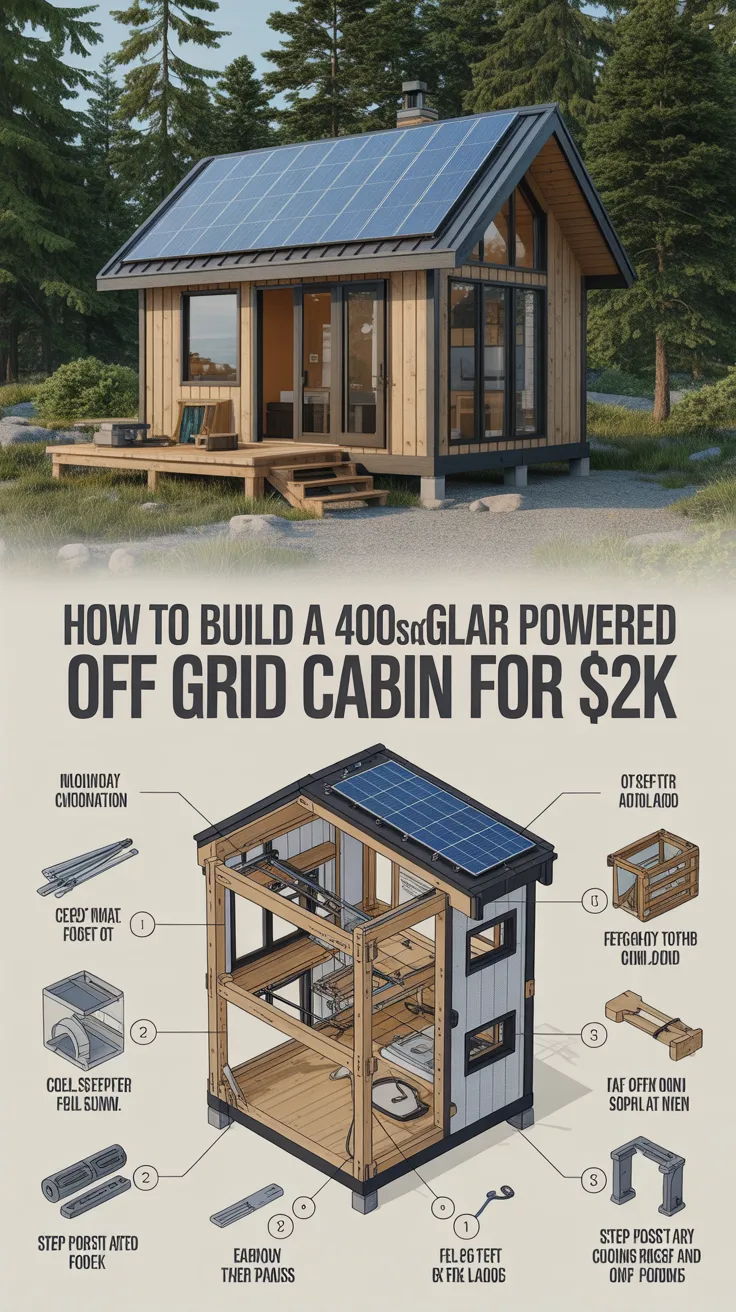
Building a simple, durable 400-square-foot off-grid cabin with solar on a $2,000 budget is possible if you prioritize needs, leverage reclaimed materials, and invest sweat equity. This guide shows how to build a 400sqft solar powered off grid cabin for $2k by focusing on a weather-tight shell, minimalist systems, and a smart micro-solar setup. You’ll get a practical roadmap from site and foundation to framing, power, water, heating, and interior finishes, with checklists you can tailor to your land, skills, and climate.
If you’re also planning resilient pantry strategies for off-grid life, consider practical, no-electricity food ideas in The Lost SuperFoods to complement your build.
Table of Contents
Budget strategy for How To Build a 400sqft Solar Powered Off Grid Cabin for $2k
Reaching a $2k total for a 400-sqft off-grid cabin stands on three pillars: reclaimed materials, simplified design, and doing nearly all the labor yourself. Think “dry-in first” and upgrade later. The goal is to create a safe, weatherproof envelope and basic systems; finishes and add-ons can come as funds allow.
- Footprint and shape: A simple rectangle like 16×24 (384 sqft) or 20×20 (400 sqft) keeps cuts and waste minimal. Straight lines, shed or gable roof, and standard lumber dimensions reduce cost.
- Design to materials: Let readily available salvaged materials inform final dimensions—e.g., if you find 8-foot wall sheathing and 12-foot metal roofing panels, size accordingly to reduce cutting and waste.
- Reclaimed sources: Habitat ReStore, demolition sales, Craigslist/Facebook Marketplace, farm auctions, and local contractors’ scrap piles can supply windows, doors, roofing tin, framing offcuts, housewrap, screws, and insulation pieces. Always inspect salvaged materials for structural soundness.
- Sweat equity and barter: Plan to frame, sheath, and roof yourself (or with friends). Barter for specialty skills you lack (e.g., a seasoned roofer in exchange for firewood or tools).
- Simplify systems: A micro-solar kit, gravity-fed water, and a basic wood stove cost far less than complex systems. Focus on efficient lighting, a small cook setup, and a manual water solution first.
- Phased spending: Allocate roughly 60–70% of your budget to the structure (foundation, frame, roofing, doors/windows) and 30–40% to systems (solar, water, heating). Keep 10–15% as a contingency for consumables (screws, sealants, blades).
Sample cost-saving targets (actual prices vary by region):
- Framing: Mix new and salvaged lumber; rip down longer pieces to needed dimensions.
- Roofing: Used corrugated metal is rugged and common on the used market.
- Windows/doors: One standard exterior door and two to three mismatched salvaged windows reduce spend and maximize light.
- Insulation: Patchwork insulation from surplus or reclaimed rigid foam is fine if safely installed with attention to air sealing.
Important: Codes and safety come first. Always confirm local requirements, set-backs, snow loads, wind zones, and fire restrictions, and consult qualified pros where needed.
Site planning, permits, and layout
Choosing where and how the cabin sits is the difference between an efficient, low-cost build and a constant maintenance drain. Your site decisions should support passive solar gains, storm resilience, drainage, and privacy.
- Orientation: In most northern hemisphere locations, face the long wall south for winter sun and natural light. Aim for an overhang that shades high summer sun while letting in low winter rays.
- Access and staging: Clear a level staging area for materials delivery and a flat spot for cutting and assembly. Keep a dry, elevated storage area for salvage to avoid warping and rot.
- Drainage: Pick high ground with a gentle slope for runoff. A 2% grade away from the cabin, plus gravel paths and a perimeter drip edge, keeps the foundation dry.
- Wind and trees: Use tree breaks strategically but avoid placing the cabin directly under large limbs susceptible to windfall.
- Water considerations: If you don’t have a well, plan rainwater catchment off the roof with first-flush diversion and a covered, opaque storage tank positioned uphill for gravity feed.
Permits and codes:
- Contact your local building department about structure size thresholds. Some regions allow small structures without full permits; others require permits for any permanent building.
- Even if permits aren’t required, follow best practices: proper footings, structural connections, fire clearances, and egress for emergency exit.
- Map your layout: Sketch a floor plan with minimal partitions—an open studio with a sleeping loft, kitchenette, and a small bath or composting-toilet closet makes the footprint feel larger.
Layout principles:
- Keep plumbing on one wall to simplify future upgrades.
- Plan a sheltered entry (a 4–6 foot overhang or a small porch) to protect doors from wind-driven rain.
- Map utility zones: a south wall for solar controller and batteries (shaded/ventilated), a north wall for storage, and a near-exterior area for a wood stove with a straight, short flue for draft.
With a clear plan, you’ll reduce trips to the store, purchase precisely, and sequence tasks to keep the project moving.
Foundation and floor system on a budget
On a $2k budget, you want a stable, well-drained base that doesn’t require heavy machinery. Choose a method that fits your soil, frost depth, and building codes.
Common low-cost options:
- Skid foundation: Two or three treated 6×6 skids on compacted gravel. Good for movable structures; quick to level with shims. Anchor with earth augers where wind is a concern.
- Deck blocks and beams: Pre-cast concrete deck blocks supporting treated beams. Fast and modular but requires careful layout and solid granular base.
- Pier-and-beam: Hand-dug piers to below frost depth (as required), poured concrete or pre-cast piers, carrying beams. More labor, but better for frost heave regions.
Steps overview:
- Clear and grade: Remove organics and create a compacted gravel pad (3–4 inches). Use a hand tamper or plate compactor if available.
- Layout: Square the footprint using the 3-4-5 triangle method. Run string lines and mark pier/block positions. Typical spacing: 6–8 feet between piers depending on beam size and loads—confirm with span tables or a pro.
- Set supports: Place skids, deck blocks, or piers. Shim with treated lumber, not scrap wood, and anchor if needed.
- Beams and joists: Install treated beams, then 2×6 or 2×8 joists 16–24 inches on center depending on span. Use joist hangers where appropriate and hurricane ties in high-wind areas.
- Subfloor: Use tongue-and-groove plywood or OSB, glued and screwed. Seal exposed edges with paint or preservative to resist moisture until under roof.
Moisture control:
- Install a ground vapor barrier (poly sheeting) where possible under the cabin.
- Maintain 6–8 inches of clearance and use wire mesh to keep critters out.
- Plan a drip edge around the perimeter with gravel or stone to avoid splash-back.
Safety and longevity:
- In snow country, prioritize pier-and-beam below frost with proper footings.
- In termite areas, use treated lumber and metal flashing barriers.
- Keep the structure skiddable if your local rules favor “temporary” buildings—this can simplify permitting and relocation.
This approach balances cost with reliability so your limited budget goes into the shell and roof quickly.
Framing and weatherproof shell
A tight, dry shell is the milestone that unlocks everything else. Keep the framing straightforward and stick with proven details. Your aim is a small, sturdy box with a simple roof that you can erect with basic tools.
Wall framing:
- Standard 2×4 studs at 16 or 24 inches on center. In low-load regions and with careful sheathing, 24 inches on center can reduce lumber costs.
- Headers only where needed; use insulated headers for exterior doors/windows if you can.
- Sheathe with plywood/OSB or use structural wall bracing if you’re using board-and-batten salvaged siding.
Roof framing:
- Shed roof: Fast, simple, and great for solar on the high side. A 3:12 to 4:12 pitch sheds rain and snow adequately in many regions; go steeper for heavy snow.
- Gable roof: Symmetry and classic look; slightly more cutting but easy to ventilate and insulate.
- Rafters: Use span tables to size rafters appropriately. Collar ties or rafter ties where needed. In high-wind/snow zones, consider added hurricane ties and ridge support.
Sheathing and weatherproofing:
- Install roof sheathing and roofing as soon as possible to protect the structure. Used corrugated metal roofing is inexpensive and durable—inspect for holes and add butyl tape where needed.
- Housewrap: Salvaged rolls are common; overlap seams correctly and tape them to cut drafts dramatically.
- Flashing: Prioritize proper flashing at windows, doors, and roof edges. Even scrap metal can serve as head flashing if bent carefully.
Windows and doors:
- Salvaged windows: Choose the best-conditioned units first. Place larger windows on the south wall for light; keep smaller ones on windward sides.
- Door: A solid-core exterior door with good weatherstripping beats a hollow interior door for security and heat retention.
Air sealing:
- Use caulk and foam to seal plate lines, rim joists, window/door gaps, and penetrations. Air sealing often delivers more comfort than high-R insulation on a tight budget.
Targeted insulation:
- Start with the roof/ceiling to reduce radiant heat loss/gain.
- Use patchwork rigid foam or batts; fill gaps with spray foam and tape seams on rigid foam.
Schedule tips:
- Frame walls flat on the deck, sheath them, then raise—faster and safer.
- Dry-in goal: Floor, walls, roof, housewrap, doors/windows, and temporary flashing within your first sustained work window, even if interior and exterior finishes wait.
Solar and power planning for How To Build a 400sqft Solar Powered Off Grid Cabin for $2k
A micro-solar system should match your real loads, not a wish list. Start with a load audit and target minimal-but-comfortable.
Essentials-first power philosophy:
- Lighting: 4–6 LED fixtures or 12V puck lights.
- Devices: Phone, headlamps, a laptop occasionally.
- Kitchen: Propane stove and kettle for cooking and hot water instead of electric appliances.
- Refrigeration: Start with a cooler or super-efficient DC/propane unit later; many owners skip a fridge initially to stay within budget.
- Water: Gravity and hand pumps beat high-draw electric pumps in the beginning.
System notes:
- Battery bank: Choose quality over size. One or two deep-cycle batteries can cover lights and device charging. Keep them in a ventilated, protected box inside the thermal envelope.
- Panels: A small array mounted on the roof or a ground rack oriented for optimal sun. Leave room to expand; wire conduit now even if the second panel arrives next season.
- Controller and inverter: A simple MPPT controller and a modest pure sine inverter (for AC loads you can’t do on DC) are sufficient. Put DC where possible—LED lighting and USB charging directly from DC saves conversion losses.
- Wiring: Use appropriately sized wire and fusing for all runs. Label circuits. Keep solar components accessible and shaded from heat.
Load management:
- Run high-draw tools on a generator during construction rather than oversizing your solar.
- Charge devices during peak sun. Schedule chores like pumping water for midday if you add a small pump later.
- Employ a kill-a-watt meter or similar to understand usage and avoid creeping loads that will force costly upgrades.
Roof angle and shading:
- If you choose a shed roof, pitch and orient it for your latitude. Avoid chimney shading by placing the flue away from the array or building a ground rack.
Expansion path:
- Pre-plan a second battery space, extra breaker positions, and cable pass-throughs. Budget now for a safe, tidy system later rather than improvising risky additions.
With a lean approach, you’ll have reliable lighting and charging without blowing the budget, and you can scale your system when funds allow.
Water, sanitation, heat, and ventilation
A comfortable off-grid cabin needs water handling, sanitation, safe heat, and fresh air. You can start simple and scale.
Water strategies:
- Rain catchment: Gutters, a leaf screen, and a first-flush diverter feeding food-grade barrels or a covered IBC tote. Keep tanks dark to limit algae. Elevate for gravity supply to a simple sink.
- Filtration: Use a gravity-fed filter for drinking water. For those wanting a compact, off-grid-friendly treatment approach, check out Aqua Tower or modular setups like SmartWaterBox that are designed to help with clean water independence.
- Surface water backup: If you have a creek or pond, pre-filter and then purify. Portable, low-power solutions can bridge seasonal dry spells; Joseph’s Well offers a practical, off-grid-friendly approach you can consider.
Sanitation:
- Composting toilet: DIY urine-diverting systems are effective and low-cost. Manage solids with cover material (sawdust, peat, or shredded leaves) and maintain a safe composting process separate from your living area.
- Graywater: Use a grease trap and mulch basin for sink water where permitted. Use biodegradable soaps and disperse subsurface to plants. Check local rules for graywater systems.
Heat:
- Small wood stove: Choose a tiny, efficient unit matched to your square footage. Keep clearances per manufacturer or NFPA guidelines. Use a proper thimble through the wall or ceiling and a straight flue for good draft.
- Insulation and air sealing: More heat stays inside when gaps are sealed. A tight cabin often uses far less wood than expected.
- Backup heat: Catalytic propane heaters can be supplemental where legal and ventilated appropriately.
Ventilation:
- Passive: Ridge vent or high/low vents encourage airflow. Operable windows on opposing walls help with cross-breeze.
- Mechanical: A small 12V fan for the kitchenette or bath area reduces moisture and cooking odors.
- Safety: Install CO and smoke detectors; keep a Class A/B/C fire extinguisher at exits and near the cooking area.
Hot water:
- Start with kettle-heated water for dishes and sponge baths. A black solar shower bag or coil can add comfort while keeping power needs near zero.
By choosing gravity systems, manual methods, and small, efficient appliances, you keep both costs and complexity down while still enjoying reliable essentials.
Interior choices that support How To Build a 400sqft Solar Powered Off Grid Cabin for $2k
Inside 400 sqft, every choice multiplies value. Make the space bright, flexible, and easy to heat.
Insulation and finishes:
- Insulate the ceiling heavily; walls next; floor if possible. Fill gaps meticulously.
- Interior wall finishes: Shiplap seconds, plywood with a clear coat, or reclaimed boards. Avoid heavy drywall mudding unless you want the look and can source material cheaply.
- Vapor control: Follow local best practices. In cold climates, a smart vapor retarder or careful air sealing plus balanced ventilation helps prevent moisture issues.
Space planning:
- Sleeping loft: A 6–8-foot-deep loft above the kitchen or entry maximizes floor area. Design safe access—a steep stair with storage underneath or a sturdy ladder.
- Multifunction zones: A fold-down table doubles as a desk and dining. A bench near the stove hides storage.
- Kitchenette: Two-burner propane stove, gravity-fed water to a single-basin sink, and open shelves for easy access.
Storage:
- Use vertical space with shelves up to the ceiling.
- Build a high, shallow cabinet run along one wall for pantry and tools.
- Hang frequently used items (mugs, pans, jackets) on pegs to keep counters clear.
Lighting and comfort:
- Place task lighting where you work—kitchen, desk, entry. Warm LED strips under shelves create a cozy vibe with minimal draw.
- Light wall colors and reflective finishes amplify daylight from small windows.
Safety and resilience:
- Keep a first-aid kit and reference material on hand. For self-reliant medical know-how tailored to austere conditions, Home Doctor can be a useful resource for learning practical skills and preparedness.
Helpful off-grid resources
- For pantry resilience and low-energy food strategies: The Lost SuperFoods
- For clean water independence and modular treatment ideas: SmartWaterBox and Aqua Tower
- For off-grid-friendly water sourcing concepts: Joseph’s Well
- For practical medical guidance when help is far: Home Doctor
These resources complement the build by reducing your reliance on grid infrastructure while keeping costs low.
Build timeline, tools, and cost control
A simple timeline keeps momentum high and mistakes low. Break the project into logical blocks and batch your purchasing.
Suggested timeline (weekend-warrior pacing):
- Week 1–2: Site prep, gravel pad, and foundation. Gather and sort all salvage; pre-cut anything you can.
- Week 3–4: Floor system and subfloor. Frame and raise walls. Sheathe and wrap.
- Week 5: Roof framing, sheathing, and install used metal roofing.
- Week 6: Doors and windows installed, flash and seal. Cabin is “dried in.”
- Week 7: Interior insulation and basic finishes in priority areas. Install minimal kitchen and sleeping loft.
- Week 8: Micro-solar setup, basic lighting, and test systems. Set up rain catchment and sanitation.
Tools list (borrow, rent, or buy used):
- Circular saw, drill/driver, hand saw, hammer, speed square, tape measures
- Level, string line, chalk line, pry bar, utility knife
- Safety gear: eye and ear protection, gloves, dust mask/respirator
- Ladder(s), sawhorses, and a few clamps
- Optional but helpful: generator for tools, nail gun, plate compactor
Budget controls:
- Buy screws and nails in bulk; fasteners consume more budget than you think.
- Track every receipt. Prioritize must-haves: roof, door, windows, housewrap, flashing.
- Say “no” to aesthetic upgrades until after dry-in and basic systems are done.
- Keep a “materials triage” corner: prioritize straightest lumber for structural spans and use less perfect salvaged boards for non-structural tasks.
Risk management:
- Weatherproof tarps on standby in case of unexpected storms.
- Store batteries, tools, and sensitive materials inside a locked trunk or shed.
- Before adding complexity (like a bigger inverter or pump), live in the cabin a few weeks to confirm your needs.
Staying disciplined with scope, materials, and sequencing is what turns a tight budget into a livable, resilient cabin.
Conclusion: your path to a durable, do-able homestead cabin
By focusing on a simple footprint, smart salvage, and essential systems, you’ve seen how to build a 400sqft solar powered off grid cabin for $2k without sacrificing safety or comfort. Dry-in fast, wire your micro-solar for the loads you actually use, start with gravity-fed water and a compact wood stove, and let real-life cabin time guide future upgrades. Each step compounds: the tight shell uses less heat, efficient lighting needs fewer panels, and a minimalist kitchen slashes power demand.
As you refine your plan, invest in knowledge that stretches your independence—clean water options like Aqua Tower or SmartWaterBox, food resilience with The Lost SuperFoods, and medical self-reliance from Home Doctor. With a clear plan and steady effort, your off-grid cabin can be affordable, comfortable, and truly yours.
FAQ
How realistic is it to build a 400 sqft off-grid cabin for $2,000?
- It’s realistic if you rely heavily on reclaimed materials, a simple structural design, and DIY labor. Expect to phase non-essential items, prioritize a weather-tight shell, and keep systems minimal at first. Costs vary by region; some builders hit $2k by using a skid foundation, salvaged windows/doors, used metal roofing, and a very small solar setup.
Do I need a permit for a small cabin like this?
- Requirements vary widely. Some areas allow small non-permanent structures without full permits; others require permits for any building. Even if not required, following structural best practices and safety codes is smart. Verify setbacks, snow/wind loads, and sanitation rules with your local building department before starting.
What size solar do I need for a 400 sqft cabin?
- Square footage doesn’t determine solar size—your power needs do. Start by listing loads: lights, device charging, and perhaps a small fan. A micro-solar setup can cover essentials if you avoid high-draw appliances. Plan conduit and extra space for future batteries and panels, then expand if you add a fridge or water pump later.
How can I handle water without a well?
- Begin with rain catchment from your roof into covered barrels or an IBC tote, then use gravity feed to a sink. Pair that with gravity filtration for drinking water. For more robust off-grid water independence, look at compact solutions like Aqua Tower, SmartWaterBox, or concepts from Joseph’s Well.
What are the key steps in how to build a 400sqft solar powered off grid cabin for $2k?
- Choose a simple footprint and orientation, set a low-cost foundation (skids or piers), frame and dry-in with salvaged materials, install used metal roofing, air-seal carefully, set up a micro-solar system for lights and charging, implement rain catchment with gravity-fed water, and use a small wood stove for heat. Finish the interior gradually and expand systems as budget allows.