
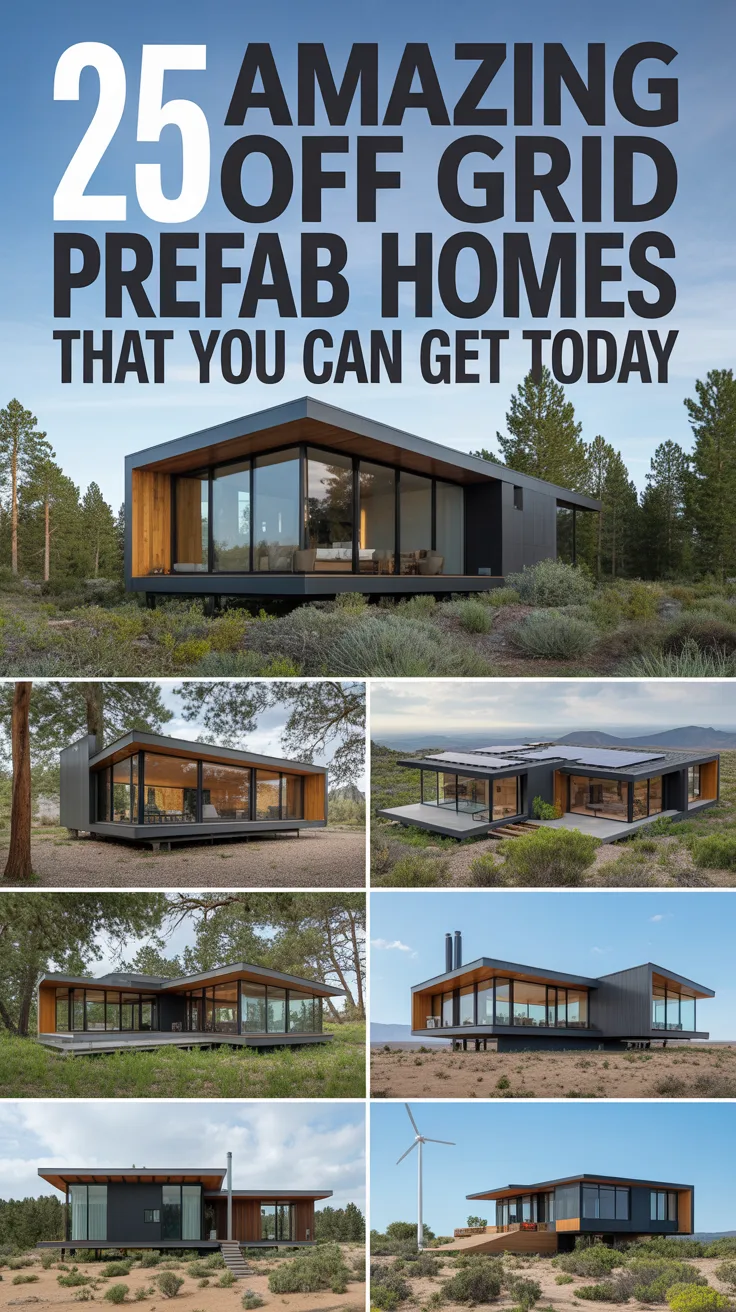
Looking for 25 amazing off grid prefab homes that you can get today? This guide maps the landscape of modern prefab options—from minimalist tiny cabins to family-sized modular builds and rugged alpine shelters—so you can match an off-grid-ready home to your climate, budget, and lifestyle. You’ll learn how to evaluate structure types, materials, utilities, and site logistics, and you’ll see 25 practical prefab profiles you can realistically pursue right now.
For true self-reliance, pair your prefab with resilient water independence. Many off-grid owners combine rain collection, filtration, and well access. Gear like SmartWaterBox, Aqua Tower, and Joseph’s Well can complement your home’s water plan with capture, filtration, and well-sourcing strategies.
Table of Contents
How to choose off grid prefab homes that truly work off grid
Prefab homes save time, reduce waste, and can be engineered for remote delivery, but “off grid” is more than solar panels—it’s a whole-home strategy. Start with three pillars:
- Structure and envelope: A tight, well-insulated shell lowers energy demand. Look for panelized or SIP (structural insulated panel) options, airtight doors/windows, and attention to thermal bridging. Good passive solar design—orientation, shaded glazing, roof overhangs—pays dividends in any climate.
- Systems and utilities: Plan early for solar PV, battery storage, generator integration, water capture, storage, and treatment, plus septic or composting toilets and greywater routing. Consider snow loads, wind exposure, wildfire risk, and freeze protection on plumbing.
- Site and logistics: Road access, crane/boom requirements, foundation type (piers, slab, helical piles), and building codes determine feasibility. Verify zoning, egress requirements, and any wildland-urban interface (WUI) rules. Prefab doesn’t bypass permitting—start those conversations early.
Key decision points:
- Climate fit: Choose materials and rooflines for your zone. A-frames and arched cabins shed snow; low, aerodynamic forms resist high winds; ember-resistant exteriors matter in wildfire areas.
- Size and layout: Smaller footprints are easier to heat, cool, and power. Lofts and mezzanines boost usable space in tiny models, while two-bedroom modulars support families.
- Delivery and assembly: Some kits are DIY-friendly; others require a set crew. Know what’s included (shell only vs. turnkey), lead times, and whether your site allows staging and crane work.
Budget and phasing:
- Many owners start with a core module and later add bedrooms, mudrooms, or screened porches. Prefab’s repeatable modules make phased growth easier.
- Think total cost of ownership: A better envelope and right-sized solar may cost more upfront but saves on batteries, fuel, and maintenance.
Water resilience:
- Rain harvesting and point-of-use filtration stack well with wells or hauled water. Consider redundancy for drought or freeze events. Tools like SmartWaterBox and Aqua Tower can help extend autonomy.
Below are 25 off-grid-capable prefab profiles you can explore today, organized by lifestyle and build style. Each outlines how the type fits off-grid usage, typical upgrades, and where it shines.
Tiny off grid prefab homes for solo living or couples
Compact prefabs are fast to place, easier to power, and ideal for remote plots with limited access. Here are five small-footprint profiles:
- SIP micro-cabin studio with loft
- Why it works: Super-insulated shell keeps heating loads low. Simple shed roof supports solar and snow shedding.
- Add-ons: Compact wood stove, 2–4 kW solar with modest battery, rain catchment, and composting toilet.
- Best for: Singles, weekend basecamps, guest suite.
- Panelized tiny cabin with front porch
- Why it works: Panelized walls make remote builds feasible without heavy cranes; porch adds solar shading and outdoor living.
- Add-ons: Propane on-demand water heater, small DC fridge, greywater irrigation for landscaping.
- Best for: Mild to mixed climates; budget-friendly starter.
- Modern cube tiny home with big glazing
- Why it works: Tight envelope, simple form; high windows for daylighting and stack ventilation.
- Add-ons: Thermal curtains, exterior shutters, or trellises; battery bank sized for winter autonomy.
- Best for: Sites with good passive solar exposure.
- Timber-frame micro-cottage with sleeping loft
- Why it works: Strong structure; traditional look. Open plan simplifies heating.
- Add-ons: Radiant floor via small electric or hydronic loop, small solar-plus-generator hybrid.
- Best for: Four-season getaway; aesthetic-driven owners.
- Minimalist bunkhouse module
- Why it works: Streamlined shell for quick deployment as a field office, studio, or bunk space.
- Add-ons: Portable solar suitcase, fold-out bed systems, compact kitchenette.
- Best for: Accessory dwelling near a main off-grid base.
Tips for tiny living:
- Prioritize envelope and ventilation. A small ERV/HRV improves air quality in tight spaces.
- Multi-use furniture and vertical storage keep clutter down.
- Right-size electrical loads—LED lighting and induction cooktops reduce inverter stress.
Container and steel-frame off grid prefab homes
Containers and steel-frame modules excel in durability and transportability. They can be craned into tight sites and withstand rough climates when properly insulated.
- Single 40-foot container studio
- Why it works: Rugged shell, rapid placement. With exterior insulation and cladding, it becomes a high-performing envelope.
- Add-ons: Roof-mounted solar, rain gutters into cisterns, reflective roofing for hot climates.
- Best for: Urban-edge or remote sites with limited staging area.
- Double-container one-bedroom with breezeway
- Why it works: Two boxes separated by a breezeway create cross-ventilation and shaded outdoor space.
- Add-ons: Sliding screens, planters for evap cooling, battery backup for shoulder seasons.
- Best for: Hot, sunny regions; simple expansion path.
- Container-plus-studio hybrid with rooftop deck
- Why it works: Adds outdoor living without expanding the footprint; great for stargazing and wildlife viewing.
- Add-ons: Exterior staircase with integrated storage, water barrels under the deck.
- Best for: Scenic sites with caps on building footprint.
- Steel-frame modular cabin with wide eaves
- Why it works: Precise factory build, open spans, and deep overhangs for storm protection and solar control.
- Add-ons: Prewired for microinverters, integrated gutter guards, screened mudroom.
- Best for: Windy or hurricane-prone zones (verify local code requirements).
- Fold-out steel module with rapid setup
- Why it works: Collapsible design minimizes shipping volume; unfolds on piers for immediate use.
- Add-ons: Plug-and-play solar kit, portable water treatment, composting loo.
- Best for: Seasonal or emergency shelter that can later serve as guesthouse.
Container/steel notes:
- Insulation is key—exterior rigid insulation prevents interior space loss and mitigates condensation.
- Use corrosion-resistant details and thermal breaks around frames and openings.
- Plan bolt-downs/tie-downs for high-wind areas.
For independent water on rugged sites, a modular approach helps: consider Joseph’s Well for well-planning strategies and SmartWaterBox for catchment-to-filtration kits.
Alpine A-frames, arches, and domes for wild climates
When snow, wind, or seismic conditions challenge builds, certain shapes shine. These forms shed loads naturally and can be panelized for faster assembly.
- Compact A-frame with dormers
- Why it works: Sloped walls shed snow; small footprint reduces heat demand.
- Add-ons: Triple-pane skylights with shades, foam under slab or insulated piers, air-sealed ridge.
- Best for: Mountain or lake regions with heavy snow.
- Modern A-frame with extended eaves
- Why it works: Extended eaves create protected entries and sun control; generous glazing on gables adds views.
- Add-ons: High-efficiency heat pump, PV array on south roof face, wood stove backup.
- Best for: Four-season living with variable weather.
- Arched cabin with corrugated shell
- Why it works: Curved profile resists wind and sheds snow; simple kit assembly with minimal framing.
- Add-ons: Insulated liner panels, vestibule airlock, storm-rated doors.
- Best for: Open plains or ridge-top sites.
- Geodesic dome cabin
- Why it works: Strong geometry, efficient enclosure; panelized triangles assemble quickly with a small crew.
- Add-ons: Ventilation dome, selective glazing, interior partitions for privacy and acoustics.
- Best for: DIY-minded owners in mixed climates; event or retreat spaces.
- Semi-buried earth-sheltered module
- Why it works: Uses thermal mass and earth coverage to stabilize temperatures, reduces wind exposure.
- Add-ons: Drainage mats, waterproofing membranes, controlled ventilation, daylight wells.
- Best for: Harsh temps, high winds, or noise-sensitive areas.
Performance tips:
- Airtightness matters as much as R-values in cold, windy zones—test and seal before finishes.
- Plan for snow retention or controlled shedding at entries.
- Balance glass area with thermal performance; add exterior shutters or insulated curtains.
Family-ready modular off grid prefab homes
Families need storage, separation, and long-term durability. Modular systems scale up without losing efficiency—and remain off-grid friendly with the right design.
- Two-bedroom modular cabin with mudroom
- Why it works: Dedicated gear zone keeps living areas clean; two true bedrooms for privacy.
- Add-ons: Boot dryer nook, wash sink in mudroom, ceiling fans for low-energy comfort.
- Best for: Active families in wet or snowy climates.
- L-shaped modular with covered outdoor room
- Why it works: L-shape creates a sheltered courtyard; covered space functions as summer living room.
- Add-ons: Outdoor kitchen stub-outs, retractable screens, rain chains feeding planters.
- Best for: Temperate climates with indoor-outdoor living.
- Split-level modular with workspace
- Why it works: Slight elevation change separates work from family areas; flexible room as office or homeschool.
- Add-ons: Hardwired ethernet, DC lighting in work zone, acoustic treatments.
- Best for: Remote workers who need quiet and power efficiency.
- Three-module family home with bunk room
- Why it works: Central great room, primary suite, and a kids’ wing with bunks; easy to zone heating/cooling.
- Add-ons: Zonal mini-splits, insulated interior doors, blackout shades for naps.
- Best for: Growing families and long stays off-grid.
- Courtyard modular with dog-trot breezeway
- Why it works: Historic dog-trot concept ventilates naturally; courtyard protects from wind and creates play space.
- Add-ons: Outdoor shower for gear rinse, hose bibs on off-grid pump circuit.
- Best for: Warm climates, homesteads with pets and kids.
Family systems to prioritize:
- Larger cisterns (rain + well) and robust filtration for cooking and drinking; backup transfer pump.
- Hybrid energy: Solar/battery as primary, generator for storms or heavy loads, efficient appliances throughout.
- Plenty of closed storage for staples; a long-stay pantry pairs well with resources like The Lost SuperFoods for shelf-stable meal planning.
Natural and hybrid prefabs with low embodied carbon
Reducing embodied carbon while boosting comfort is easier with natural or hybrid systems. Many are kit or panel-based and compatible with off-grid goals.
- Straw-insulated panel cabin
- Why it works: Bio-based insulation with excellent thermal and acoustic properties; breathable wall assemblies.
- Add-ons: Lime/clay plasters, deep window wells with shading shelves, solar-ready roof.
- Best for: Dry to mixed climates with attention to detailing.
- Hemp-lime (hempcrete) panel micro-home
- Why it works: Hygric buffering improves moisture stability; good fire resistance when finished properly.
- Add-ons: Wood stove with outside air kit, radiant slab, natural-fiber finishes.
- Best for: Owners prioritizing indoor air quality and sustainability.
- Timber-and-SIP hybrid cottage
- Why it works: Timber frame provides structure and aesthetics; SIPs deliver thermal performance and speed.
- Add-ons: Energy recovery ventilation, window overhangs, high-solar-gain glazing on south.
- Best for: Four-season living with balanced design goals.
Natural build notes:
- Breathable assemblies still need airtightness layers and vapor-smart membranes.
- Detail jambs, sills, and penetrations meticulously to prevent moisture issues.
- Choose finishes compatible with the wall system (e.g., mineral paints, lime plasters).
Helpful off-grid add-ons to pair with these builds:
- Water independence: Aqua Tower for capture/filtration, SmartWaterBox for compact treatment workflows.
- Health resilience: Home Doctor as a practical reference for remote living, and pantry planning with The Lost SuperFoods.
Mobile, expandable, and seasonal off grid prefab options
Not every off-grid path is a permanent foundation. Mobile or semi-permanent units let you start sooner, test a site, or add seasonal capacity.
- Park-model tiny home with wide porch
- Why it works: Larger than a typical tiny house on wheels, yet still movable with proper hauling; porch increases living space without big energy loads.
- Add-ons: Skirting for winter, quick-connect solar, portable water tank plus filtration.
- Best for: Seasonal sites or phased homestead builds.
- Expandable cabin with plug-in modules
- Why it works: Start with a core unit (kitchen/bath/living) and add bedroom or office modules later; easy to adapt as needs change.
- Add-ons: Prewired expansion ports, extra roof stubs for PV, gutter-ready fascia for future rain capture.
- Best for: Budget-staged builds or growing families.
Mobility tips:
- Verify transport regulations, width/height limits, and escorts for delivery.
- Design utility quick-connects (water, power, waste) for fast setup and takedown.
- Use adjustable pier foundations or ground screws to maintain level without heavy excavation.
Seasonal playbook:
- Drain-back plumbing and freeze protection for shoulder seasons.
- Shade sails or pergolas for hot months; windbreak planting for winter.
- Modular furnishings that store easily when moving or winterizing.
Power, water, and waste systems that close the off-grid loop
Your prefab becomes truly off-grid when its infrastructure matches the envelope’s efficiency. Think in layers and redundancies.
Power:
- Solar as baseline: Aim for orientation and roof pitch that optimize production in your worst month. Keep wiring runs short and tidy, with room for future panels.
- Battery strategy: Balance daily depth of discharge and winter autonomy. Even with a stout bank, a backup generator avoids oversizing batteries.
- Loads: Choose inverter-friendly appliances—induction cooktops, heat pump water heaters, mini-split heating/cooling, and DC lighting where practical.
Water:
- Sources: Roof catchment into cistern plus a drilled well (where feasible) provides redundancy. Consider Joseph’s Well for planning and SmartWaterBox for compact treatment setups.
- Treatment: Multi-stage—sediment, carbon, and final purification for drinking taps. Freeze-protect storage and lines with insulation and heat trace where required.
- Conservation: Low-flow fixtures, foot-pedal sinks, and drought-tolerant landscaping reduce demand.
Waste:
- Toilets: Composting or incinerating toilets bypass septic where soil conditions or permits are challenging. If using septic, size tanks and leach fields for your soil and occupancy.
- Greywater: Route laundry/shower water to subsurface irrigation where allowed. Use plant-safe soaps.
Fire, wind, and storm readiness:
- Ember-resistant exteriors (metal or fiber-cement), screened vents, and defensible space in wildfire zones.
- Hurricane clips, continuous load paths, and impact-rated openings in storm regions.
- Elevate critical systems in flood-prone sites; seal penetrations.
Health and preparedness:
- Stock a comprehensive medical reference like Home Doctor and a durable pantry strategy, with ideas from The Lost SuperFoods.
Permitting, delivery, and the path from order to move-in
Even “turnkey” prefab projects involve steps you’ll want to choreograph early.
- Due diligence: Confirm zoning (ADU vs. primary dwelling), setbacks, height limits, occupancy rules, and utility requirements. Ask specifically about off-grid systems and fire code compliance if you’re in WUI territories.
- Foundations: Piers, helical piles, or slabs—choose based on soil reports, frost depth, and access. Helical piles can be minimally invasive and fast to install for remote sites.
- Access: Measure road widths, turning radii, bridge load limits, and overhead lines. Plan staging areas and crane reach; sometimes tree trimming or temporary road mats are needed.
- Contracts and inclusions: Clarify what’s included (shell, windows, interior finishes, appliances) and what’s by others (site work, foundation, hookup, septic). Ask about lead times and storage if your site isn’t ready.
- Inspections: Factory inspections may be part of modular programs; you’ll still need local sign-offs for foundations, tie-downs, and systems.
- Commissioning: Test airtightness, ventilation balances, plumbing pressure, and electrical safety. Walk through solar settings, generator transfer procedures, and maintenance schedules.
Contingency planning:
- Weather wiggles schedules—have flexible dates for crane work and deliveries.
- Keep a small generator or battery pack for tools during setup.
- Stage water for construction use, then transition to your permanent system (a good time to implement Aqua Tower or SmartWaterBox).
Cost, financing, and long-term maintenance
Off-grid prefab budgets vary by region, finish level, and site complexity. While exact costs depend on quotes, you can plan intelligently:
- Total project view: Combine unit cost, shipping, crane, foundation, site work, solar/battery, water/septic, permits, and contingency. Remote sites often need a higher contingency.
- Phased builds: Start with a smaller module and add bedrooms or porches later; buy core solar now, plan additional panels and batteries as needs grow.
- Financing: Some lenders finance prefabs similarly to modular homes if they are placed on a permanent foundation and meet local codes. Off-grid systems can sometimes be included; ask about appraisals that reflect solar/battery value.
Operating costs:
- Energy: A tight envelope and efficient appliances reduce battery cycles and generator runtime.
- Water: Filter changes, pump maintenance, and periodic cistern cleaning. In cold climates, annual freeze checks pay off.
- Waste: Composting systems require routine management; septic needs regular inspection and pumping.
Maintenance planning:
- Keep a seasonal checklist—roof, gutters, filters, fireproofing, alarm tests, and battery health checks.
- Track spare parts: filters, pump seals, inverter fuses, and weatherstripping.
- Train household members on power-down procedures, generator safety, and water sanitation best practices.
Preparedness and comfort:
- A small library of practical references and a well-curated pantry can turn storms or outages into non-events. Consider Home Doctor and The Lost SuperFoods as part of your on-site kit.
Conclusion
The 25 amazing off grid prefab homes that you can get today span tiny SIP studios, rugged containers, cozy A-frames, modular family layouts, and low-carbon hybrids—each capable of true independence when paired with the right systems. Start with a well-insulated envelope, match your structure to climate, and design power, water, and waste with redundancy. Whether you begin with a compact module or a full family plan, the off-grid lifestyle is more attainable than ever with modern prefabs, smart utilities, and a bit of foresight.
Frequently Asked Questions
How do I size solar and batteries for off grid prefab homes?
- Begin with your daily energy load (kWh), then design for your lowest-production month. Right-size panels for winter sun in your location and choose batteries that cover at least 1–2 days of autonomy, with a generator as backup. Work with a local installer to account for shading, roof pitch, and temperature.
Are composting toilets allowed in most places for off grid prefab homes?
- It depends on local codes and health department rules. Many jurisdictions allow them with conditions, and some still require a greywater or septic system. Check regulations early to avoid design changes later.
What’s the best foundation for off-grid prefab units on difficult terrain?
- Helical piles or piers are popular for remote, sloped, or rocky sites because they minimize excavation and can be installed quickly. However, soil tests and local code guidance should drive the final decision.
Can I expand later if I start with a small prefab?
- Yes. Many prefab systems are modular, allowing future additions such as bedrooms, mudrooms, or covered outdoor spaces. Plan utility chases, structural tie-in points, and rooflines to make later phases seamless.
How do I ensure reliable water off-grid year-round?
- Combine multiple sources and treatments: rain capture into cisterns, a well if feasible, and robust filtration for drinking. Freeze-protect lines and tanks in cold climates. Solutions like SmartWaterBox, Aqua Tower, and planning aids like Joseph’s Well can help build redundancy.