
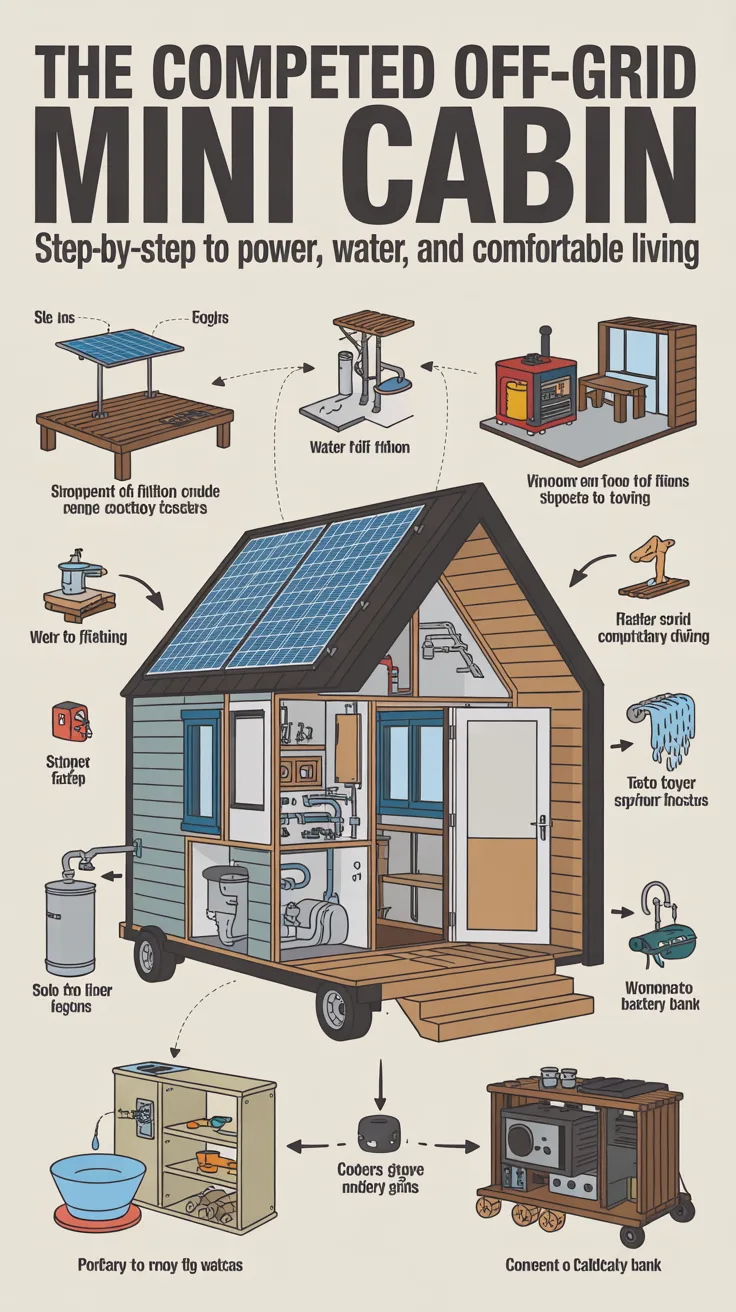
A finished off-grid build is more than four walls and a roof—it’s a resilient home that keeps you safe, powered, hydrated, fed, and comfortable year-round. In this guide, we break down The Completed Off-Grid Mini Cabin from site planning to energy, water, waste, heating, food, and ongoing maintenance so you can confidently cross the finish line without costly rework. If you’re setting up water independence right now, consider pairing your cabin with a reliable, compact solution like Aqua Tower to secure safe, off-grid water delivery.
Table of Contents
What “Completed” Really Means for an Off-Grid Mini Cabin
“Completed” in an off-grid context is about function, not just finish. A tiny cabin can look great in photos while hiding weaknesses in energy balance, moisture control, or sanitation. A truly finished mini cabin integrates structure, systems, and routines that hold up to real-life changes—seasonal weather, extended stays, guests, and minor emergencies—without daily micromanagement.
A complete mini cabin typically includes:
- A sealed, insulated shell that handles wind, rain, snow load, and temperature swings.
- A right-sized solar power system with storage, and a backup plan (generator or alternative energy).
- Water sourcing (groundwater, well, or rainwater), portable storage, and basic treatment.
- Waste management (composting or septic) sized for actual usage.
- Safe heating and cooking (wood, propane, or efficient electric), with ventilation and detectors.
- Food storage and indoor prep space that works in winter and summer.
- A maintenance plan, spares, and a system for monitoring key cabin metrics.
Design decisions cascade. For example, your insulation level (R-value), air sealing, and window placement directly affect how large a solar array or battery bank you’ll need. A well-managed shell reduces energy demand, making power and heating easier to manage.
Practicality is your north star. The best off-grid setups avoid extreme complexity. Choose systems you can maintain with basic tools and minimal parts. If a component fails, you should be able to limp along gracefully until you can fix it. That could mean a gravity-fed water option, a manual pump, or a secondary heat source in case the primary goes down.
Key mindset shifts:
- Build for the worst week, not the average day. Size systems for cold snaps, cloudy stretches, and high-use weekends.
- Plan your “Plan B.” Every critical system gets a backup: lights, cooking, water, heat.
- Standardize and simplify. The fewer specialized parts you need, the more resilient you’ll be.
By defining “completed” as a reliable life-support system—not a decorative build—you’ll prioritize what actually matters and avoid the trap of endless tweaks.
Site Selection, Layout, and Passive Design for a Year-Round Cabin
The strongest off-grid cabins begin with a good site. Before placing posts or pouring footings, consider sun path, wind, water, and access. A south-facing aspect (in the Northern Hemisphere) allows passive solar gain in winter and supports solar panels with shorter wiring runs. Aim to position the cabin above the high-water mark with gentle drainage away from the structure. Avoid frost pockets and look for windbreaks from evergreen stands on the prevailing-wind side.
Passive design optimizes comfort without electric load:
- Window placement: Larger windows on the south for winter warmth; smaller, well-shaded windows east and west to reduce summer heat gain.
- Overhangs and shading: Size roof overhangs to block high summer sun while letting in low winter sun. Add exterior shutters or thermal curtains.
- Thermal mass: Interior masonry or water barrels near sunlit areas can stabilize temperature swings.
- Cross ventilation: Place operable windows or vents to flush hot air and moisture.
Layout for function:
- Entry/mud area with hooks and bench to protect interiors from mud and snow.
- Mechanical corner or wall dedicated to power electronics (inverter, charge controller, breakers) with ventilation and clearances.
- Wet wall alignment: Group kitchen and bathroom plumbing to simplify piping and freeze protection.
- Storage lofts and under-bench compartments to keep floors clear.
Access matters. Year-round reach via gravel drive or a maintained track prevents your cabin from becoming unreachable after storms. Consider turnarounds for delivery trucks or a trailer, and designate a staging area for firewood, propane, or water containers.
Environmental realities:
- Fire safety: Establish defensible space, clear brush, and choose non-flammable exterior materials where wildfire risk exists.
- Water behavior: Observe the site in heavy rain. Mark swales, plan french drains if needed, and keep foundations out of runoff paths.
- Snow country: Plan for roof pitch and snow shedding. Keep door swings clear of drifting zones.
A thoughtful site and passive strategy reduces the size and cost of active systems later, shaping a mini cabin that’s easier to power, heat, and maintain.
Structure, Shell, and Insulation That Beat Weather and Time
A durable shell is the foundation of off-grid comfort. Choose a foundation suited to soil, frost depth, and load: pier-and-beam for speed and low impact; helical piles for soft or wet ground; or a small slab with rigid insulation in colder zones. Make sure footings are below frost line and that you have hardware to resist uplift and lateral loads.
Framing options:
- Conventional 2x framing is flexible and easy to repair.
- Structural insulated panels (SIPs) can speed construction with high R-values, though they can be harder to modify later.
- Advanced framing (24” on center, aligned loads) reduces thermal bridging and saves material.
Air sealing and insulation are where many tiny builds fail. Use a continuous air barrier, properly sealed at joints and penetrations. Insulate to local climate recommendations: a target might be R-21 to R-30 in walls for cold climates, higher in the roof (R-38 to R-49). Don’t forget the floor—uninsulated floors are a common source of heat loss in mini cabins.
Moisture management:
- Install a smart vapor retarder or appropriate layering so your wall assembly can dry in at least one direction.
- Flash and seal around windows and doors meticulously.
- Ventilate the roof with a proper intake and ridge vent to avoid condensation.
Exterior finishes should be tough, low-maintenance, and fire-aware: metal roofing for longevity and snow shedding, fiber-cement or charred wood siding, and insect-resistant trims. Use quality fasteners and flashing details—these small choices prevent costly rot and leaks.
Doors and windows are worth investing in. High-quality, properly installed units reduce drafts and improve comfort. Add storm doors/screens and thermal curtains for seasonal flexibility.
Checklist to finish the shell:
- Continuous air barrier verified with a simple blower test or incense/smoke check.
- Window/door sill pans and head flashing taped and waterproofed.
- Roof penetrations (stove pipe, vents) flashed and fire-stopped to code.
- Exterior drainage plane (housewrap or rainscreen) with consistent overlaps.
- Kick-out flashing at roof-to-wall transitions.
With a tight, insulated shell, your power and heat systems can be smaller, cheaper, and more reliable. It’s the single best investment you can make in a truly completed off-grid mini cabin.
Power Systems That Just Work: Solar, Storage, and Backup
A dependable power system aligns energy generation, storage, and usage. Start with a simple load audit: list all appliances and devices, their wattage, and estimated daily hours. Add seasonal differences—winter lighting is longer, and heating fans may run more.
Core components:
- Solar array: Right-size your panels to cover your average daily load with margin for cloudy periods. Fixed racks are simple; adjustable tilt racks squeeze more from winter sun.
- Charge controller: MPPT controllers improve harvest efficiency from modern panels.
- Battery bank: Lithium (LiFePO4) offers high cycle life, deep discharge, and low maintenance. Lead-acid can work if budget demands, but they prefer shallower discharges and more frequent maintenance.
- Inverter/charger: Choose a pure sine wave inverter sized for surge loads (fridge, well pump). A combined inverter/charger simplifies generator integration.
Design principles:
- Keep wire runs short and sized appropriately to minimize voltage drop and heat.
- Isolate electronics in a ventilated, non-dusty space away from direct heat.
- Add a system monitor so you can read state of charge (SOC), voltages, and alerts at a glance.
Backup plans:
- A small, efficient generator paired with your inverter/charger sustains you during multi-day storms.
- DC lighting or a dedicated low-voltage circuit can be a lifesaver if the inverter fails.
- Redundant charging: portable folding panels or an alternator charge line from a vehicle in a pinch.
Appliance selection:
- Favor DC or super-efficient AC options: DC fridge/freezers, induction cooktop, LED lighting, and a variable-speed water pump.
- Avoid hidden loads: idle electronics, chargers, and entertainment systems. Install switched outlets or a power strip to fully cut power when not in use.
Safety and code:
- Proper overcurrent protection and disconnects at array, controller, battery, and inverter.
- Grounding and bonding according to manufacturer instructions and local code.
- CO and smoke detectors, and clear labeling on your electrical panel.
When designed with margin and simplicity, your power system becomes boring—which is exactly what you want. Check SOC each morning, plan heavy loads on sunny days, and let the system quietly support daily life.
Off-Grid Water and Waste Without the Headaches
Water is where many off-grid builds stumble. Decide early how you’ll source, store, treat, and distribute water—and what you’ll do with what goes down the drain.
Sourcing:
- Groundwater/well: Reliable, but consider drilling costs and pump energy. A high-efficiency pump with a small pressure tank can work well.
- Rainwater harvesting: A metal roof with gutters feeding first-flush diverters and food-grade tanks is a compact, clean solution. Size storage for dry spells.
- Surface water: Requires robust filtration, treatment, and seasonal planning.
Treatment and delivery:
- Use multi-stage filtration (sediment + carbon) and, if needed, a final treatment step like UV or boiling for drinking water.
- Gravity-fed systems are quiet and resilient; a small pressure pump can add convenience.
- For compact, versatile setups, a portable tower or modular system like Aqua Tower can simplify off-grid water independence with minimal power draw.
- If you’re exploring well-based solutions or manual-draw backups, consider Joseph’s Well as a supplemental approach for reliable water access without grid dependence.
- For storage and emergency backup, a space-saving system such as SmartWaterBox helps you keep potable reserves on hand without complicating your core plumbing.
Waste and sanitation:
- Composting toilets are the go-to for mini cabins. Choose a model appropriate for your expected usage. Vent lines need short, straight runs with proper caps to avoid odors.
- Urine diversion reduces moisture and speeds composting. Maintain a regular emptying and compost management routine.
- Graywater: Keep soaps biodegradable. Use a simple mulch basin or subsurface dispersion where allowed. In freezing climates, insulate or drain-down seasonal lines.
- Septic is an option where permitted and budget allows. It adds cost and complexity but can be set-and-forget for larger use.
Freeze protection:
- Keep plumbing runs short, insulated, and interior when possible.
- Use heat tape on vulnerable sections and design for easy drain-down when leaving for extended periods.
- Bury exterior lines below frost depth and protect tanks from ice load with insulation or earth berming.
Monitoring and maintenance:
- Check filters on a schedule; keep spares in a sealed bin.
- Sanitize storage tanks periodically.
- Label shutoffs and maintain a simple diagram of your system.
A well-designed water and waste plan makes your cabin feel like a home—hot tea on demand, clean dishes, and no lingering worries about what happens after you flush or drain.
Food, Heat, and Health for Long-Term Self-Reliance
Heat, food, and health care complete the living picture. For most small cabins, a high-efficiency wood stove or direct-vent propane heater provides reliable primary heat. Size the stove to the cubic footage and insulation level; oversizing leads to hot-and-cold cycles and wasted fuel, while undersizing leaves you chasing the thermostat.
Heating best practices:
- Install a proper hearth, wall shielding, and clearances. Use double-wall pipe where required and stainless for roof penetrations.
- Combine heating with insulation upgrades and thermal curtains.
- Keep a week’s worth of dry firewood under cover, plus kindling and fire starters.
Cooking and hot water:
- An induction cooktop powered by solar on sunny days is efficient; propane backups cover cloudy weeks.
- For hot water, consider on-demand propane heaters with low flow requirements, or a small tank water heater that you can run mid-day on surplus solar.
Food storage and preparedness:
- Compact DC/efficient AC fridges paired with a small chest freezer handle staples.
- Shelf-stable pantry goods minimize dependency on runs to town. If you want inspiration and techniques for durable recipes, preservation, and nutrient-dense staples, The Lost SuperFoods offers ideas for resilient food planning that suit a mini cabin lifestyle.
Health readiness:
- Stock a first-aid kit, medications, and duplicates of critical prescriptions.
- Keep a non-electric blood pressure cuff, thermometer, and basic emergency tools.
- For practical, at-home medical guidance when you’re far from assistance, Home Doctor can complement your kit with step-by-step strategies for common issues.
Resilience for disruptions:
- Store a 2–4 week buffer of water and food.
- Maintain a simple rotation system for pantry items to avoid waste.
- For broader self-reliance and contingency planning (storms, supply chain hiccups), resources like New Survival Offer: Dark Reset can help you think through layered preparedness without turning your cabin into a bunker.
Comfort is a system: dry wood, reliable heat, easy meals, and basic medical knowledge. When these elements work together, your mini cabin shifts from “survivable” to truly livable.
Finishes, Smart Storage, Security, and Maintenance for the Long Haul
Interior finishes in a mini cabin should be durable, easy to clean, and light-reflective. Pale woods, lighter paints, and matte surfaces reduce glare while brightening small spaces. Use water-resistant materials in the kitchen and bath zones: sealed butcher block or compact laminate for counters, waterproof wall panels near sinks, and non-slip vinyl or tile in wet areas.
Smart storage:
- Vertical space: wall-mounted racks, pegboards, and ceiling tracks for seasonal gear.
- Built-ins: under-bed drawers, window-seat benches, and toe-kick pullouts increase cubic capacity.
- Multipurpose furniture: a fold-down table, a couch that hides blankets and tools, or modular crates that double as steps.
Security and safety:
- Solid door hardware, window locks, and motion lights at entries.
- A small safe or hidden lockbox for documents and backups (USBs with system manuals, photos of inventory for insurance).
- Fire extinguishers at key points: kitchen, near the stove, and in the mechanical zone.
- Detectors: smoke, CO, and propane leak detectors, tested monthly.
- Window coverings that provide privacy and insulation.
Maintenance rhythm:
- Weekly: quick check of battery SOC, water levels, fuel (propane/wood), and a visual scan for leaks or pests.
- Monthly: panel cleaning, filter changes, roof inspection from the ground (binoculars work), and check seals around penetrations.
- Seasonal: deep-clean gutters, test drain-down procedure, inspect chimney, and re-seal exterior wood where needed.
Documentation and redundancy:
- Keep a binder and a digital copy (offline) of manuals, serial numbers, and wiring/plumbing diagrams.
- Store spare fuses, water filters, heater gaskets, and critical fasteners.
- Maintain a simple tool kit: multimeter, crimpers, plumbing patches, and roof repair tape.
Recommended off-grid resources:
- Water independence and storage: Aqua Tower and SmartWaterBox
- Well/backup hand-draw concepts: Joseph’s Well
- Food resilience: The Lost SuperFoods
- Medical self-reliance: Home Doctor
- Big-picture preparedness: New Survival Offer: Dark Reset
Action cue:
- This week, finalize your water plan and stock spares. Next week, run a full-system test weekend—no grid, real menus, real showers—and note every friction point to iron out.
Budget, Timeline, and Legal Basics That Keep Projects Moving
Money and time slip away in small increments. Define the minimum viable completion for your cabin—what makes it livable now—and what upgrades can wait. Then budget in layers.
Budget strategies:
- Envelope first: shell, windows, doors. Every dollar here pays back in comfort and smaller systems later.
- Systems with redundancy: buy the quality core (charge controller, inverter) and add panel capacity as funds allow.
- Tiered fixtures: install the basics (e.g., standard faucet) and upgrade to premium touch points later.
Common timeline risks:
- Supply delays for specialty windows, stoves, or electrical components.
- Weather windows for foundation and roofing.
- Inspection or permit scheduling in jurisdictions that require them.
Permits and compliance vary widely. Some areas allow small structures under certain square footage with minimal permitting; others require engineering for foundations, septic approvals, or electrical permits. Even off-grid cabins benefit from a quick conversation with local authorities to avoid surprise fines or forced rework. If you choose to build in a gray area, at least adhere to structural and safety best practices, and document your work.
Soft costs and contingencies:
- Add 10–20% contingency for materials.
- Budget for delivery fees to rural sites.
- Include recurring costs: filters, gaskets, chimney cleaning, and battery replacements on multi-year horizons.
Milestones to the finish line:
- Weather-tight shell with functioning doors/windows.
- Power online with safe distribution and labeled circuits.
- Water in, waste managed, and freeze protection tested.
- Heat source installed and chimney/venting certified safe.
- Interior fixtures set, storage solutions in, and a stocked pantry.
When you control budget scope and protect your schedule from predictable bottlenecks, “almost done” turns into The Completed Off-Grid Mini Cabin—on time and without financial whiplash.
Seasonal Operations, Winterization, and Off-Season Care
A cabin that’s delightful in September can be punishing in February if you skip seasonal planning. Prioritize winterization and summer heat strategies so you’re never caught off guard.
Winter readiness:
- Insulate and seal: draft snakes, foam gaskets on outlet boxes, door sweeps, and weatherstripping.
- Heat distribution: a small, silent fan or doorway transfer grille moves heat to lofts or closed rooms.
- Freeze defense: heat tape on vulnerable runs, insulated tank enclosures, and a clear drain-down process if you leave for weeks. Keep a laminated checklist by the door.
- Fuel buffers: minimum two weeks of split, dry wood and a spare propane cylinder. Store them safely and upright.
Snow and ice:
- Roof rake to reduce eave ice load; mind ladder safety.
- Keep paths to wood storage, tanks, and generator clear.
- Vent pipes and intakes must remain unobstructed.
Summer strategy:
- Shade awnings, light-colored exterior finishes, and reflective window films for west windows.
- Dehumidification if your area is humid; even a small, efficient unit preserves finishes and prevents mold.
- Pest control: screens in good shape, sealed penetrations, and stored food in rodent-proof containers.
Off-season care:
- If you leave the cabin for long periods, shut off water at a master valve and drain fixtures.
- Unplug non-essential loads; leave critical monitors running if they protect batteries or security.
- Photograph critical areas before leaving—helpful for insurance and change detection.
Dry runs:
- Practice a mock winter storm: two cloudy days with limited generator use. Note what runs short and what’s overbuilt, then adjust.
- Test the drain-down and restart procedure; time it, label valves, and update your checklist.
Seasonal mastery turns your cabin into a place you trust. The systems you need are either insulated, redundant, or easy to restart—no guesswork, no drama.
Troubleshooting, Redundancy, and Everyday Routines
Even the best systems need attention. Build routines that prevent problems and make fixes straightforward.
Daily/weekly rhythms:
- Morning check: battery SOC, water tank level, and stove ash. Five minutes saves surprises.
- Sunny-day tasks: wash laundry, run hot water cycles, and charge tool batteries at midday when solar surplus is highest.
- Evening closure: secure doors/windows, set dampers, and pre-stage kindling for morning.
Troubleshooting mindset:
- Change one variable at a time. If pressure drops, check filter before pump. If lights flicker, inspect connections before blaming the inverter.
- Keep a failure log. Date, symptom, fix. Future you will thank you.
Redundancy examples:
- Two ways to boil water (propane + induction or kettle on wood stove).
- Two lighting systems (AC mains + DC or lanterns).
- Water options (gravity feed + pressurized, or a manual pump backup).
- Two heat sources if your climate demands it (wood + direct-vent propane).
Spare parts and tools:
- Electrical: fuses, breakers, MC4 connectors, spare charge controller fan if serviceable.
- Plumbing: hose clamps, PEX couplers, compression fittings, plumber’s tape.
- Heat: stove gasket rope, high-temp sealant, flue brush.
- General: roof tape, waterproof sealant, fasteners, and spare bulbs.
Operational discipline:
- Label everything. Arrows for flow, open/closed indicators on valves, and color-coded circuits reduce errors under stress.
- Keep walkways clear; clutter becomes a hazard in small spaces.
- Store critical documents in a water/fire-resistant pouch.
If you want to round out your everyday resilience with broader preparedness knowledge and urban-to-rural crossover strategies, resources like New Survival Offer: URBAN Survival Code can add perspective to your planning, even if your heart is in the woods.
By turning best practices into daily habits, you transform your cabin from a project into a lifestyle—smooth, predictable, and resilient.
Conclusion
The Completed Off-Grid Mini Cabin is a promise: that comfortable, independent living is possible with a tight shell, right-sized systems, and calm routines. Start with the envelope, then align power, water, waste, heat, and storage around how you actually live. Add redundancy where failure would really hurt, run seasonal drills, and keep spares on hand. With a few smart resources—like Aqua Tower for dependable water, The Lost SuperFoods for pantry resilience, and Home Doctor for health confidence—you’ll cross the finish line and settle into a cabin that simply works.
Frequently Asked Questions
What defines The Completed Off-Grid Mini Cabin versus “almost done”?
A completed cabin can support daily living through all seasons with reliable power, safe heat, clean water, and managed waste. It has backups for critical systems, a sealed and insulated shell, and a tested routine for maintenance and seasonal changes.How much solar do I need for a small off-grid cabin?
It depends on your load. A careful audit of appliances and usage is essential. Many mini cabins function on a modest array with lithium storage, sized for winter sun. Prioritize efficiency first—LED lighting, DC/efficient fridge, and mindful scheduling of heavy loads on sunny days.What’s the simplest water solution if I don’t have a well?
Rainwater harvesting paired with treatment is straightforward if your local rules allow it. A compact, modular system like SmartWaterBox for storage, plus a filtration setup such as Aqua Tower, gives you potable water with minimal power and footprint.Which toilet system is best for a tiny off-grid cabin?
Composting toilets are common due to simplicity and low water use. Choose a unit sized for expected occupancy, ensure good venting, and consider urine diversion to reduce moisture and odors. Where regulations and budget permit, a small septic is another option.How do I winterize a finished off-grid cabin if I leave for weeks?
Shut off the main water supply, drain lines and fixtures, add non-toxic antifreeze to traps if needed, secure the stove and vents, and set detectors to active. Document the steps in a laminated checklist. Keep the battery bank maintained—either on solar float or with a planned generator top-up.