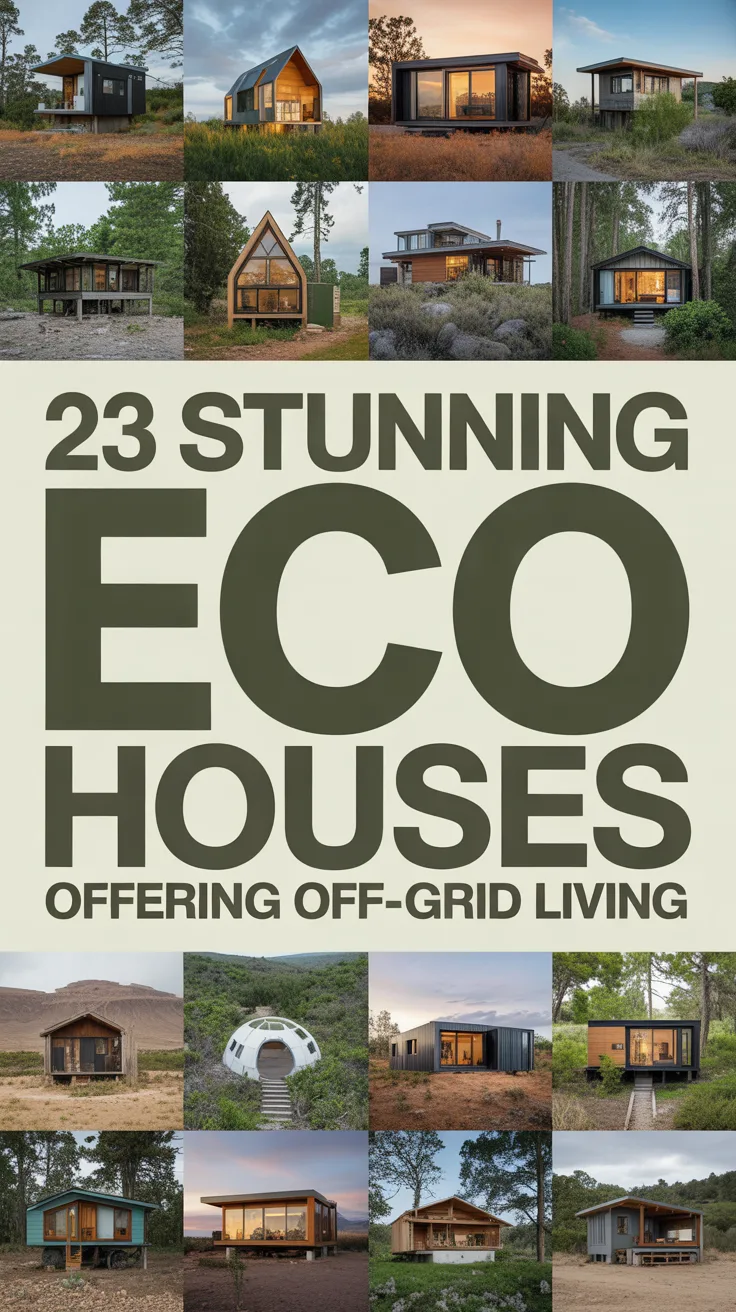
The dream of disconnecting from the grid has moved from fringe to mainstream, with design-forward, high-performance homes proving that independence doesn’t mean compromise. These 23 stunning eco houses offering off-grid living showcase how smart envelopes, renewable energy, and regenerative systems create comfort, resilience, and beauty—whether you’re homesteading in the country or carving out a net-zero life on the edge of a small town.
If you’re planning true water independence from day one, a compact filtration and storage setup such as SmartWaterBox can simplify your path with a modular approach that fits cabins, cottages, and full-time homes.
Table of Contents
Foundations of a Modern Off-Grid Eco Home
Off-grid living starts with a building envelope that sips energy, then layers renewables and independent water/waste systems. The design focus is not just equipment—it’s performance-by-design.
- Site and orientation: Maximize passive solar gain with a long south-facing axis (in the northern hemisphere), broad overhangs, and deciduous shading. Use windbreaks and terrain to reduce exposure.
- Envelope and thermal control: High R-values, robust airtightness, and thermal mass (rammed earth, stone, concrete with low-carbon binders) stabilize indoor temperatures. Combine continuous exterior insulation with thermal-bridge-free detailing.
- Daylighting and glazing: Size and position openings for solar harvest in winter and shading in summer. Triple-glazed windows with low-e coatings dramatically reduce heat loss and improve comfort.
- Ventilation with heat recovery: HRV/ERV systems exchange stale air for fresh while preserving energy, crucial for tight, high-performance homes.
- Heat and cooling: Options include high-efficiency heat pumps, hydronic slabs with solar thermal assist, rocket mass heaters, or wood stoves using locally-sourced biomass.
- Power: Photovoltaics sized to your actual loads (not your wish list) plus battery storage create a microgrid. A small turbine can complement PV in windy sites.
- Water: Rainwater harvesting to cisterns, gravity-fed lines where possible, and good filtration. A well is ideal but not mandatory if rain catchment is ample and legal in your region.
- Waste and reuse: Composting toilets or septic, plus greywater reuse for landscape irrigation. Blackwater minimization strategies protect groundwater.
- Food resilience: Edible landscaping, kitchen gardens, and permaculture zones near the house reduce grocery miles and improve nutrition.
Early modeling (energy, sun/shade, and water yield) aligns expectations with reality. The recipe: reduce demand first, then right-size systems for year-round resilience.
Showcase of 23 Stunning Eco Houses Offering Off-Grid Living (1–12)
These examples span climates, materials, and budgets, but share the same DNA: a durable shell, passive strategies, and independent utilities.
Passive-solar straw bale cottage: Thick, breathable walls deliver exceptional insulation and acoustic comfort, with lime plaster finishes and wide eaves for weather protection.
Rammed-earth desert homestead: Thermal mass smooths day-night swings, paired with clerestory vents for natural stack cooling and a modest rooftop solar array.
SIPs micro-cabin in the woods: Tight, factory-built panels reduce thermal bridges and speed assembly, supported by a compact 3–5 kW PV system and lithium battery bank.
Earthship-inspired berm home: Earth-bermed walls, greenhouse glazing for winter gain, and integrated greywater planters for a near-closed-loop water cycle.
Timber-frame alpine chalet: Heavy timber structure with cellulose insulation, triple glazing, and a wood stove/rocket heater for deep-winter reliability.
Hempcrete modern farmhouse: Bio-based walls regulate humidity, store carbon, and pair well with metal roofing for rain catchment and snow shedding.
Off-grid container duo: Two repurposed shipping containers bridged by a glazed breezeway, wrapped in exterior insulation to curb thermal bridging.
Modular prefab net-zero ranch: Factory precision, an airtight shell, and plug-and-play renewables, sited for easy maintenance and future expandability.
Coastal dune cottage: Elevated piers for flood resilience, cedar cladding, corrosion-resistant fixtures, and solar with battery for storm-related outages.
Forest A-frame retreat: Compact footprint with high lofted roof, careful skylight placement, and a high-efficiency heat pump paired with a small pellet stove.
Cob and stone garden house: Earthen walls and stone foundations, finished with earthen plasters, integrating a living roof and gravity-fed rainwater.
Urban-edge laneway eco suite: Tiny footprint, super-insulated envelope, and balcony planters; grid-optional with solar and smart demand management.
Showcase of 23 Stunning Eco Houses Offering Off-Grid Living (13–23)
Light-straw-clay family home: A hybrid of timber frame and bio-based infill for excellent insulation and hygroscopic comfort, with HRV and solar hot water.
Geodesic dome homestead hub: Structural efficiency supports snow loads; panoramic daylighting tamed by interior shade sails and insulated panels.
ICF high-wind haven: Insulated concrete forms deliver strength and low air leakage; pair with standing-seam roof and battery backup for storm country.
Hillside terrace dwelling: Split levels follow contour lines to minimize cut-and-fill, with retaining walls doubling as thermal mass.
Tiny house on skids: Semi-mobile, off-grid with a collapsible solar array, composting toilet, and rainwater tote supply for seasonal living.
Adobe courtyard home: Thick earthen walls, shaded courtyard microclimate, and lattice screens to temper sun and wind in arid zones.
Modern barn conversion: Envelope upgrade with exterior insulation, airtight membrane, and reclaimed finishes; large roof plane ideal for PV.
Green-roof meadow cabin: Living roof enhances biodiversity and reduces heat island effects, with integrated skylights and operable vents.
Polar-ready superinsulated box: Simple shape, high R-values, heat-recovery ventilation, and triple-sealed doors for extreme cold efficiency.
River bluff passive villa: South glazing with exterior shading, thermal-bridge-free balcony connectors, and gravity-fed rainwater to garden terraces.
Community cluster eco dwellings: Three to five small homes sharing microgrid batteries, a common well, and tools—resilience through collaboration.
These 23 stunning eco houses offering off-grid living prove that context-led design—climate, materials, and site—matters more than any single technology.
Natural Materials and Structures for Long-Lived Shells
Natural and low-carbon materials provide both performance and a sense of place. Your choice depends on climate, soil, labor availability, and local code.
- Straw bale: Best in dry or moderately wet climates with good detailing. Delivers high insulation (thick wall assemblies), superb sound dampening, and fire resistance when plastered. Protect with generous foundations and overhangs.
- Rammed earth: Durable, pest-proof, and low-maintenance. The mass shines in sunny, diurnal climates by absorbing daytime heat and releasing it at night. Combine with south glazing and insulated roofs for balance.
- Cob and adobe: Sculptable earthen mixes that store heat and regulate humidity. Ideal where earthen building is traditional and labor is abundant. Requires compatible finishes and careful drip edges.
- Hempcrete: Cast-in-place or block-based, it’s vapor-open, mold-resistant, and carbon-storing. Pair with timber or light steel frames; insulate roof heavily and address airtightness with tapes and membranes.
- Timber frame: High-strength skeleton allows open interiors. Combine with cellulose, wood fiber, or light-straw-clay for a renewable insulation strategy and excellent moisture buffering.
- Stone and hybrid mass: Local stone as foundation or feature walls adds durability and thermal inertia. Hybridize with high-insulation roofs and framed walls to reach net-zero.
- Roofs and rain control: Standing-seam metal roofs excel for rain catchment, fire resistance, and longevity. Deep overhangs, drip edges, and capillary breaks are non-negotiable to protect natural walls.
- Finishes and airtightness: Lime plasters, clay plasters, and wood fiber boards create vapor-open, healthy interiors. Airtight layers (membranes, tapes, gaskets) should be continuous and testable via blower door.
Thermal bridges and uncontrolled air exchange are the enemy. Design details—window bucks, service cavities, and insulated slab edges—are where performance is either won or lost. Think systems: materials, details, and mechanicals must reinforce one another.
Power, Storage, and Energy Management without Guesswork
Electric independence works best when overall demand is low and predictable. Build the envelope, then size the system—not the other way around.
- Solar PV: Size panels to cover winter consumption, not summer peaks. If the site has seasonal shading, consider a ground mount at the sunniest spot for easy maintenance and snow clearing.
- Battery storage: Lithium iron phosphate banks offer long cycle life and stability. Place in a conditioned space to optimize performance and longevity.
- DC vs AC loads: Favor efficient DC-native appliances (fridges, fans) where available; otherwise, a high-quality inverter with surge handling is critical for tools and pumps.
- Generator strategy: A quiet, efficient backup generator sized to charge batteries during poor weather stretches can be part of a resilient stack (ideally biodiesel-capable).
- Heating: In cold-moderate climates, a cold-climate heat pump may carry most of the load, with a wood or pellet stove as backup. In very cold zones, hydronic slabs with solar thermal assist plus a high-efficiency boiler or heater work well.
- Cooling: Start with design—shading, cross-ventilation, night flush, and thermal mass. Use ceiling fans and a small heat pump only when needed.
- Monitoring and controls: Smart shunts and energy monitors help tune your behavior and catch issues early. Load-shedding priorities (water pump, fridge, fans) keep essentials powered.
For off-grid households, stick to energy literacy: cook with propane or wood in cold climates to offload electric demand; choose induction where solar surplus is ample. Appliances should be selected for efficiency and serviceability, not just looks.
Water Independence, Sanitation, and Food Security
Water is often the gating factor. Plan collection, storage, and treatment as carefully as your roof and foundation.
- Rainwater harvesting: Roof area, local rainfall, and storage determine your supply. First-flush diverters and leaf screens keep tanks cleaner. Place cisterns for gravity feed where possible.
- Wells and springs: A reliable well with sanitary sealing and efficient pumping is ideal. Where drilling is viable, low-power pumps on timers or solar-direct arrays can minimize battery strain.
- Filtration and treatment: Combine sediment filtration with activated carbon and point-of-use purification as needed. For compact systems that integrate storage and filtration, consider SmartWaterBox. For additional modular capture/filtration flexibility, Aqua Tower can support household or garden needs.
- Hand pumps and redundancy: Manual or solar hand pumps for shallow wells add resilience. If you’re evaluating low-tech well strategies, resources like Joseph’s Well provide DIY guidance for sites where conventional drilling isn’t feasible.
- Greywater reuse: Route laundry and shower water to subsurface irrigation (where code allows). Use plant-friendly soaps. Install a three-way valve for easy maintenance.
- Toilets and blackwater: Composting toilets minimize water use; alternatively, a properly sized septic plus low-flow fixtures keeps systems robust and simple.
- Food storage and resilience: Root cellars, cool pantries, and shade structures reduce refrigeration needs. If you’re stocking a pantry for emergencies or seasonal gaps, The Lost SuperFoods offers heritage preservation strategies suited to off-grid kitchens.
- Landscape and permaculture: Zone plantings by frequency of use, integrate swales and mulch basins, and choose drought-tolerant natives. Polycultures stabilize yields and reduce inputs.
Manage your watershed like an asset: measure rainfall, track tank levels, and plan for multi-month dry spells. Simulate usage scenarios before committing to tank sizes and pump specs.
Roadmap to Planning, Permits, and Project Execution
Even the most beautiful concept can stall without a clean process. Treat your off-grid build like a systems project with milestones.
- Define intent and loads: List space needs, appliances, and seasonal use. Model energy loads and water demand. Use a worst-week scenario for sizing power and storage.
- Site reconnaissance: Solar access (winter and summer), access roads, drainage patterns, soil type, and local microclimates. Map prevailing winds and frost pockets.
- Codes and compliance: Many jurisdictions allow alternative materials with engineer-stamped plans. Meet or exceed energy codes—even off-grid. Clarify septic and rainwater rules early.
- Team and delivery: Decide between design-build, prefab, or owner-builder. Prefab can shorten timelines and improve quality; owner-build lowers cost but requires time and skills.
- Phasing: Start with the envelope, roof, and rain capture. Add interior finishes and renewables in parallel only if your budget and schedule allow. Build infrastructure (drive, culverts) ahead of deliveries.
- Testing and commissioning: Blower-door test to confirm airtightness. Verify HRV/ERV balance, inverter settings, and water system pressures. Keep a commissioning log for future troubleshooting.
- Operations manual: Document shutoffs, filter schedules, battery maintenance, and backup procedures. Off-grid reliability relies on routine.
When planning resilience for medical needs or outages, it’s smart to prepare your household as well as your house. Resources like Home Doctor can help you think through self-reliant care in remote settings, while broad preparedness frameworks such as New Survival Offer: Dark Reset can inform contingency planning.
Design Principles Behind Stunning Eco Houses Offering Off-Grid Living
Patterns repeat across the best projects. Apply these before you choose finishes or fixtures.
- Compact, right-sized forms: Simple shapes reduce surface area and thermal loss. Shed roofs and rectangles often beat complex forms in performance and cost.
- Sun-smart glazing: Most glass faces south with tuned overhangs. Limit east/west glazing to reduce summer heat gain; add exterior shades and deciduous plantings.
- Thermal zoning: Keep high-heat spaces (kitchen, mechanicals) and low-heat spaces (storage, mudroom) appropriately separated. Close doors at night in winter to maintain core warmth.
- Materials with purpose: Choose assemblies that handle your climate (freeze-thaw, humidity). Use vapor-open assemblies in mixed-humid climates and robust air barriers everywhere.
- Equipment as a system: PV array, inverter, batteries, charge controllers, and backup generation must be matched. Design with maintenance in mind—clear access, labeled breakers, and spare parts.
- Water-first thinking: Roof pitch and area, gutter types, first-flush systems, and cistern placement should be on your initial drawings—not add-ons.
- Fire-wise and storm-ready: Non-combustible exteriors, ember-resistant vents, defensible space landscaping, or hurricane clips and impact-rated windows where applicable.
Mid-project choices are much easier when you’ve set performance targets (kWh/day, liters/day, ACH50, R-values) and have a budget for the envelope that you protect from scope creep. The most stunning eco houses are the ones that quietly meet needs every day.
Recommended Off-Grid Tools, Guides, and Resources
Building a home is half the journey; living off-grid comfortably is the other half. These resources complement your design with practical know-how and redundancy.
- SmartWaterBox: A compact, modular approach to water storage and filtration that’s adaptable to cabins or full-time residences.
- Aqua Tower: Flexible water capture and filtration support for homesteads focusing on garden and household needs.
- Joseph’s Well: DIY guidance for low-tech well options where conventional drilling is out of reach.
- The Lost SuperFoods: Pantry strategies and preservation ideas suitable for off-grid kitchens and seasonal living.
- Home Doctor: Medical self-reliance tips to bolster household resilience when help is far away.
- New Survival Offer: Dark Reset: Wider contingency planning frameworks to think through long outages or disruptions.
Choose tools that solve your specific bottlenecks—if water is your constraint, solve water first; if winter heating is your stressor, tune your shell and backup heat. An off-grid lifestyle thrives on appropriate technology, not maximum technology.
Cost, Planning, and Site Selection for Eco Houses Offering Off-Grid Living
Total project cost hinges on your site, structure, and degree of self-perform. Plan transparently to balance aspirations with realities.
- Site drives everything: A sunny, well-drained site with good access will save thousands in earthwork, foundation complexity, and PV yield.
- Structure choice affects labor: Natural builds can reduce material costs but increase labor time. Prefab compresses schedules but may raise upfront costs; it can still net out with fewer delays and better performance.
- Systems scale with demand: A minimalist lifestyle may run happily on a modest array and small battery bank; all-electric conveniences require larger systems. Right-size to your actual habits.
- Maintenance and lifecycle: Budget for filter replacements, roof and battery maintenance, and occasional inverter or pump service. Design for easy access and clear labeling to reduce service calls.
- Resale and flexibility: Eco houses retain value when their systems are understandable and documented. Provide future owners with manuals, schematics, and a homeowner’s guide.
Finally, think community. Even if you prefer solitude, collaboration on tool libraries, shared wells, or community batteries can multiply resilience. Among the 23 stunning eco houses offering off-grid living, many share a pattern: independence built on smart cooperation.
Conclusion
The 23 stunning eco houses offering off-grid living in this guide prove that comfort, resilience, and beauty can coexist. Whether your shell is straw bale or SIPs, rammed earth or prefab, the winning formula is consistent: design for low demand, invest in a tight envelope, harvest local energy and water, and keep systems simple enough to maintain. Start with your site and goals, then choose the materials and tools that match your climate and lifestyle. The result is a home that serves you every day—quietly, sustainably, and on your terms.
Frequently Asked Questions
How much power do I need for an off-grid eco house?
Start with a load audit. Add up daily kWh for essentials (fridge, lights, fans, water pump) and seasonal loads (heating/cooling). Size solar and batteries for winter worst-case, with a generator or secondary source as backup.
Which building material is best for off-grid homes?
It depends on climate and skills. Straw bale and hempcrete excel for insulation; rammed earth and adobe offer thermal mass in sunny, arid regions; SIPs and ICFs provide tight, fast shells in mixed climates. Choose based on local conditions and labor.
Can rainwater supply a full-time household?
Often, yes—if you have sufficient roof area, storage, and legal permission. A good filtration strategy is essential. Systems such as SmartWaterBox can help consolidate storage and treatment for everyday use.
What toilets work best off-grid?
Composting toilets minimize water use and simplify waste management, especially where septic is impractical. In other areas, a well-designed septic with low-flow fixtures is reliable and simple.
How do I begin planning 23 stunning eco houses offering off-grid living ideas for my site?
Start by mapping the site’s sun, wind, drainage, and access. Sketch right-sized forms, set performance targets (insulation levels, ACH50, kWh/day), and prioritize water strategy. Then choose a few house types from the 23 examples that fit your climate and lifestyle.