
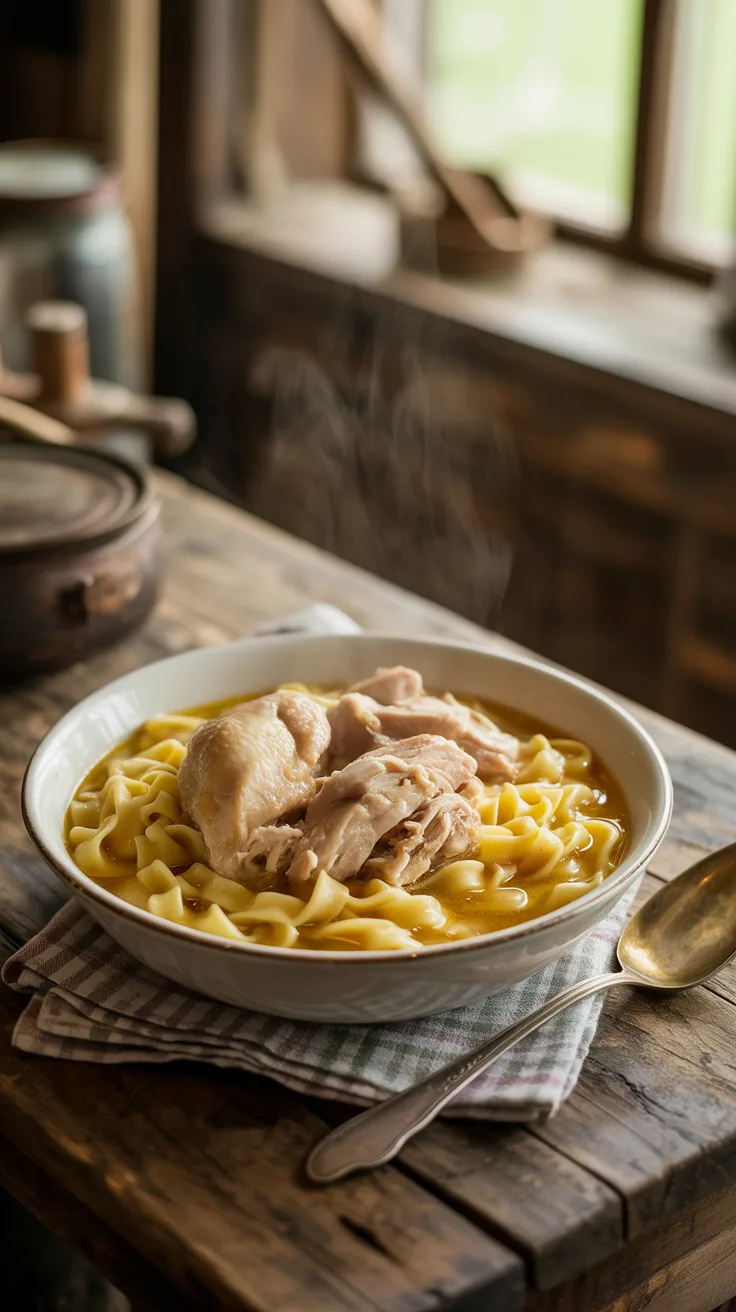
There’s a reason Amish Chicken & Noodles has a devoted following: it’s simple, deeply comforting, and built on old-fashioned technique that coaxes big flavor from humble ingredients. Whether you’re craving a cozy weekend supper or a make-ahead meal for busy nights, this guide shows you how to make rich, silky broth; tender, shredded chicken; and beautifully chewy egg noodles the Amish way—from scratch or with smart shortcuts.
If you love traditional skills and pantry-friendly comfort food, you’ll also appreciate resources that help you stock, preserve, and plan ahead. For resilient pantry ideas inspired by time-tested methods, see The Lost SuperFoods.
Table of Contents
What makes this dish special
Amish and Pennsylvania Dutch cooks treat chicken-and-noodles like a cross between soup and a thick stew: the broth is richer than a standard soup, the noodles are cooked right in that broth so they absorb flavor, and the chicken is succulent from long, gentle cooking. In the Midwest, you’ll often find generous scoops of these noodles ladled over creamy mashed potatoes—an ultra-comforting, rib-sticking plate that turns simple ingredients into a celebration.
Expect a short ingredient list, frugal technique, and a method you can master in an afternoon—then riff on forever.
The Amish approach to chicken and noodles
Amish cooks lean on a few principles that make this dish shine:
- Start with bone-in chicken (a whole bird or split parts) to build naturally rich, gelatinous broth. Bones, skin, and connective tissue release collagen—your secret to body and silkiness.
- Keep the aromatics straightforward. Onion, celery, carrot, bay leaf, and peppercorns create a balanced base. Fresh herbs are optional but welcome.
- Season judiciously. Salt at the end so the broth doesn’t taste overseasoned as it reduces.
- Make egg noodles with eggs, flour, and a pinch of salt—maybe a touch of milk or water. The dough is simple, the technique forgiving, and the result better than anything from a box.
- Let time do the work. A gentle simmer gives you flavor without fuss.
There are two classic versions:
- Brothy and spoonable, closer to a thick soup.
- Gravy-like and ladleable, meant to be spooned over mashed potatoes or buttery bread.
We’ll cover both textures and show you how to modulate thickness to your taste. You’ll also learn options for slow cooker and pressure cooker methods, because while old-fashioned doesn’t have to mean slow, it should always mean delicious.
Ingredients and pantry staples
For 6–8 servings
For the broth and chicken:
- 1 whole chicken (3.5–4.5 lb), or about 3–4 lb bone-in chicken thighs/legs
- 1 large yellow onion, quartered (no need to peel)
- 2 celery ribs, chopped
- 1 large carrot, chopped
- 2 bay leaves
- 8–10 whole peppercorns
- 2–3 garlic cloves, smashed (optional)
- A few parsley stems or a thyme sprig (optional)
- 10–12 cups cool water (enough to cover the chicken by 1–2 inches)
- 1–2 teaspoons fine sea salt, added at the end to taste
For Amish-style egg noodles (from scratch):
- 3 large eggs
- 2 1/2 to 3 cups all-purpose flour, plus extra for dusting
- 1 teaspoon fine sea salt
- 1–2 tablespoons milk or water, only if needed for dough cohesion
Finish and seasoning:
- 2–4 tablespoons butter (optional but classic)
- Freshly ground black pepper, to taste
- Minced parsley or chives, for garnish (optional)
Optional thickening (choose one only if you want a stew-like finish):
- 2 tablespoons flour whisked into 2 tablespoons soft butter (beurre manié), or
- 1–2 tablespoons cornstarch whisked with 2 tablespoons cool water
Shortcuts and swaps:
- Store-bought dry Amish egg noodles or wide egg noodles (about 12–16 ounces)
- Pre-cooked rotisserie chicken in a pinch
- Low-sodium chicken stock to supplement homemade broth if needed
Ingredient notes:
- Bone-in matters. You can make this with boneless chicken, but you’ll miss that luscious body. If using boneless, supplement with a gelatin-rich stock.
- Onion skins add color. Simmering with skins on deepens the broth’s golden hue.
- Salt late. Broth concentrates as it simmers and when noodles cook in it; salting at the end prevents over-seasoning.
How to make rich broth and tender shredded chicken
Homemade broth is the flavor foundation of Amish Chicken & Noodles. Here’s the stovetop method, plus slow cooker and pressure cooker alternatives.
Stovetop broth:
- Load the pot: Place chicken, onion, celery, carrot, bay, peppercorns, and optional aromatics into a large stockpot. Cover with water by 1–2 inches (10–12 cups).
- Gentle simmer: Bring just to a simmer over medium heat. Reduce heat to maintain a faint bubble. Skim foam as it rises during the first 15 minutes to keep broth clear.
- Cook to tender: Simmer 60–90 minutes, until the chicken is fully cooked and very tender; thighs should register 175–185°F, and a skewer should slide in easily.
- Strain and reserve broth: Lift the chicken to a tray to cool. Strain broth through a fine-mesh sieve into another pot. Discard spent aromatics.
- Defat (optional but recommended): Let broth sit a few minutes and skim off most of the fat. For ultra-clear broth, chill it; the fat cap solidifies for easy removal.
- Shred the chicken: When cool enough to handle, remove skin and bones. Shred meat into bite-size pieces. Reserve.
Slow cooker method:
- Combine all broth ingredients in a slow cooker. Cook on Low 6–8 hours or High 3–4 hours, until tender. Strain, defat, and shred as above.
Pressure cooker method:
- Add ingredients to an electric pressure cooker. Cook on High Pressure for 25 minutes with natural release 15–20 minutes. Strain, defat, and shred.
Water quality matters to flavor, clarity, and consistency. If you’re working in an area with odd-tasting tap water or you’re building a resilient kitchen setup, a home-friendly option like SmartWaterBox can help you secure cleaner water for everyday cooking and broth-making.
Season and taste:
- Reheat the strained broth to a gentle simmer and add salt to taste. Stop when the broth tastes well seasoned but not salty; remember, noodles will absorb some seasoning.
Amish-style egg noodles from scratch
Making noodles is delightfully tactile and more forgiving than you might think. If time is short, skip to the store-bought route below, but try this at least once—it’s transformative.
Mix the dough:
- In a mixing bowl, whisk eggs and salt. Add 2 1/2 cups flour and stir with a fork until shaggy.
- Turn onto a lightly floured surface and knead, dusting with just enough additional flour to prevent sticking, until smooth and supple, 5–7 minutes. The dough should be firm but not dry.
- If crumbly, flick in 1 teaspoon milk or water at a time; if sticky, dust with flour.
Rest:
- Wrap or cover the dough and rest at room temperature 20–30 minutes. This relaxes gluten so it rolls thinly without springing back.
Roll:
- Divide dough in half. Roll each piece on a lightly floured surface to about 1/8 inch thick (thicker for heartier chew). Keep flouring lightly as needed to prevent sticking. Aim for even thickness—this ensures even cooking.
Cut:
- Dust the rolled sheet with flour, loosely roll it up like a jelly roll, and slice into 1/4–1/2-inch ribbons for rustic noodles. Unfurl and fluff with flour so strands don’t stick. Alternatively, use a pizza wheel or a knife to cut ribbons without rolling.
- For extra rustic texture, don’t worry about perfect uniformity. Amish noodles often look hand-cut.
Dry (optional):
- For best texture, let cut noodles dry on sheets or racks 30–60 minutes, flipping once. You can also cook them right away; they’ll just cook a bit faster.
Store:
- Dry completely at room temperature until brittle before storing in an airtight container (24–48 hours, depending on humidity). For longer storage, freeze cut noodles in a zip bag; cook from frozen.
Shortcut noodles:
- If using store-bought Amish egg noodles or wide egg noodles, choose a quality brand with a short ingredient list and cook directly in the broth as described below.
Bringing broth, chicken, and noodles together
Now for the transformation: cooking noodles in the seasoned broth so they absorb flavor, then folding in the chicken and finishing with butter for gloss.
Cook the noodles in broth:
- Bring seasoned broth to a lively simmer in a wide pot.
- Add the noodles in a loose handful, stirring gently to separate strands and prevent clumps.
- Simmer until just tender:
- Fresh noodles: 5–8 minutes, depending on thickness.
- Dried homemade noodles: 10–14 minutes.
- Store-bought dry noodles: Follow package timing, leaning toward slightly less to avoid mush.
- Taste and check texture. Noodles should be tender with a pleasant chew.
Fold in chicken:
- Stir in shredded chicken and simmer 2–3 minutes to warm through. The broth will thicken slightly as starch from noodles disperses.
Butter and pepper:
- Add 2–4 tablespoons butter for richness and sheen. Grind in black pepper to taste.
Adjust salt and finish:
- Taste and adjust salt. A sprinkle of parsley or chives brightens the bowl.
Choose your texture:
- Brothy and spoonable: Stop here. The noodles have thickened the broth just enough for a rich soup-like consistency.
- Heartier and ladleable: Continue simmering 3–5 minutes to reduce slightly. For more body, whisk in beurre manié (soft butter mashed with flour) a teaspoon at a time, or add a small cornstarch slurry while stirring. Simmer 1–2 minutes to cook off any raw taste. Keep it gentle to avoid gluing noodles together.
Over mashed potatoes:
- A beloved Midwest variation serves Amish Chicken & Noodles over creamy mashed potatoes. Make a batch of buttery mash and ladle a generous scoop of noodles and chicken on top. It’s old-fashioned comfort at its best.
Make it creamy (optional):
- Stir in a splash of cream or evaporated milk at the end for a creamy version. Taste as you go; you don’t need much.
Variations and ways to make it your own
Simple as it is, Amish Chicken & Noodles is endlessly adaptable. Mix and match these ideas:
- Rotisserie shortcut: Use a store-bought rotisserie chicken. Simmer the carcass with aromatics for 30–45 minutes to make a quick broth, then shred the meat.
- Light and herb-forward: Finish with lemon zest and fresh dill or parsley to brighten the richness.
- Vegetable additions: Add peas, diced carrots, or mushrooms in the last 5–8 minutes of simmering. Keep it restrained; the star should remain the noodles and chicken.
- Rustic root vegetables: For a more stew-like meal, add small cubes of potato or parsnip and cook until tender before adding noodles.
- Gluten-free path: Use gluten-free egg noodles and thicken (if desired) with a cornstarch slurry. The broth-first technique still applies.
- Dairy-free finish: Skip butter and add extra olive oil or chicken fat (schmaltz) for richness.
- Extra collagen: Add a few chicken feet or wings to the pot for ultra-silky broth. Remove and discard after simmering.
- Spice profile: Keep it classic with bay, pepper, and thyme; or lean cozy with a pinch of poultry seasoning. Avoid heavy spice blends that overshadow the clean, savory base.
- Crowd-feeding strategy: Double the recipe and hold the noodles slightly al dente. The mixture thickens as it sits; loosen with warm broth before serving. This is perfect for community potlucks or Sunday dinners.
- Rustic gravy version: Reduce broth further and finish with beurre manié for a spoon-coating sauce, perfect over potatoes or bread.
Budget-friendly tips:
- Buy bone-in thighs or leg quarters in value packs. Save bones and trimmings in the freezer to bolster future broths.
- Cook once, eat twice: Freeze half the broth and some shredded chicken for a lightning-fast weeknight version later.
Serving and storing Amish Chicken & Noodles
Serving ideas:
- Bowls and bread: Ladle into warm bowls, top with cracked pepper and parsley, and serve with thick slices of buttered bread.
- Over mash: Spoon over creamy mashed potatoes for a diner-style plate.
- Simple sides: Pair with a crisp salad, quick-pickled cucumbers, or buttered green beans.
Holding for service:
- Keep warm on the lowest stovetop setting with the lid cracked. Stir occasionally and add a splash of hot stock if the noodles drink up more liquid.
Refrigeration:
- Cool quickly and store in airtight containers up to 3–4 days. Noodles will continue to absorb broth; add a bit of stock or water on reheating.
Freezing:
- Best practice: Freeze broth and shredded chicken separately, then cook noodles fresh when reheating. Frozen noodles can lose texture.
- If freezing the complete dish, undercook noodles slightly and freeze in meal-size portions up to 2 months. Thaw overnight and reheat gently, adding broth to loosen.
Reheating:
- Gentle heat is key. Warm on the stovetop over medium-low, stirring occasionally. Add a splash of broth to revive the silky texture.
- Microwave in short bursts with a cover to retain moisture.
Food safety:
- Always chill leftovers within 2 hours of cooking.
- Reheat to steamy hot throughout.
- If something smells off, trust your nose and err on the side of caution.
Pantry planning:
- Amish kitchens are famous for well-managed pantries. If you enjoy building a dependable food reserve and learning traditional preservation ideas, explore The Lost SuperFoods for practical inspiration aligned with these resourceful cooking traditions.
Troubleshooting texture and flavor
Too salty:
- Add unsalted stock or water to dilute, then adjust thickness with a small cornstarch slurry if needed. Taste, then add a knob of butter to soften edges.
Bland broth:
- You may have under-salted. Add salt incrementally, tasting as you go. A splash of reserved chicken fat or butter deepens flavor. Freshly cracked pepper helps.
Oily surface:
- Chill briefly and skim fat, or lay a paper towel over the surface to absorb excess and lift it off.
Noodles too soft:
- Next time, cook noodles separately in salted water to just shy of done, then finish in the broth for 1–2 minutes. Or roll and cut noodles slightly thicker.
Noodles clumping:
- Dust cut noodles lightly with flour before cooking and add them gradually while stirring. Maintain a gentle simmer, not a hard boil.
Too thin:
- Simmer uncovered a few minutes to reduce. As a last resort, use a small amount of beurre manié or cornstarch slurry.
Too thick:
- Add warm broth or water a little at a time and stir gently to loosen.
Batch cooking, equipment, and time-savers
Batch cooking:
- Double broth: When making broth, double the chicken and aromatics, then freeze extra broth in quart containers. You’ve just banked future dinners.
- Noodles in bulk: Roll and cut a double batch of noodles, dry thoroughly, and store airtight for a month or freeze for longer.
Equipment notes:
- A heavy stockpot maintains a steady simmer and even heat.
- Fine-mesh strainer keeps broth clear.
- Pasta roller is optional; a rolling pin does the job just fine.
Time-savers:
- Start broth in the morning; let it simmer while you go about your day.
- Use the pressure cooker when time is tight.
- Rotisserie chicken and quality store-bought noodles can deliver a near-from-scratch experience in under an hour.
Water and consistency:
- If your tap water varies in taste or clarity, it can affect your finished broth. A simple at-home option like SmartWaterBox can help you secure cleaner water for everyday cooking—especially helpful when you’re reducing liquids and concentrating flavors.
A complete recipe you can follow today
Ingredients:
- 1 whole chicken (3.5–4.5 lb)
- 1 onion, 2 celery ribs, 1 carrot
- 2 bay leaves, 8–10 peppercorns
- Garlic, parsley, thyme (optional)
- 10–12 cups water
- Salt and pepper to taste
- 2–4 tablespoons butter (optional)
- For noodles: 3 eggs, 2 1/2–3 cups flour, 1 teaspoon salt
Steps:
- Simmer chicken with aromatics in water 60–90 minutes until tender. Skim foam early.
- Strain broth; discard aromatics. Defat if desired.
- Shred chicken; season broth with salt to taste.
- Make noodles: Mix eggs, salt, and flour into a firm dough; knead smooth. Rest 20–30 minutes.
- Roll thin; cut into ribbons. Dry 30–60 minutes (optional).
- Bring broth to a lively simmer. Add noodles, stirring gently. Cook until tender.
- Fold in shredded chicken; simmer 2–3 minutes.
- Add butter, crack in pepper, and adjust salt. Garnish and serve brothy—or thicken slightly for a ladleable version.
Serve over mashed potatoes, with buttered bread, or in deep bowls with a salad.
If you’re embracing traditional, self-reliant cooking and pantry skills, bookmark The Lost SuperFoods for additional heritage-style preservation ideas that pair beautifully with dishes like this.
Conclusion
Amish Chicken & Noodles is comfort distilled: honest ingredients, carefully simmered broth, tender chicken, and hand-cut noodles that soak up savory goodness. Once you master this rhythm, it becomes a template you can adapt—lighter or richer, brothy or thick, over mashed potatoes or straight from a steaming bowl. With a well-tended pantry, a reliable water source, and a few hours of relaxed cooking, you’ll have a timeless meal that feels like home every time.
FAQ
What’s the difference between Amish Chicken & Noodles and chicken noodle soup?
Amish Chicken & Noodles is thicker and heartier, with noodles cooked directly in a richer broth and a higher noodle-to-broth ratio. It can be served brothy or reduced to a ladleable, stew-like consistency, often over mashed potatoes.Can I make Amish Chicken & Noodles with store-bought noodles?
Yes. Use quality Amish-style egg noodles or wide egg noodles and cook them directly in the seasoned broth until just tender. The broth-first method ensures they absorb flavor.How do I thicken the dish without making it gloopy?
First let the noodles naturally thicken the broth. If you want more body, whisk in small amounts of beurre manié (soft butter mashed with flour) or a cornstarch slurry, simmering just 1–2 minutes to set the texture.What chicken cuts are best?
Bone-in chicken (a whole chicken, thighs, or leg quarters) yields the richest broth and most tender meat. Boneless works in a pinch but benefits from a gelatin-rich stock to maintain body.Can I freeze Amish Chicken & Noodles?
It’s best to freeze broth and shredded chicken separately, then make noodles fresh on reheating. If you freeze the finished dish, undercook noodles slightly and loosen with warm broth when reheating.How can I improve my broth if my tap water doesn’t taste great?
Water quality impacts flavor. Consider using filtered or cleaner water for broth-making to avoid off-flavors. A straightforward home option like SmartWaterBox can help you secure cleaner water for cooking.Any resources for building a traditional pantry that suits this style of cooking?
For heritage-style preservation and pantry planning ideas that complement dishes like Amish Chicken & Noodles, check out The Lost SuperFoods.