
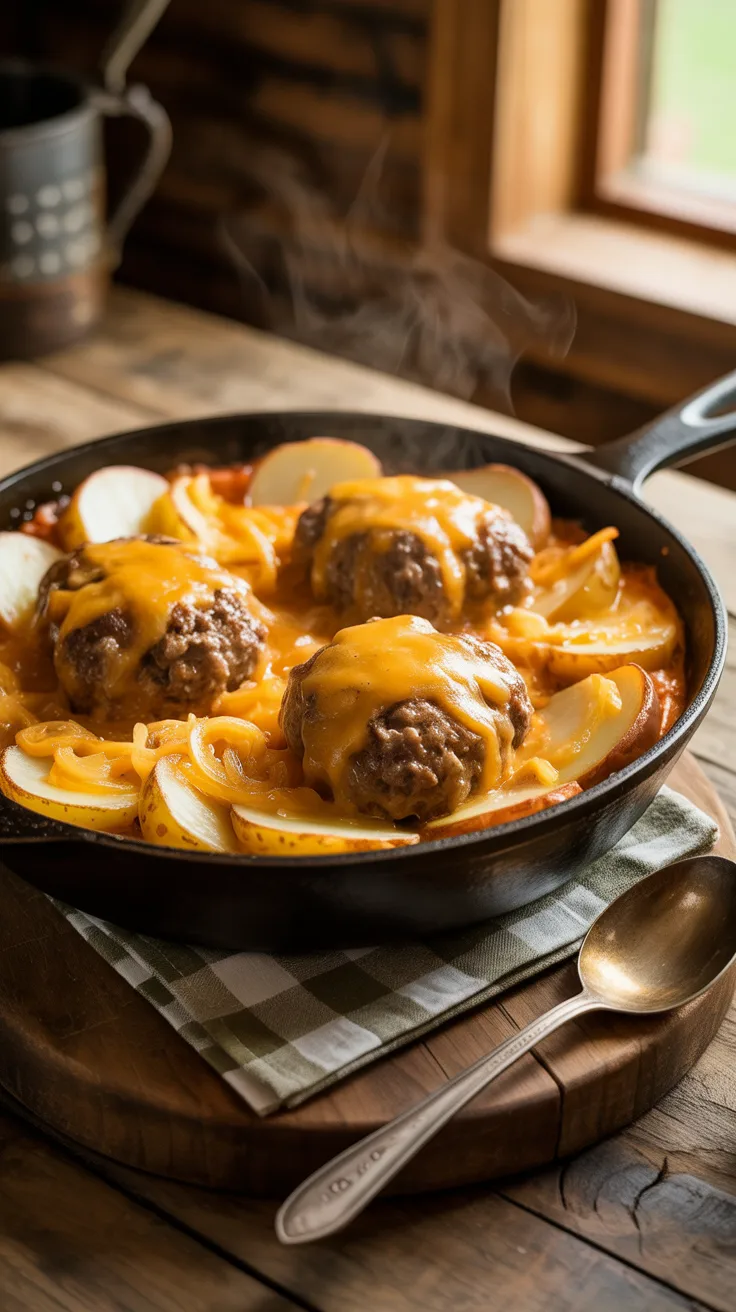
There are nights when only a hearty, old-fashioned bake will do, and that’s where an Amish Hamburger Steak Bake Recipe That’s Pure Comfort Food shines. It’s simple, dependable, deeply savory, and built from pantry staples—exactly the sort of family meal you can put in the oven while you set the table and exhale. Think seared hamburger steaks nestled in onions and a silky brown gravy, baked until spoon-tender and ready to ladle over mashed potatoes or buttered noodles.
If heritage cooking speaks to you, you’ll enjoy exploring traditional pantry wisdom in The Lost SuperFoods—a helpful resource for time-tested preservation ideas and make-ahead staples that pair naturally with comfort-food recipes like this one.
Table of Contents
Why this bake satisfies like a Sunday supper
Amish-inspired meals are built around practicality and generosity: one pan, honest ingredients, and a focus on flavor developed the right way. This hamburger steak bake starts with well-seasoned beef mixed gently with breadcrumbs and milk, forming tender patties that hold their shape without turning dense. A quick sear in a hot skillet adds a crust and deepens flavor through browning—the secret to a rich, meaty base without fancy techniques or expensive cuts.
The real soul of this dish is the gravy. A proper gravy is not just thick; it’s glossy, balanced, and layered. You’ll build it on the fond—the browned bits in the pan—adding onions for sweetness and beef stock for depth. A roux brings it together into a sauce that coats every bite. Once the patties and gravy meet in the oven, slow heat works its magic, melding flavors and tenderizing the meat without drying it out.
Serve it the Amish way with starch and vegetables: creamy mashed potatoes or buttered egg noodles, stewed green beans, skillet corn, or a crunchy slaw. Add warm bread to capture extra gravy. Nothing fussy—just hearty, nourishing comfort from a single casserole dish.
This bake also fits real-life rhythms. It’s make-ahead friendly, freezes well, and reheats beautifully for lunches. It’s adaptable to dietary needs and equally at home in a modern kitchen or a cast-iron skillet over a wood stove. In every version, you’ll get that same rustic, stick-to-your-ribs satisfaction.
Ingredients and pantry staples for old-fashioned flavor
This recipe matches everyday ingredients with simple technique. Use what you have; swap smartly; and don’t overwork the meat.
- Ground beef: 2 pounds, 80/20 for juiciness
- Onion: 1 large, finely minced for the patties, plus 1 large, sliced for the gravy
- Garlic: 2 cloves, minced (optional but wonderful)
- Breadcrumbs or cracker crumbs: 1 cup (Amish kitchens often use crushed saltines)
- Milk: 1/2 cup (softens crumbs and keeps patties tender)
- Eggs: 2 large (binds the mixture)
- Worcestershire sauce: 1 tablespoon (umami kicker)
- Dried thyme or marjoram: 1 teaspoon (gentle herb note)
- Fresh parsley: 2 tablespoons, chopped (optional, for brightness)
- Kosher salt: 1.5 teaspoons (adjust to taste)
- Black pepper: 1 teaspoon, freshly ground
For the brown gravy:
- Butter or beef drippings: 4 tablespoons
- All-purpose flour: 4 tablespoons
- Beef stock or broth: 3 to 3.5 cups (warm)
- Sliced onion: 1 large (or substitute 8 ounces mushrooms)
- Dijon mustard: 1 teaspoon (optional complexity)
- Worcestershire sauce: 1 teaspoon (echoes the patties)
- Bay leaf: 1 (optional)
- Salt and pepper: to taste
Optional add-ins and smart swaps:
- Oats for crumbs: Use 3/4 cup quick oats instead of breadcrumbs for a heartier texture.
- Gluten-free: Use certified GF breadcrumbs and a gluten-free flour (like a 1:1 blend or cornstarch slurry for the gravy).
- Dairy-free: Swap milk with unsweetened oat milk; use oil instead of butter in the gravy.
- Mushrooms: Add 8–12 ounces sliced cremini to the gravy for extra depth.
- Potatoes: For a one-pan casserole, layer 2–3 cups thinly sliced raw potatoes on the bottom of the baking dish; they’ll cook in the gravy.
- Broth choice: A mix of beef and chicken broth can taste “rounder” if your beef broth is intense.
Equipment:
- Large skillet (cast iron holds heat beautifully)
- 9×13-inch baking dish or 3-quart casserole
- Mixing bowl
- Whisk and wooden spoon
Ingredient notes:
- Ground beef: A mix of chuck and round gives the best balance. Leaner beef can work, but watch cook time and moisture.
- Breadcrumbs: Fresh homemade or dry both work; crushed crackers add a classic, lightly buttery flavor.
- Stock: Warm it before adding to the roux for a lump-free gravy.
Step-by-step: sear, simmer, and bake
Set yourself up for success by mixing gently, searing hot, and letting the oven finish the job.
- Mix the patties
- In a large bowl, combine breadcrumbs and milk; let sit 2–3 minutes to soften.
- Add ground beef, minced onion, garlic, eggs, Worcestershire, herbs, salt, and pepper.
- Using your fingers or a fork, mix just until combined—overmixing toughens the meat.
- Shape into 8 even patties, about 3/4 inch thick. Press a small dimple in the center of each to prevent doming.
- Sear for flavor
- Preheat your oven to 350°F (175°C).
- Heat a large skillet over medium-high. Add a thin film of oil if your pan runs dry.
- Sear patties 2–3 minutes per side until deeply browned but not fully cooked. Work in batches to avoid crowding.
- Transfer browned patties to a 9×13-inch baking dish. Leave the drippings and browned bits (fond) in the skillet.
- Build the onion gravy
- Lower heat to medium. If the pan is dry, add 1–2 tablespoons butter; otherwise use the beef drippings.
- Add sliced onions (or mushrooms). Cook 6–8 minutes, stirring, until softened and lightly caramelized.
- Add butter to total 4 tablespoons fat, then sprinkle flour over the onions. Stir to make a roux; cook 1–2 minutes until blond and bubbling.
- Whisk in warm stock gradually, scraping the pan to release fond. Add Dijon, Worcestershire, bay leaf.
- Simmer 4–6 minutes until glossy and just thick enough to coat a spoon. Taste and adjust salt and pepper.
- Bake until tender
- Pour gravy over the patties in the baking dish. If adding potato slices to the bottom, ensure they’re covered in gravy.
- Cover tightly with foil and bake 30 minutes. Remove foil and bake 10–15 minutes more until patties reach 160°F internal temperature and potatoes (if using) are tender.
- Rest 5–10 minutes before serving to let juices settle.
Tips for restaurant-level results:
- Resting time matters. Juices redistribute and the gravy clings better.
- If gravy thickens too much in the oven, whisk in a splash of hot stock or water after baking.
- For extra richness, stir 2 tablespoons cold butter into the finished gravy right before serving.
Brown gravy that coats every bite
A great gravy turns this from “good” to “can’t-stop-eating.” The key steps are simple: brown something, capture fond, and balance texture and taste.
- Build on aroma: Onions and/or mushrooms are your aromatic base. Cook them long enough to release moisture and develop sweetness. A pinch of salt early pulls moisture; a tiny pinch of sugar can help browning if your onions are mild.
- Roux mastery: Equal parts fat and flour form the thickener. Let the roux bubble to cook out raw flour taste; stop at blond for a classic brown gravy that’s flavorful but not heavy like a dark Cajun roux.
- Deglazing: Warm stock avoids clumping; add gradually while whisking. Scrape the pan to dissolve the fond—that’s concentrated flavor.
- Seasoning: Worcestershire adds umami and a faint molasses note; Dijon provides backbone without shouting mustard. Taste as you go. If it tastes flat, add a pinch more salt and a whisper of acidity (a few drops of apple cider vinegar can sharpen the finish).
- Consistency: Aim for “lightly velvet.” It should cling to a spoon but flow freely. If too thin, simmer a minute or two more. If too thick, thin with hot stock. For a silkier finish, strain before baking; for rustic charm, leave the onions in.
Customization ideas:
- Creamy mushroom gravy: Add a 1/3 cup cream or evaporated milk after thickening; don’t boil vigorously.
- Pepper gravy: Coarsely grind extra black pepper at the end for a gentle kick.
- Onion-and-herb: Stir in chopped parsley and a tiny pinch of dried thyme before baking.
Gravy troubleshooting:
- Lumpy? Whisk vigorously with hot stock. An immersion blender can rescue small lumps.
- Bland? Add a touch more salt, a dash of Worcestershire, or reduce briefly to concentrate.
- Greasy sheen? Skim excess fat with a spoon or lay a paper towel quickly on the surface and remove.
Variations, dietary swaps, and off-grid cooking
One beauty of heritage-style bakes is how adaptable they are across seasons, budgets, and kitchens.
Budget and pantry variations:
- Salisbury-style: Add 1 tablespoon ketchup to the gravy and 1 teaspoon onion powder to the meat for a diner-style twist.
- Swiss steak vibe: Add sliced bell peppers, a can of diced tomatoes, and a little paprika to the gravy for a tangy, tomato-onion version.
- One-pan potato bake: Slice potatoes thinly (1/8–1/4 inch), layer under the patties, and bake 45–55 minutes covered until the potatoes are tender. Finish uncovered for browning.
- Oat binding: Replace breadcrumbs with oats for more chew and nutty character—great if crackers are scarce.
Dietary swaps:
- Gluten-free: Use GF crumbs and thicken the gravy with a cornstarch slurry (2 tablespoons cornstarch + 3 tablespoons cold water), added after simmering the onions. Stir until glossy.
- Dairy-free: Swap milk with oat or almond milk, and use oil for the roux. A splash of coconut aminos can add roundness if you skip Worcestershire.
Off-grid and low-energy methods:
- Stovetop simmer: After searing, nestle patties in a Dutch oven, pour in gravy, cover, and simmer gently 25–35 minutes. Check for 160°F internal temp.
- Wood stove or campfire: Use cast iron; elevate above direct flame to avoid scorching. Slow and steady heat wins.
- Solar or thermal cooking: Preheat a solar cooker, place seared patties with hot gravy inside, and cook until patties reach safe temp; timing varies with sun strength.
If you value resilient, low-tech cooking and water-smart kitchens, a countertop emergency filtration setup like SmartWaterBox can be useful for both daily cooking and “just in case” moments when municipal water gets cloudy or you’re working off-grid. For broader grid-down skill-building—including cooking strategies and safe food handling without power—resources such as Dark Reset offer practical, scenario-based guidance you can adapt to your household.
Kitchen safety and self-reliance:
- Keep a small first-aid booklet handy for kitchen nicks and burns. If you prefer a layperson-friendly reference, Home Doctor focuses on at-home preparedness and can help you plan for minor medical issues when professional care is delayed.
Make-ahead, freezing, reheating, and food safety
This bake is made for planning ahead. Use these methods to save time without sacrificing quality.
Make-ahead options:
- Mix-and-hold: Form patties up to 24 hours in advance. Cover tightly and refrigerate. Bring to cool-room temp for 15 minutes before searing for even cooking.
- Gravy-in-advance: Prepare gravy up to 3 days ahead. Reheat gently with a splash of stock; whisk smooth before pouring over patties.
- Assemble and chill: Brown patties, pour on cooled gravy, cover, and refrigerate up to 24 hours. Bake an extra 10–15 minutes to ensure a hot center.
Freezing:
- Unbaked: Freeze seared patties on a sheet tray. Once firm, move to a freezer bag (up to 3 months). Freeze gravy separately in a container. Thaw both in the fridge overnight before baking.
- Baked leftovers: Cool quickly, portion with gravy into airtight containers, and freeze up to 3 months. Label with date.
Reheating:
- Oven: 325°F, covered, 20–25 minutes for a family portion. Add a splash of stock if the gravy thickened.
- Stovetop: Simmer gently in a covered skillet with a few tablespoons of stock, 10–15 minutes.
- Microwave: Reheat in short bursts at 50–70% power, stirring gravy between bursts to prevent breakage.
Food safety:
- Cook ground beef to 160°F internal temperature.
- Refrigerate leftovers within 2 hours; use within 3–4 days.
- Reheat leftovers to 165°F.
- If you layered raw potatoes, ensure they’re fork-tender throughout before serving.
Water-wise cooking:
- Deglaze the searing pan with a splash of stock; those flavorful drippings become part of the gravy, reducing dish count.
- If local water has off flavors, filtered water makes a surprisingly big difference in gravy and mashed potatoes. A compact solution like SmartWaterBox helps ensure clean-tasting cooking water when tap quality is unpredictable.
Serving ideas, sides, and a weeknight meal plan
Pairings make comfort food complete. Choose one starchy base, one or two vegetables, and a bright side for contrast.
Starches:
- Mashed potatoes: Classic partner. Whip with warm milk and butter or olive oil. Add roasted garlic for depth.
- Buttered egg noodles: Toss with butter, chopped parsley, and a pinch of garlic powder.
- Skillet potatoes: Pan-fry parboiled cubes in a little beef fat for crispy edges.
- Amish-style baked corn: Soft, custardy spoon bread complements the gravy.
Vegetables:
- Green beans with onions: Sauté with a little bacon or butter, add a splash of apple cider vinegar at the end.
- Honey-glazed carrots: Steam until crisp-tender; glaze with butter, a dab of honey, and a pinch of salt.
- Cabbage slaw: Shredded cabbage, carrots, and a tangy dressing cut the richness nicely.
- Stewed tomatoes: Bright and slightly sweet, they enliven the plate.
Bread and extras:
- Soft dinner rolls or buttered rye to mop up the gravy.
- Pickled beets or chow-chow for a sweet-tart accent.
- Apple butter or a simple apple sauce on the side nods to country kitchens and balances savory flavors.
Simple weeknight plan:
- Day 1: Bake the hamburger steaks and serve with mashed potatoes and green beans.
- Day 2: Slice leftover patties and rewarm in gravy; serve over buttered noodles with a quick slaw.
- Day 3: Shepherd’s pie twist: Break up leftover patties in a dish, top with mashed potatoes, bake until golden.
Beverage pairing:
- Unsweetened iced tea or cold buttermilk are traditional. A light lager or a dry cider also pairs well with the savory gravy if you enjoy a drink with dinner.
The complete recipe card
Yield: 6–8 servings
Active time: 25–30 minutes
Bake time: 40–45 minutes
Ingredients:
- 2 lb ground beef (80/20)
- 1 large onion, finely minced (plus 1 large onion, sliced, for gravy)
- 2 cloves garlic, minced (optional)
- 1 cup breadcrumbs or crushed saltines
- 1/2 cup milk
- 2 large eggs
- 1 tbsp Worcestershire
- 1 tsp dried thyme or marjoram
- 2 tbsp chopped parsley (optional)
- 1.5 tsp kosher salt
- 1 tsp black pepper
- 4 tbsp butter or drippings
- 4 tbsp all-purpose flour
- 3 to 3.5 cups warm beef stock
- 1 tsp Dijon mustard (optional)
- 1 tsp Worcestershire (gravy)
- 1 bay leaf (optional)
- Salt and pepper to taste
- Oil for searing
Directions:
- Soak crumbs in milk. Add beef, minced onion, garlic, eggs, Worcestershire, herbs, parsley, salt, and pepper. Mix lightly. Shape into 8 patties; dimple centers.
- Sear patties in a hot skillet, 2–3 minutes per side, until well-browned. Transfer to a 9×13-inch dish. Heat oven to 350°F (175°C).
- In the same skillet, cook sliced onions in drippings until lightly caramelized. Add butter as needed to reach 4 tablespoons fat. Sprinkle in flour; cook 1–2 minutes.
- Whisk in warm stock gradually; add Dijon, Worcestershire, and bay leaf. Simmer until glossy and slightly thick. Season to taste.
- Pour gravy over patties. Cover with foil; bake 30 minutes. Uncover and bake 10–15 minutes more, until patties reach 160°F. Rest 5–10 minutes. Serve with potatoes or noodles.
Notes:
- For a one-pan meal, layer thinly sliced raw potatoes in the dish before adding patties. Bake until potatoes are tender.
- For gluten-free gravy, thicken with a cornstarch slurry instead of flour.
Pantry wisdom for year-round comfort
Meals like this thrive on a well-organized pantry. A few simple habits keep dinner easy, economical, and hearty:
- Keep a “gravy kit” on hand: flour (or cornstarch), bouillon or shelf-stable stock, onions, and Worcestershire.
- Batch-prep patties: Mix a double batch, sear, and freeze half for a future no-fuss supper.
- Save drippings: A jar of beef or bacon drippings becomes instant flavor for gravies and vegetables.
- Rotate your staples: Use what you store and store what you use to avoid waste.
If you enjoy traditional preservation tricks and resilient pantry planning, The Lost SuperFoods offers a wide range of heritage-inspired ideas that pair perfectly with homestyle cooking routines.
Conclusion: A plateful of calm and classic comfort
An Amish Hamburger Steak Bake Recipe That’s Pure Comfort Food hits the sweet spot where thrift, flavor, and family meet. With a simple meat mixture, a sturdy brown gravy, and an easy oven finish, you get a dinner that is both nostalgic and practical. It welcomes substitutions, plays nicely with pantry staples, and adapts to any kitchen—electric range, cast iron, or camp stove. Serve it with mashed potatoes or noodles, add a couple of humble sides, and you’ve got a warm, satisfying meal that stretches comfortably and tastes like home.
If you’re also building skills for simpler, steadier cooking—on busy nights or during unexpected outages—tools like SmartWaterBox and guides such as Dark Reset and Home Doctor can round out your kitchen resilience while you enjoy the steady comfort of this classic bake.
FAQ
What is the difference between hamburger steak and Salisbury steak?
Hamburger steak is essentially seasoned ground beef formed into patties and cooked; Salisbury steak usually includes more seasonings and often a tomato-ketchup component in the gravy. This bake leans hamburger steak with a classic onion-brown gravy.Can I add potatoes to this Amish Hamburger Steak Bake Recipe That’s Pure Comfort Food?
Yes. Layer thinly sliced raw potatoes (about 2–3 cups) under the patties, cover them with gravy, and bake covered until tender before uncovering to brown. Expect a slightly longer bake time.How do I keep the patties tender and not dense?
Hydrate breadcrumbs with milk, mix the meat gently, and avoid compacting the patties. Searing quickly on high heat forms a crust without overcooking before the oven finish.Can I make this gluten-free or dairy-free?
Absolutely. For gluten-free, use GF breadcrumbs and thicken the gravy with a cornstarch slurry. For dairy-free, substitute plant milk for the crumb soak and use oil instead of butter for the roux.What should I serve with an Amish Hamburger Steak Bake Recipe That’s Pure Comfort Food?
Mashed potatoes or buttered noodles are classics. Add a vegetable like green beans or carrots and a bright side (slaw or pickled beets) to balance the richness.How well does it freeze and reheat?
Very well. Freeze seared patties and gravy separately, or freeze leftover baked portions with gravy. Reheat gently with a splash of stock to restore the sauce’s silky texture.Can I make the gravy without flour?
Yes. Use a cornstarch slurry (2 tablespoons cornstarch mixed with 3 tablespoons cold water). Add it to simmering stock and onions and stir until glossy and thickened, then continue with the recipe.Is this recipe suitable for camp or off-grid cooking?
Yes. Sear and simmer in a Dutch oven over a steady flame, or use a wood stove at a low, even heat. For broader grid-down tips, see Dark Reset.