
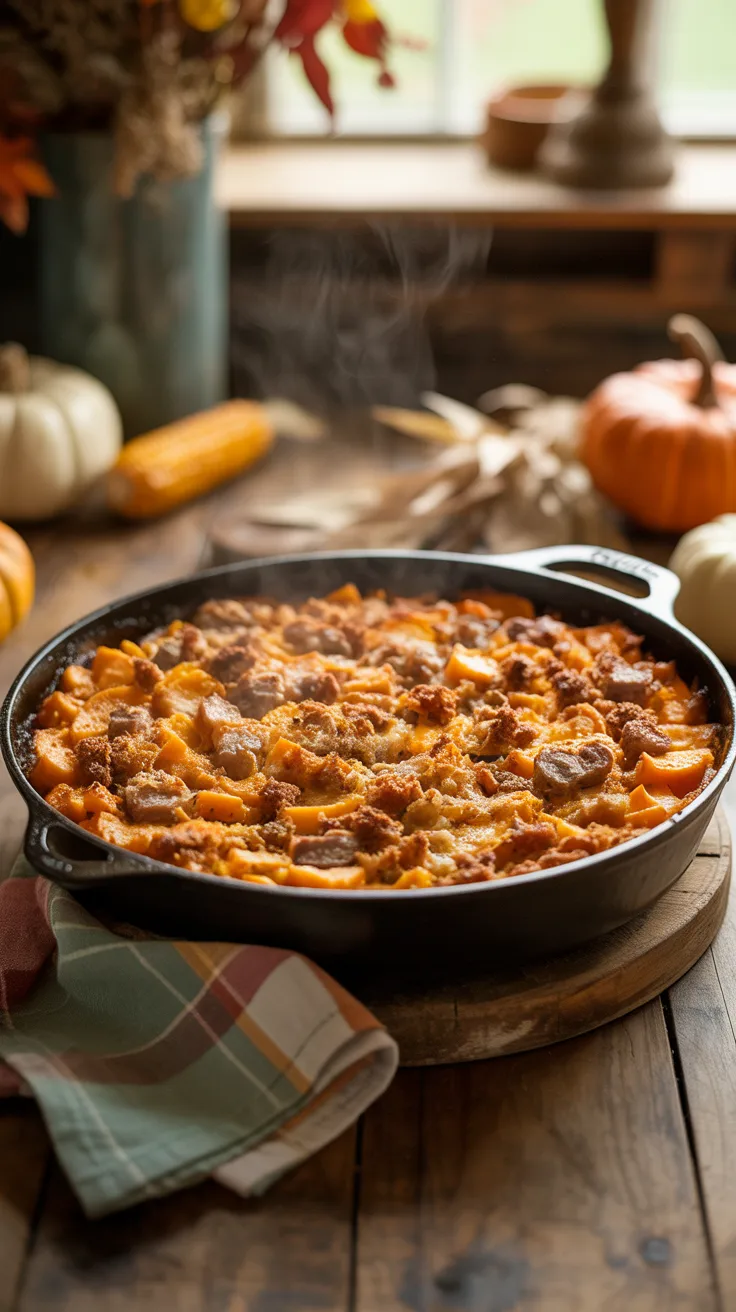
Nothing says cool-weather comfort quite like Amish Harvest Casserole. This farmhouse-style bake layers hearty vegetables, a simple protein, and a creamy, from-scratch sauce into a golden, aromatic pan that feeds a crowd and warms the kitchen. It’s the kind of humble, wholesome dish that fits the season—root vegetables, squash, cabbage, onions, and a touch of sweet apple—all working together to celebrate the harvest.
For cooks who love heritage pantry know-how, the classic techniques behind this casserole pair perfectly with long-keeping staples. If you’re building a smarter pantry around time-tested foods that store well, explore the practical, history-rich ideas in The Lost SuperFoods.
Table of Contents
Flavor, Tradition, and Purpose
Amish cooking is rooted in practicality—seasonal ingredients, simple methods, and nourishing results. Amish Harvest Casserole carries those values into a single dish: it’s flexible, scalable, and forgiving enough for busy weeknights or leisurely Sunday suppers. The flavors are earthy and mildly sweet, with cabbage and onions offering backbone, squash or potatoes adding body, and a gentle creaminess tying it all together. A little sausage or ground beef gives depth, but it’s just as satisfying meatless, especially when beans or mushrooms are worked in.
There are two typical directions with this casserole:
- Vegetable-forward: Think cabbage, carrots, onions, squash or potatoes, with a cream or broth-based sauce.
- Protein-forward: Add browned sausage, ground beef, or turkey for a fuller, Sunday-dinner feel.
One reason this bake stands out is how well it accommodates what you already have. Amish cooks often cook with what’s on hand—turnips or rutabaga instead of potatoes, kale or shredded Brussels sprouts instead of cabbage, and apples when they need using. The casserole takes well to a mild cheese, fresh herbs, or a breadcrumb crunch, but it’s equally authentic without them.
Texture is everything here. Aim for tender-crisp vegetables, not mush. Salt confidently; the vegetables will soak up seasoning. Keep the sauce modest—pleasantly creamy, not soupy. And give the casserole a brief rest after baking so the layers settle and slice neatly.
Ingredients and Smart Substitutions
A well-balanced Amish Harvest Casserole starts with a few core categories—vegetables, a protein (optional), a simple sauce, and a finishing topping if you like a little crunch. Use these flexible guidelines to build your version.
Foundation vegetables
- Cabbage: Green or savoy cabbage, thinly sliced. Adds sweetness and structure.
- Root vegetables: Potatoes, sweet potatoes, carrots, parsnips, or turnips. Dice or thinly slice for even cooking.
- Winter squash: Butternut or acorn squash add color and natural sweetness; peel and cube.
- Aromatics: Yellow onion and garlic for savory depth.
- Optional apple: A peeled, thin-sliced tart apple (like Granny Smith) adds a subtle harvest sweetness that plays well with sausage and cabbage.
Protein options
- Sausage: Mild pork sausage or smoked sausage brings classic farmhouse flavor.
- Ground meats: Ground beef, turkey, or chicken, browned with onions.
- Meatless choices: White beans or cannellini beans for protein, or a mix of sliced mushrooms for umami.
Binding and sauce
- Simple-country cream sauce: Butter, flour, milk or light cream, and broth. A spoon of sour cream is optional for tang.
- Broth-forward alternative: Use only chicken or vegetable broth thickened with a small roux for a lighter version.
- Dairy-free variation: Use olive oil and a dairy-free milk or just a broth thickened with a bit of flour or cornstarch.
Seasoning
- Salt and pepper: Season each layer lightly.
- Herbs: Thyme, parsley, or dill. Caraway seed pairs wonderfully with cabbage.
- Warming spices: A pinch of nutmeg or allspice complements squash and apple without turning the dish sweet.
Optional toppings
- Breadcrumbs or cracker crumbs tossed in melted butter.
- A light sprinkle of mild cheese (Monterey Jack, muenster, or a young cheddar) for a gentle melt.
- Fresh parsley at the end for color and freshness.
Substitution ideas
- Cabbage swap: Shredded Brussels sprouts or chopped kale.
- Root veg swap: Use whatever you have—parsnips, turnips, rutabaga—just cut evenly.
- Sauce swap: Substitute a can of evaporated milk if you’re short on fresh dairy.
- Gluten-free: Thicken with cornstarch or a gluten-free flour blend and use gluten-free breadcrumbs or skip the topping.
- Lower-carb: Use more cabbage and mushrooms, fewer potatoes.
Step-by-Step Amish Harvest Casserole Recipe
This version serves 6–8 and leans toward the vegetable-forward side with the option to add sausage or ground meat. It’s designed for a 9×13-inch casserole dish.
Ingredients
- 2 tablespoons butter or olive oil
- 1 large yellow onion, diced
- 2 cloves garlic, minced
- 1 small head green cabbage, cored and thinly sliced (about 6 cups)
- 3 cups cubed butternut squash or potatoes (or a mix)
- 2 medium carrots, thinly sliced
- 1 tart apple, peeled and thinly sliced (optional)
- 1 pound mild sausage or ground beef, browned (optional)
- 2 tablespoons flour (or 1 tablespoon cornstarch mixed with cold milk for gluten-free)
- 1 1/2 cups milk or light cream (or unsweetened dairy-free milk)
- 1 cup chicken or vegetable broth
- 1/2 teaspoon dried thyme
- 1/4 teaspoon nutmeg (optional)
- 1 teaspoon kosher salt, plus more to taste
- 1/2 teaspoon black pepper
- 1/2 cup sour cream (optional, for tang)
- 1/2 cup breadcrumbs tossed with 1 tablespoon melted butter (optional)
- 1/2 cup mild shredded cheese (optional)
- Chopped parsley for serving
Equipment
- Large skillet or Dutch oven
- 9×13-inch baking dish
- Foil
Directions
- Preheat the oven to 375°F (190°C). Grease the baking dish.
- Saute the aromatics: Heat butter or oil in a large skillet. Cook onion with a pinch of salt until translucent. Add garlic and saute briefly until fragrant.
- Soften the vegetables: Add cabbage and a big pinch of salt. Cook 4–6 minutes, stirring, until it wilts. Add carrots and squash or potatoes; cook another 3–5 minutes to soften slightly. Transfer to a bowl.
- Brown the meat (if using): In the same skillet, brown sausage or ground beef. Drain excess fat. Combine with the vegetables.
- Make the sauce: In the skillet, melt 2 tablespoons butter (add a splash more oil if needed). Whisk in flour and cook 1 minute. Slowly whisk in milk or cream, then broth, simmering until lightly thickened. Stir in thyme, nutmeg if using, and season with salt and pepper. Off heat, whisk in sour cream if using.
- Assemble the casserole: Spread half the vegetable mixture in the baking dish. Layer the sliced apple if using. Pour over half the sauce. Add the remaining vegetables and meat (if using), then the rest of the sauce. Top with cheese and buttered breadcrumbs if desired.
- Bake covered for 25 minutes, then uncover and bake 15–20 minutes more, until bubbling and the top is golden. The vegetables should be tender when pierced.
- Rest and serve: Let the casserole rest 10 minutes so it slices neatly. Shower with parsley before serving.
Alternate methods
- Slow cooker: Skip the roux; whisk 1 cup broth with 1 cup milk and 1 tablespoon cornstarch. Layer the vegetables and meat with sauce in a slow cooker. Cook on Low 6–7 hours or High 3–4 hours, until tender. Broil briefly to brown the top, if you like.
- Stovetop Dutch oven: Build the recipe in a heavy Dutch oven, cover, and simmer on low 35–45 minutes, stirring occasionally, until the vegetables are tender and the sauce thickens.
Seasonal Variations and Regional Twists
Amish Harvest Casserole is a template, not a fixed formula, which makes it ideal for seasonal cooking and regional ingredients.
Fall and winter twists
- Apple and caraway: Add the apple layer and 1/2 teaspoon caraway for a cabbage-friendly, old-world flavor.
- Maple and mustard glaze: Stir 1 teaspoon Dijon and 1 teaspoon maple into the sauce for a savory-sweet whisper that complements squash.
- Smoky sausage and kale: Use smoked sausage and fold in chopped kale with the cabbage.
Vegetarian comfort
- Mushroom and white bean: Saute sliced cremini mushrooms until browned; fold in a can of drained cannellini beans for protein. Finish with a light sprinkle of cheese or a crispy breadcrumb top.
- Roasted vegetable base: Pre-roast cubes of squash, carrots, and onions at 425°F to caramelize edges, then assemble with the sauce for deeper flavor.
Lighter, broth-based version
- Skip the dairy: Thicken 2 cups of vegetable broth with a cornstarch slurry. Add a splash of apple cider for brightness and a teaspoon of vinegar at the end to lift flavors.
Country noodle variation
- Amish-style noodles: Swap part of the vegetables for 8 ounces of parboiled wide egg noodles. Layer noodles between the cabbage mixture and pour a slightly looser sauce (add 1/2 cup extra milk) to keep it silky.
Gluten-free and dairy-free paths
- Gluten-free: Use cornstarch slurry to thicken and gluten-free breadcrumbs for the topping, or top with crushed gluten-free crackers.
- Dairy-free: Use olive oil instead of butter and unsweetened oat or almond milk; skip cheese and sour cream, and lean on herbs and a splash of vinegar for brightness.
Regional produce swaps
- Midwest roots: Rutabaga or turnip in place of some potatoes gives a pleasantly peppery backbone.
- Appalachian twist: Add a handful of chopped greens (collards or mustard greens) and a little country ham in place of sausage.
- Northeastern orchard: Lean into apples and onions with sage, a nod to fall orchard flavors.
Make-Ahead, Freezing, and Batch Cooking
One of the reasons Amish Harvest Casserole works so well for busy families is how easily it adapts to planning and preparation.
Make-ahead strategies
- Prep-and-park: Assemble the casserole up to the point of baking, cover tightly, and refrigerate up to 24 hours. Add an extra 10–15 minutes to the covered bake time since it starts cold.
- Pre-cook components: Brown meat and saute veggies up to two days ahead. Store separately and assemble quickly on bake day.
Freezer-friendly approach
- Freeze before baking: Assemble without the breadcrumb topping. Wrap the dish well in plastic and then foil. Freeze up to 3 months. Thaw overnight in the fridge, add topping, and bake as directed, adding 15–20 minutes to the covered time.
- Freeze after baking: Cool completely, portion into freezer-safe containers, and freeze up to 3 months. Reheat covered at 350°F until hot, or microwave portions until steaming.
Batch cooking for crowds
- Double the recipe: Use two 9×13 pans. Bake one now, freeze the other uncooked for a future night or a meal train.
- Potluck-ready: For buffet-style serving, bake in an oven-safe casserole that holds heat well, or transfer to a pre-warmed slow cooker on Warm to keep the dish safe and pleasant for a few hours.
Storage and reheating
- Refrigerate leftovers: Store covered up to 4 days. Reheat in a 350°F oven, covered, 15–20 minutes, or microwave individual slices.
- Revive the topping: If a breadcrumb top softens, broil the last 1–2 minutes to re-crisp.
Budget and pantry benefits
- Stretching ingredients: Increase cabbage and carrot, reduce meat, and the casserole remains satisfying.
- Pantry top-ups: Keep onions, dried herbs, broth, and a shelf-stable milk on hand so you can assemble this even when fresh produce runs low.
Serving Ideas, Sides, and Nutrition Notes
A balanced plate helps this hearty casserole sing without feeling heavy. Choose a few simple sides for contrast, freshness, and color.
Satisfying side ideas
- Simple salad: A crisp salad with apple cider vinaigrette cuts the richness and echoes the harvest theme.
- Buttered green beans or steamed broccoli: Clean, bright vegetables offset the creaminess.
- Skillet apples: Lightly sauteed apples with a pat of butter and a pinch of cinnamon add a homestead touch to sausage-heavy versions.
- Rustic bread or biscuits: If your casserole is dairy-light, a crusty loaf or biscuit basket adds comfort.
Sauce and topping tweaks
- Fresh finish: A squeeze of lemon, splash of apple cider vinegar, or spoonful of chopped dill or parsley at the end lifts the whole dish.
- Texture play: Combine crushed crackers and breadcrumbs with melted butter for a crunchy cap, or go minimalist with just a sprinkle of herbs.
Nutrition perspective
- Balanced comfort: The dish leans wholesome—vegetables, gentle fats, and protein. If you’re watching calories, keep the sauce broth-forward and skip the cheese layer.
- Protein choices: Lean ground turkey and beans keep it lighter. Sausage increases flavor and calories; balance with extra cabbage and carrots.
- Fiber and color: Add more squash, kale, or beans for fiber and nutrients without sacrificing comfort.
Leftover magic
- Breakfast hash: Pan-fry a scoop of leftovers until crisped, top with a soft egg.
- Stuffed peppers: Fill halved bell peppers with chopped leftovers; bake until the peppers are tender.
- Soup starter: Chop leftover casserole and simmer with extra broth to make a hearty cabbage-squash soup.
Pantry Resilience and Off-Grid Cooking Approaches
This casserole is tailor-made for resilient, sensible kitchens that keep staples on hand and cook comfortably even during busy weeks—or the occasional power blip.
Cooking off-grid
- Dutch oven on the grill: Assemble in a cast-iron Dutch oven and cook covered over indirect heat until vegetables are tender.
- Woodstove or camp stove: Simmer the stovetop version low and slow, stirring periodically so the bottom doesn’t scorch.
- Slow cooker with a power inverter: If you’re prepared for outages, a slow cooker can run off backup power for a set-and-forget option.
Water-wise cooking
- Broth and milk swaps: If fresh milk isn’t available, use evaporated milk or thicken broth with a cornstarch slurry. Keep shelf-stable cartons handy.
- Smart storage: For those building a practical kitchen for any season, dependable water storage is an underrated ally. A compact, easy-to-deploy system like SmartWaterBox can help ensure you always have clean water for cooking, drinking, and cleanup when the unexpected happens.
Pantry planning with heritage ideas
- Long-keeping staples: Cabbage, onions, and winter squash store well and anchor this casserole beautifully.
- Dried goods: Keep beans, broth bases, and baking staples organized so you can make a sauce from scratch on short notice.
- Inspiration from tradition: If you enjoy building a pantry with techniques that stood the test of time, you might appreciate the old-school, practical guidance in The Lost SuperFoods. It explores durable food ideas that align with the resourceful spirit behind Amish-style cooking.
Safety reminders
- Time and temperature: Refrigerate leftovers within 2 hours. Reheat to 165°F.
- Cooling strategy: Spread hot leftovers shallowly in containers to cool faster and safer.
- Labeling: Date your containers; enjoy within 3–4 days or freeze for longer storage.
The Heart of Harvest Cooking
Amish Harvest Casserole invites you to cook the way the season feels—steady, generous, and unfussy. Whether you favor the vegetable-forward version, a sausage-studded Sunday bake, or a lighter broth-based pan, the method remains the same: layer what’s in season, season with care, bind gently with a comforting sauce, and bake until everything melds into a cozy whole. It’s a dish that makes the home smell like fall and turns simple ingredients into something memorable.
If you’re leaning into heritage kitchen skills—stretching ingredients, cooking off-grid when you have to, and buying staples that store well—this casserole fits right in. For more ideas that echo those values, a resource like The Lost SuperFoods pairs naturally with the spirit of this recipe, while SmartWaterBox can help you keep the kitchen humming no matter the season.
Conclusion
Simple, flexible, and deeply satisfying, Amish Harvest Casserole is a love letter to seasonal cooking and pantry wisdom. With a few humble vegetables, a choice of protein, and a straightforward sauce, you can produce a golden, comforting bake that works for weeknights, gatherings, and freezer stashes alike. Build it with what you have, taste as you go, and let the oven turn your harvest into a hearty classic. When the leaves turn and the kitchen calls for something warm, Amish Harvest Casserole is ready to answer.
FAQ
How do I make Amish Harvest Casserole ahead of time without it getting watery?
- Saute cabbage and onions to release moisture before assembling, and let roasted or par-cooked vegetables cool slightly. Assemble, cover, and refrigerate up to 24 hours. Bake from cold, adding 10–15 minutes covered so everything heats evenly without over-thinning the sauce.
What protein works best in Amish Harvest Casserole?
- Mild sausage is a favorite for its savory depth, but ground beef or turkey work well too. For a meatless version, use browned mushrooms and white beans to provide umami and body without heaviness.
Can I make a dairy-free Amish Harvest Casserole?
- Yes. Use olive oil instead of butter. Make the sauce with vegetable broth thickened by a cornstarch slurry or dairy-free milk. Skip the cheese and use a crunchy breadcrumb topping (or omit) for texture.
What are good sides to serve with Amish Harvest Casserole?
- Pair with a crisp green salad, buttered green beans, or steamed broccoli to cut the richness. A warm biscuit or slice of crusty bread is optional if you want a heartier plate.
How can I freeze Amish Harvest Casserole for best results?
- Assemble without the topping, wrap well, and freeze up to 3 months. Thaw overnight in the fridge, add the topping, and bake as directed, adding 15–20 minutes covered. For cooked leftovers, cool, portion, and freeze; reheat to 165°F.