
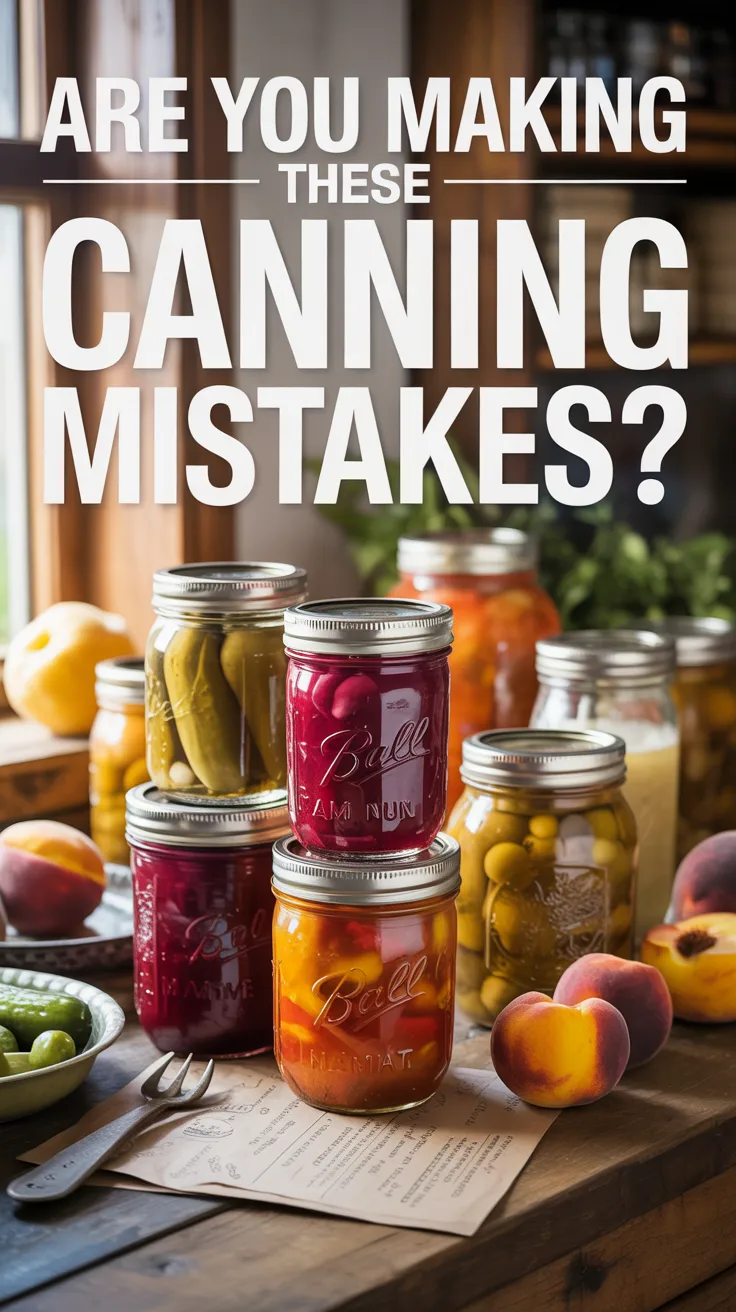
Home canning turns fresh harvests into shelf-stable meals—but small errors can lead to flat flavors, wasted work, or, in worst cases, unsafe food. If you’ve wondered, “Are you making these canning mistakes?” you’re not alone. Even experienced home canners slip into habits that don’t match current, tested guidelines. This guide walks you through the most common pitfalls and how to fix them, so you can build a reliable, long-lasting pantry with confidence.
If you’re building a deep pantry to rely on during lean seasons or emergencies, a reference that covers preservation and storage ideas can help you plan your canning projects smarter. Consider adding The Lost SuperFoods to your preparedness bookshelf as you work through this guide.
Table of Contents
Are You Making These Canning Mistakes with recipes and sources
The fastest way to sabotage a canning session is by following outdated or untested methods. Canning is food science, not guesswork. A method that “worked for Grandma” might be unsafe with modern produce varieties or current lid designs.
- Relying on old cookbooks and blogs without tested processes: Not all recipes are created equal. Use sources that test for pH, density, processing times, and headspace. The USDA Complete Guide to Home Canning and the National Center for Home Food Preservation (NCHFP) are the gold standard. Look for recipes that specify jar size, processing method (water bath or pressure canning), headspace, and altitude adjustments.
- Improvising thickening agents, fats, and starches: Cornstarch, flour, and added fats change the density of your mixture. That density can prevent heat from penetrating properly in the jar, increasing the risk of underprocessing. Use ClearJel for approved pie fillings if you need a thickener, and save dairy, flour, and fats for reheating after opening.
- Reusing old times and temperatures: Processing times are not suggestions. They’re calculated to destroy spoilage organisms and the spores of Clostridium botulinum in low-acid foods. Times vary by recipe, jar size, and even the shape of your product (whole vs. crushed tomatoes), so match your method precisely to the recipe.
- Swapping ingredients without considering acidity: In salsa, replacing lemon juice with fresh lime or adding more low-acid peppers can push the pH above 4.6. If the tested recipe calls for bottled lemon juice or vinegar at a certain strength (typically 5% acidity), stick to it.
Pro move: Build a canning binder with printed recipes from tested sources. Add notes on yield, flavor tweaks you can safely do during serving (not processing), and your altitude adjustment. Over time, you’ll create a personalized, trusted playbook.
Are You Making These Canning Mistakes in method choice
One of the biggest issues is using the wrong canning method. There are two primary, safe techniques, and they’re not interchangeable:
- Water bath canning: This is for high-acid foods—those with a pH of 4.6 or lower—including most jams, jellies, fruit, fruit butter, pickles, chutneys, some tomato products with added acid, and most relishes. The boiling water temperature of 212°F/100°C is sufficient for these because acidity controls botulism spores and the heat kills yeasts, molds, and vegetative bacteria.
- Pressure canning: This is for low-acid foods—vegetables, meat, poultry, seafood, beans, soups, and broths. Pressure canners reach 240–250°F (115–121°C), which is required to destroy botulism spores in low-acid environments. No shortcut, no substitutions.
Common method mistakes:
- Water-bath canning low-acid foods: Never do this, no matter how long you boil. Boiling water can’t reach the higher temperatures needed to destroy botulism spores in green beans, carrots, or meat.
- Using a pressure cooker (not a pressure canner): Electric pressure cookers and small stovetop pressure cookers are not the same as pressure canners. Unless explicitly tested and approved for canning by a reputable authority, they cannot be relied on for safe processing. Most electric models are not approved for pressure canning.
- Misclassifying tomato products: Tomatoes often straddle the pH line. Unless a tested recipe says otherwise, acidify with bottled lemon juice or 5% vinegar and process as directed. Don’t assume “tomato = high acid.”
Altitude matters: At higher elevations, water boils at a lower temperature, so you must increase processing time for water bath canning and increase pressure for pressure canning (e.g., from 10 PSI to 15 PSI depending on your dial or weighted gauge and altitude). Check a reliable altitude chart and mark your personal adjustment in your binder.
Acidity, sugar, and salt fundamentals that keep jars safe
Acidity, sugar, and salt do more than flavor your food; they influence safety and texture during canning.
Acidity:
- The magic number is pH 4.6: Below this, botulism spores are controlled. Fruits, pickles, and properly acidified tomato products are safe for water bath canning.
- Bottled acid vs. fresh: Tested recipes typically call for bottled lemon juice or standardized vinegar at 5% acidity, because fresh citrus varies wildly. That consistency matters for pH.
- Keep the ratios: Don’t reduce vinegar or bottled lemon juice in pickles or salsa unless the recipe allows it. If you need milder flavor, add sugar post-processing when you open the jar, or choose a different, tested recipe.
Sugar:
- Preserves texture and helps with gel in jam: Using too little sugar can affect set and shelf stability in high-acid preserves. Low-sugar pectin or no-sugar pectin can work, but follow the package recipe exactly, as the chemistry is different.
- Don’t rely on sugar for safety in low-acid foods: Sugar isn’t a substitute for pressure processing when it comes to green beans, corn, or carrots.
Salt:
- Canning salt is your friend: It dissolves cleanly and doesn’t cloud brine. Table salt often has anti-caking agents that make brine hazy. Sea salt can vary in density, throwing off measurements.
- Salt is mostly for flavor and crispness in pickles: It’s not a safety control for low-acid foods. Mind your ratios, and use tested pickle recipes for best crunch.
Water quality matters too. Hard water can leave mineral film on jars; contaminated water is an obvious no-go. If your tap water is questionable, filter or treat it before building brines or syrups. For off-grid or emergency canning sessions (say, after a storm), a compact purification system can remove a variable from your process. Explore reliable options like SmartWaterBox if you’re strengthening your water resilience for kitchen and pantry tasks.
Bonus science: Density and particle size affect heat penetration. A chunky sauce might need longer processing than a pureed version, which is why you must stick to the recipe’s texture and cut size. This is also why thickeners are restricted: thicker products heat more slowly and unevenly.
Equipment handling that breaks seals and wastes time
Perfectly good produce can be lost to preventable equipment errors. Focus on correct jar prep, headspace, lid handling, and cooling to get strong seals.
Jars:
- Use true canning jars: Mason-style jars (Ball, Kerr, etc.) withstand pressure and repeated heat cycles. Recycled jars (like mayo jars) are thinner and prone to breakage.
- Check for chips and hairline cracks: Run your finger around the rim. Any nick can prevent a seal. Discard compromised jars from canning rotation.
- Size matters: Follow recipe jar sizes. Heat penetrates differently in half-pints, pints, and quarts.
Lids and bands:
- New lids, please: Modern lids are designed for one-time sealing. Reusing them risks false seals. Bands (rings) are reusable if not rusted or bent.
- Don’t overheat lids: Most modern lids don’t require pre-simmering. If a manufacturer recommends warming, it’s typically in hot—not boiling—water. Boiling can damage the sealing compound.
- Band torque: Finger-tip tight means snug, not cranked. Over-tightening can trap air and lead to buckled lids or siphoning (liquid loss during processing).
Headspace and bubbles:
- Honor the headspace: Too little headspace can cause siphoning; too much can prevent sealing. Typical headspace is 1/4 inch for jams/jellies, 1/2 inch for fruits and tomatoes, 1 inch for low-acid foods—but always follow the recipe.
- Debubble thoroughly: Use a plastic or wooden tool to release trapped air. Air pockets create expansion issues and uneven heating.
Thermal shock prevention:
- Preheat jars: Hot food into hot jars; cold jars plunged into boiling water can crack. Keep clean jars warm in hot water or a 200°F (93°C) oven before filling.
- Water temperature alignment: When loading the canner, the temperature of the canner water and the filled jars should be similar (hot pack into simmering water; raw pack into warm water when pressure canning) to minimize shock and siphoning.
Post-processing:
- No tilting or pressing lids: Let jars sit undisturbed on a towel, spaced apart, for 12–24 hours. Pressing on lids or tightening bands right away can break a forming seal.
- Remove bands for storage: Bands can hide false seals or trap moisture against the lid, leading to rust. Store jars with bare, sealed lids so you can inspect them easily.
Processing technique errors that cause false seals and siphoning
Even with perfect prep, processing technique can make or break your jars. Focus on venting, timing, altitude, and cooling.
Venting:
- Pressure canners must vent: Exhaust steam for a full 10 minutes before bringing the canner to pressure. This purges air and creates a uniform steam environment, which is crucial for accurate, safe temperatures.
Timing:
- Start the clock at the right moment: For water bath canning, begin timing when the water returns to a full rolling boil after loading jars. For pressure canning, begin only when the canner reaches the target pressure.
- Maintain steady pressure or boil: Fluctuations lead to siphoning and underprocessing. Adjust your burner gradually; avoid chasing the dial.
Altitude adjustments:
- Higher altitude means longer times for water bath and higher pressure for pressure canning. Note your altitude and corresponding adjustments for each jar size in your canning binder.
Cooling:
- Let pressure drop naturally: Quick-cooling a pressure canner by opening the vent, removing the weight, or running cold water over the lid is a shortcut to siphoning and broken seals. Turn off heat and wait until pressure returns to zero before you open the canner.
- Rest period: After you remove the canner lid, let jars sit in the canner a few minutes before moving to a towel-lined counter to normalize pressure.
False seals and reprocessing:
- Check seals after 12–24 hours by lifting the jar gently by the lid edge; it should hold firmly. Alternatively, press the center—it should be concave and not flex.
- If a jar didn’t seal: Refrigerate and use within a few days, or reprocess immediately with a new lid following the same method. Don’t attempt to reprocess multiple times.
Safety note: If in doubt, throw it out. Bulging lids, spurting liquid when opened, off smells, or mold mean the contents are unsafe. When building broader household resilience, it can be helpful to have general, practical health guidance on hand for everyday issues—especially if professional help is delayed. A plain-language resource like Home Doctor can be a helpful addition to your preparedness library for non-emergency home care context.
Smart storage, rotation, and inspection habits for a reliable pantry
Canning doesn’t end with the ping of a sealing lid. Storage and rotation practices determine whether your jars remain safe and delicious for months or years.
Storage environment:
- Cool, dark, and dry: Aim for 50–70°F (10–21°C) in a space away from sunlight and appliances. Heat and light degrade food quality faster and can weaken seals over time.
- Avoid damp areas: Moisture encourages rust on lids, which can eventually compromise seals. Use shelves that allow air circulation.
Labeling:
- Always label with content and date: Permanent marker on the lid works well. Add batch notes (e.g., “no-sugar pectin, 7/2026”) to track experiments.
- First in, first out (FIFO): Rotate older jars forward so they’re used first. Build rhythms—like reviewing your shelf each season—to keep stock fresh.
Shelf life:
- Best quality times vary: Jams and pickles often retain quality for 12–18 months; low-acid foods like meats and veggies are best within one year for flavor and texture. Safety can extend beyond that if seals are intact and food was properly processed, but quality decline is real.
- Watch for creeping issues: Discoloration at the top, separated liquid, or sediment might be normal for some products; trust your nose and eyes, and never taste questionable food.
Opening and using:
- Clean the lid before opening: Dust or rust can fall into food. Wipe lids and rims before you pop them.
- Heating low-acid foods: Many home canners choose to boil low-acid foods for 10 minutes after opening as an extra precaution. This does not replace safe canning, but it can add a layer of reassurance.
- Refrigerate after opening: Treat opened jars like any other food. Don’t store partially used jars at room temperature.
Pantry planning helps you can with purpose. Think in meals, not just ingredients. If you’re pursuing a deeper food resilience strategy, cross-train your pantry with shelf-stable staples beyond canning—dehydrated vegetables, sturdy grains, and high-protein foods—so meals come together faster.
Are You Making These Canning Mistakes with water, packing, and headspace
Water quality, pack style, and headspace discipline often separate flawless jars from those that siphon or fail to seal.
Water:
- Mineral deposits: Hard water won’t necessarily make food unsafe, but it can cloud jars and leave residue. Add a splash of white vinegar to the canner water to reduce film on jars.
- Sanitization: Use clean, potable water for brines, syrups, and rinsing. If your source is questionable due to storms, boil and cool water before use, or rely on a robust purification solution. For longer-term resilience, evaluate off-grid options like SmartWaterBox or well concepts supported by resources like Joseph’s Well to diversify your water plan.
Hot pack vs. raw pack:
- Hot pack: Preheating foods in liquid before filling jars drives out air and shrinks produce slightly, improving density, reducing floating food, and enhancing shelf life. Many vegetables and most fruits benefit from hot packing.
- Raw pack: Faster prep and brighter appearance, but more trapped air and more floating. Some foods are safe either way if a tested recipe allows it. Hot pack is often worth the extra step for better quality.
Headspace discipline:
- Follow the recipe’s headspace exactly: Measure with a headspace tool. Conduct a final check after debubbling; removing bubbles often changes the level.
- Wipe rims with vinegar or warm water: A tiny smear of grease or syrup can prevent sealing. For greasy foods (meat, broth), vinegar helps cut residue.
Load management in the canner:
- Don’t cram jars: Leave space for water circulation and prevent jars from touching. A rack between layers (if your canner allows double stacking) ensures stability.
- Consistent jar sizes: Processing times are designed for a uniform load. Mixing jar sizes in one run can affect heat distribution and timing accuracy.
Thinking like a canner-scientist means optimizing variables you can control—water purity, pack style, headspace, and load. Nail these, and your seal rate will soar.
Tools, references, and resources to avoid canning errors
Good tools make safe canning faster and more repeatable. While you don’t need every gadget, a few core items dramatically reduce mistakes.
Essential tools:
- Reliable pressure canner with a calibrated gauge or a properly weighted regulator
- Large water bath canner with rack
- Jar lifter, bubble remover/headspace tool, and wide-mouth funnel
- Magnetic lid lifter and clean towels
- Timer, kitchen scale, pH strips or meter for advanced users
- Canning salt, bottled lemon juice, and 5% vinegar
- Spare new lids and replacement gaskets (if your canner uses them)
Reference library:
- Current USDA Complete Guide to Home Canning
- National Center for Home Food Preservation online recipes
- Tested pectin guides when making jams and jellies
- Your personal canning binder with altitude notes and past results
Recommended products for broader pantry resilience:
- The Lost SuperFoods: A helpful reference for rounding out a preparedness pantry with classic, shelf-stable ideas that complement your canning projects.
- SmartWaterBox: A compact option to boost household water preparedness, useful when you need dependable water for brines, syrups, and cleanup.
- Joseph’s Well: A resource for off-grid water reliability that can support homestead canning and everyday resilience.
- Home Doctor: A practical, layperson-friendly guide for handling common issues at home when professional care is delayed.
Call to action: your 20-minute canning safety tune-up
- Audit your last three canning sessions: Which recipes, jar sizes, and headspace were used? Any siphoning or soft seals?
- Check your tools: Are your lids current? Do you have spare gaskets? Does your gauge need calibration?
- Confirm altitude adjustments: Write your altitude and corresponding PSI/time tweaks on a sticky note inside your canning cupboard.
- Standardize water: Decide on a filtration or purification plan for canning days; consider a dedicated solution such as SmartWaterBox.
- Expand references: Add one deep-dive pantry resource like The Lost SuperFoods and one practical health reference like Home Doctor so your kitchen and household routines are covered.
Conclusion: eliminate errors and can with confidence
Canning rewards attention to detail. If you caught yourself saying “Ah—are you making these canning mistakes?” at any point, that’s a good sign. You’re noticing the small variables—recipe sources, acidity control, method choice, headspace, venting, cooling, and storage—that keep jars safe and delicious. Stick to tested recipes, respect the differences between water bath and pressure canning, and control what you can: water quality, pack style, and equipment prep. With a reliable workflow, your pantry will reflect the best of your harvest, season after season, with fewer failures and more meals you’re proud to serve.
Frequently asked questions
What’s the number one beginner error in home canning?
The most common mistake is using the wrong method—water bath canning low-acid foods like green beans or soups that require pressure canning. The second is following untested recipes or improvising acid ratios. Fix it by choosing tested recipes and verifying whether your food is high acid or low acid.How do I know if a jar actually sealed?
After 12–24 hours, the lid center should be slightly concave and not flex when pressed. You can also gently lift the jar by the lid edge—if it holds, it’s sealed. Remove bands for storage so you can see if a seal ever fails later.Can I reuse canning lids?
Modern two-piece canning lids are designed for single use. Reusing them risks false seals. Bands (rings) are reusable if not bent or rusty. Check the manufacturer’s guidance for your specific lids.Do I need to sterilize jars before canning?
If you process jars for the full recommended time in a water bath or pressure canner, pre-sterilizing is generally unnecessary because the processing sterilizes the contents and jars. You should still start with clean jars, and keep them hot to prevent thermal shock.Is it safe to can dairy, butter, or thickened soups?
No. Home canning of dairy, butter, and many thickened soups is not recommended due to density and safety concerns. Use tested recipes that exclude dairy and thickeners during processing. You can add cream, butter, or thickeners when reheating after you open the jar.How does altitude change my processing?
At higher elevations, increase water bath processing time and increase pressure for pressure canning. Check a reputable chart, note your altitude, and record the correct PSI/time in your canning binder to avoid guessing each time.Are You Making These Canning Mistakes when storing jars?
Common storage missteps include leaving bands on, exposing jars to heat or sunlight, and skipping regular inspection. Store in a cool, dark, dry place, remove bands, label with date, and use a first-in, first-out rotation.What should I do if I see liquid loss (siphoning) after canning?
A little siphoning can happen and the food may still be safe if jars sealed and the headspace remains adequate. Prevent it by allowing pressure to drop naturally, avoiding rapid temperature changes, using correct headspace, and debubbling thoroughly.Does water quality really matter for canning?
Yes. Use clean, potable water for brines and syrups. Hard water can cloud jars; a small splash of white vinegar in your canner water helps. If your water source is unreliable, adopt a purification plan to remove doubt on canning days.How can I quickly check if I’m making common canning mistakes?
Run a simple checklist: tested recipe, correct method (water bath vs. pressure), altitude adjustment applied, exact headspace measured, jars debubbled, rims wiped, canner vented, steady boil/pressure maintained, natural cool-down, bands removed after 24 hours, and proper storage conditions. If you can check all of those, you’re doing it right.