
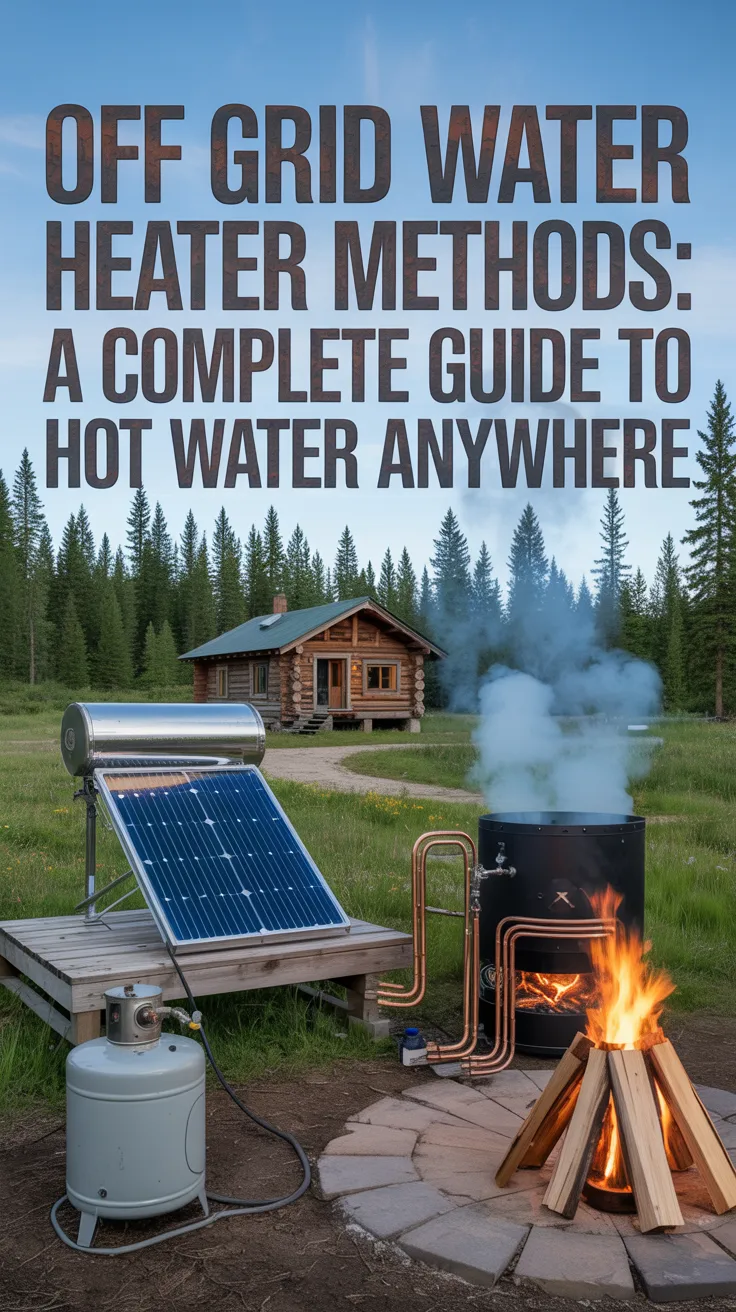
If you’re building a homestead, outfitting a remote cabin, or just want more resilience at home, understanding off grid water heater methods is one of the smartest upgrades you can make. From sunshine and wood scraps to propane, solar PV, and even compost heat, there are multiple ways to get reliable hot water with or without the grid. This guide compares the major options, shows you how to size a system correctly, and helps you choose the best fit for your climate, budget, and fuel availability.
If you’re also setting up a robust off-grid water supply, consider pairing your heating system with SmartWaterBox for compact, modular water management and added resilience.
Table of Contents
How to plan off grid water heater methods that fit your site
Before we dive into solar collectors and rocket stoves, start with a plan. Off-grid success is all about balancing energy demand, climate realities, and maintenance capacity.
Key planning steps:
- Identify daily hot water demand: showers, dishwashing, laundry, and hand-washing. A typical person uses 10–20 gallons of hot water per day in an efficient off-grid home; aim lower with low-flow fixtures.
- Calculate energy needs: heating water takes significant energy. Roughly, each gallon weighs 8.34 lb. To raise 30 gallons by 60°F (e.g., 55°F to 115°F), you need 8.34 × 30 × 60 ≈ 15,000 BTU, or about 4.4 kWh (1 kWh ≈ 3,412 BTU).
- Decide on storage vs. on-demand: storage tanks buffer intermittent sources (solar), while on-demand units (propane) deliver heat only when needed.
- Consider climate: freezing temps, frost depth, and cloud cover strongly affect system choice. Solar thermal thrives in sunny, mild climates; propane or wood may suit deep-winter locations.
- Map fuel availability: wood from your property, bulk propane delivery, or a well-sized solar PV array each enable different strategies.
- Plan for water quality: hard water scales heat exchangers and tankless heaters. Integrate sediment and scale control (pre-filter, softener, or anti-scale media) to protect your investment.
- Prioritize safety: include a temperature and pressure (T&P) relief valve, anti-scald mixing valve (tempering valve), and proper venting for combustion devices. Use PEX or copper rated for high temp.
System architectures to consider:
- Single-source: one heater sized for your peak needs.
- Hybrid: solar thermal for daytime and a backup (propane or wood) for cloudy periods.
- Thermal storage: oversized tanks soak up surplus heat from solar or PV-driven elements, then deliver steady hot water.
Water source matters as much as heat. If you’re developing a well or pulling from a spring, a resource like Joseph’s Well can help you secure reliable on-site water before you invest in heating hardware.
Solar off grid water heater methods that make the most of your sun
Solar thermal harnesses sunlight directly to heat water. It’s one of the most efficient off-grid methods where sunlight is consistent, especially from spring through fall in temperate zones.
Main solar thermal types:
- Batch/ICS (Integral Collector Storage): a dark tank or tubes inside an insulated glazed box. Simple, low-cost, and passive. Best in mild climates; add freeze protection in cold regions.
- Flat-plate collectors: insulated box with a dark absorber, copper tubing, and glazing. Good all-around performance; rugged and proven.
- Evacuated tube collectors: rows of vacuum-sealed tubes minimize heat loss and excel in cold, windy areas and shoulder seasons.
Circulation strategies:
- Thermosiphon: tank above the collector; hot water rises naturally. No pump or controller. Requires careful placement and freeze awareness.
- Active closed-loop with glycol: food-grade antifreeze circulates through the collector and a heat exchanger in the tank, controlled by a differential controller and small pump. Robust freeze protection.
- Drainback: water drains to a reservoir when the pump stops, protecting from freezing and overheating.
Freeze and overheat management:
- Use propylene glycol in closed loops in cold climates.
- In ICS systems, add freeze-tolerant collectors, drainable plumbing, and consider seasonal shutdown.
- Address stagnation: size collectors appropriately, include heat dumps, or use controller logic that prevents extreme temperatures.
DIY-friendly solar batch heater sketch:
- Materials: insulated plywood box, reflective insulation, dark-painted tank or copper coil, tempered glass or polycarbonate glazing, high-temp plumbing, and a mixing valve.
- Steps: build a box with R-10+ insulation; mount the tank/coil on a slight tilt; paint absorber black; install glazing with weather seals; plumb cold-in at bottom, hot-out at top; route to a tempered mixing valve; secure and anchor the unit against wind uplift.
- Use: ideal for summer cabins, outdoor showers, and as a preheater upstream of a backup heater.
Sizing tips:
- A rule of thumb is 1–1.5 gallons of storage per square foot of collector for balanced systems.
- Tilt collectors to your latitude plus 10–15° for better winter performance if year-round use is intended.
Solar thermal pairs beautifully with a backup heat source to carry you through storms or winter. It reduces fuel consumption dramatically without sacrificing comfort.
Wood-fired and biomass heaters for abundant, renewable hot water
If you have access to sustainable firewood or woody debris, wood-fired systems can deliver reliable, high-temperature hot water with independence from gas or grid power. They demand respect and good design for safety.
Approaches to use wood heat:
- Wood cookstove or heater with water jacket: a built-in water coil or jacket transfers heat to a storage tank via a heat exchanger loop.
- Side-arm or flue-pipe coil: copper coil wrapped around stove pipe or embedded in stove body, circulating water thermosiphon-style to a nearby tank. Use only if the stove manufacturer allows; improper coils can create dangerous pressures.
- Rocket stove water heater: a high-efficiency combustion core heats a pot or coil. Great for camp/showers but should be engineered for safe venting and flow.
Safety essentials:
- Use an open, non-pressurized loop or an appropriately rated expansion tank to accommodate thermal expansion.
- Install a T&P relief valve directly on any closed vessel that can be heated.
- Add an anti-scald mixing valve to blend down storage temperatures (often 140°F+) to a safe 120°F at taps.
- Ensure consistent flow through coils when the fire is lit; stagnant water in a heated coil can flash to steam.
- Vent combustion gases properly and maintain clearances to combustibles.
System example: cookstove with thermosiphon tank
- A copper coil on the stove jacket connects to the side of an insulated storage tank.
- Hot water rises from the coil’s top outlet into the tank’s upper side port; cooler water returns from the tank’s low port to the coil inlet.
- No pump is required; add a vented header tank for open-loop safety, and place the storage tank above the stove coil for reliable thermosiphon.
Pros:
- Uses local biomass and scrap wood.
- Works during grid outages and harsh winters.
- Can tie into whole-house heating via hydronic loops.
Cons:
- Requires manual fire management.
- Potential for creosote; flue cleaning is non-negotiable.
- Higher scald and pressure risks if not designed correctly.
Wood-fired systems excel when you already heat with wood or cook daily on a stove. With the right controls and safety devices, they can be the backbone of an off-grid hot water setup.
Propane-powered strategies for on-demand reliability
Propane (LPG) is popular off-grid because it stores long-term, delivers high energy density, and powers efficient on-demand heaters. It’s ideal as a primary heater in cold climates or as a backup to solar thermal.
Tankless propane water heaters:
- Deliver hot water only when you open a tap, eliminating standby losses.
- Flow rate is limited by temperature rise. For example, a 100,000 BTU/hr unit at ~80% efficiency might supply roughly 3 GPM with a 60°F rise. If your groundwater is 45°F and you want 110°F, plan around 2–3 GPM.
- Some models use electronic ignition requiring 120V; others use batteries (D-cells) or piezo igniters, which are off-grid friendly.
Installation notes:
- Venting: direct-vent or power-vent models must exhaust outdoors and supply combustion air safely. Follow clearances and use appropriate vent kits.
- Condensation: high-efficiency condensing units require condensate drainage; account for freezing.
- Water quality: scale buildup reduces heat transfer. Plan for periodic descaling with a small pump and vinegar or use anti-scale conditioning upstream.
- Elevation and derating: high altitude reduces combustion efficiency; check manufacturer guidance.
Storage tank plus propane backup:
- A hybrid approach uses a solar preheat tank feeding a small propane tankless unit. When solar delivers hot water, the tankless barely fires; when solar is weak, propane takes over seamlessly.
Safety and controls:
- Install CO detectors near sleeping areas.
- Use a mixing valve and leave the heater set high to expand usable capacity without scald risk.
- Protect exterior plumbing with insulation and heat trace in freezing areas.
When water access is part of the plan, combine a reliable heater with a resilient source. As you blueprint your system, explore Joseph’s Well for strategies to establish dependable groundwater access that matches the rest of your off-grid infrastructure.
Electric paths off grid: heat pumps, PV diversion, and hybrid thinking
Electric hot water can work off-grid, especially when you harvest ample solar power. The key is efficiency and smart control.
Heat pump water heaters (HPWH):
- These move heat from ambient air to water at 2–3x the efficiency of resistance elements (Coefficient of Performance, COP 2–3+).
- They excel in warm spaces (utility room, garage) where they also dehumidify; in cold spaces, performance drops and they may chill the room.
- Off-grid integration: schedule operation during peak solar generation; pair with a larger storage tank to bank heat.
Direct PV-to-water approaches:
- DC elements with PV diversion: route surplus PV to a dedicated DC immersion element in a storage tank. As array output rises, you “charge” thermal storage instead of curtailing PV.
- AC diversion via smart controllers: prioritize battery charging and critical loads; when batteries are full, a diverter powers an electric element.
- Best with oversized arrays that produce more energy than your daily electrical needs in sunny seasons.
Conventional electric tanks:
- Simple but energy-hungry. If you run a generator regularly, use a timer to heat during generator hours and keep the rest of the day off.
- Consider thick insulation, insulating blankets, and low setpoints with a mixing valve for safety and efficiency.
Point-of-use and demand reductions:
- Install low-flow showerheads (1.25–1.5 GPM), aerators, and thermostatic mixing valves.
- Use point-of-use mini-tanks near far fixtures to reduce pipe losses and long waits.
Off-grid electrical notes:
- Account for start-up surges of HPWH compressors and ensure your inverter/charger and battery bank can handle them.
- Place HPWH units where condensate can drain without freezing issues.
- Combine with solar thermal or propane for a balanced, resilient system that adapts to weather and seasons.
Electric options shine when you already invest in a substantial PV system. Use thermal storage like a battery—charge it when the sun is strong, spend it when it’s not.
Low-tech and emergency-ready hot water with minimal gear
Sometimes you need hot water now with scraps, sunshine, or a small flame. Low-tech off grid water heater methods can bridge gaps, serve seasonal cabins, or provide redundancy.
Sun-powered simplicity:
- Black hose coil: wind 100–200 feet of black polyethylene hose on a plywood disk, tilt toward the sun, and run water slowly for solar-warmed output. Great for outdoor showers.
- Solar shower bags: hang in direct sun; perfect for weekend trips and backup hygiene.
- DIY batch barrel: a steel or glass-lined tank or black-painted drum inside a glazed box provides day-to-day heat in fair weather.
Fire-based options:
- Kettle and pot systems: heat water on a wood stove or open fire for dishwashing and sponge baths. Store in a thermos to extend utility.
- Camp-style portable propane heaters: handy for showers and washing; use outdoors or with proper ventilation.
- Rocket stove heaters: high-efficiency combustion boils water fast; ensure any coil designs allow continuous flow and pressure relief.
Compost and ground heat:
- Compost heating, inspired by the Jean Pain method, can maintain warm water in loops running through large, fresh woodchip piles. It’s experimental, space-intensive, and works best as a supplement, not a sole source.
- Ground-coupled preheating: bury intake lines or run through earth tubes to lift water temperature slightly before final heating.
Cold climate tactics:
- Drain-back and isolation valves on seasonal systems.
- Portable systems you can bring indoors at night.
- Insulate exposed lines and use heat tape where safe and supported by your power budget.
If you’re building a compact, gravity-friendly setup for washing stations or garden work, a modular unit like Aqua Tower can complement these low-tech heaters by making storage and delivery simpler without overcomplicating your system.
Plumbing integration, freeze protection, and maintenance that keep systems alive
Good plumbing design turns a collection of components into a reliable hot water system. Here’s how to integrate, protect, and maintain your off-grid investment.
Smart plumbing layout:
- Centralized mechanical “hub”: storage tank, heat exchanger, valves, and filters in one accessible location.
- Short, insulated runs to bathrooms/kitchen reduce losses. Consider point-of-use boosters where long runs are unavoidable.
- Tempering valve on the main hot outlet to guard against scalds; set to 120°F target with a high-temp storage tank to improve effective capacity.
Heat exchangers and recirculation:
- Side-arm heat exchangers on storage tanks allow solar or stove loops to add heat without mixing fluids.
- Drainback loops for solar prevent freeze damage by default.
- Avoid continuous recirculation unless necessary; if used, insulate the loop heavily and control it with timers or demand-activated pumps.
Freeze protection:
- Use closed-loop glycol for solar in freezing climates.
- Insulate exterior lines with high-R foam and UV-resistant wrap; add heat trace only where necessary and power is available.
- Bury supply lines below frost depth; slope for drainage and include isolation valves to winterize sections easily.
Legionella and water hygiene:
- Keep storage at or above 140°F and blend down at the tap to 120°F for safety, especially in seldom-used systems.
- Flush rarely used lines periodically.
- Treat source water appropriately. Sediment and activated carbon filtration protect fixtures; a safe disinfectant regime (chlorination or UV) tackles microbes when needed.
Maintenance routines:
- Descale tankless heaters: flush with white vinegar or a manufacturer-recommended solution using a small pump and bucket every 6–12 months in hard water areas.
- Inspect anode rods in tanks annually; replace when more than half consumed.
- Check T&P valves by briefly actuating the lever; replace any valve that weeps or fails to reseat.
- Examine solar collectors and piping each season for leaks, insulation damage, and glazing seals; verify controller sensor readings.
- Sweep wood stove flues regularly and inspect coils for soot buildup.
Boost efficiency:
- Insulate the first 10–15 feet of hot and cold lines at the tank.
- Add a drain-water heat recovery unit on vertical shower drains to reclaim 30–60% of outgoing heat.
- Use low-flow fixtures and aerators to stretch every heated gallon further.
Resilience is not one device—it’s a system that’s easy to service, safe to operate, and matched to your habits and climate.
Choosing the best pathway based on climate, budget, and lifestyle
Bringing it all together, your ideal off-grid hot water solution balances up-front cost, fuel, climate performance, and maintenance effort.
Best-fit snapshots:
- Sunny, mild climate, low-maintenance: closed-loop solar thermal with glycol, 80–120 gallon storage, and a compact propane tankless backup. Add drain-water heat recovery for extra efficiency.
- Cold climate, wood-heated home: cookstove coil feeding a well-insulated storage tank with tempering valve, plus a small propane tankless for summer or low-fire days. Solar thermal optional if winter sun is limited.
- PV-rich homestead: heat pump water heater scheduled for midday operation plus PV diversion to an immersion element in a larger tank. A small propane or resistive backup covers long storms.
- Budget/seasonal cabin: DIY batch heater or black hose coil for summer, portable propane heater for shoulder seasons, and a kettles-and-thermos routine for minimal needs.
Decision checklist:
- What’s your water source temperature and quality?
- How many simultaneous hot water uses do you need (shower + sink)?
- What fuel is most dependable for you year-round?
- Can you commit to periodic maintenance (descaling, flue cleaning)?
- What safety devices have you integrated (T&P valve, mixing valve, CO alarms)?
For a robust water backbone that supports any heating path, explore SmartWaterBox for modular water management and Joseph’s Well to help establish a reliable source. To round out storage and delivery, the compact Aqua Tower can integrate smoothly with gravity-fed or pump-driven layouts.
Recommended resources for resilient off-grid water
These resources pair naturally with the heating methods in this guide:
- SmartWaterBox — A compact, modular way to organize water storage and delivery for off-grid systems.
- Joseph’s Well — Practical guidance for developing dependable on-site water sources.
- Aqua Tower — A space-efficient solution to streamline basic water storage and access.
Use them to secure your supply side, then layer on the heating method that best fits your climate and fuel plan.
Conclusion
There’s no single “best” off grid water heater method—there’s a best-for-you approach that aligns climate, fuel, and lifestyle. In sunny regions, solar thermal with a propane backup can slash fuel use while delivering comfort. In wood-rich, cold climates, a cookstove coil and insulated storage tank shine. If you’re already investing in solar PV, a heat pump water heater with thermal storage offers excellent efficiency. Across all paths, safety devices (T&P valve, tempering valve), freeze protection, and maintenance habits are what turn a clever setup into a dependable one.
Start by sizing your system honestly, then choose a primary heat source and a simple backup. As you build, strengthen your water source and storage so your hot water remains reliable regardless of weather or outages. For help on the supply side, consider SmartWaterBox, explore Joseph’s Well, and simplify delivery with the Aqua Tower. With the right mix, you’ll enjoy steady, safe hot water anywhere.
FAQ
What is the most efficient off grid water heater method?
Solar thermal is typically the most efficient because it converts sunlight directly into heat. In colder or cloudier climates, pairing solar with a propane tankless or wood-fired backup maintains comfort while keeping fuel use low.Can I run a tankless water heater off-grid with propane and no electricity?
Yes, some propane tankless units use battery ignition and hydrogenerators instead of 120V power. Choose models designed for off-grid use and ensure proper venting, gas supply, and freeze protection.How do I size an off grid water heater for two showers at once?
Estimate your combined flow (e.g., two 1.5 GPM showers = 3 GPM) and your temperature rise (desired 110°F minus incoming water temperature). Pick a unit that can deliver that GPM at the required rise or use storage plus a mixing valve to buffer demand.How do I prevent freezing in solar off grid water heater methods?
Use a closed-loop glycol system with a heat exchanger, or a drainback design that empties collectors when the pump stops. Insulate all exterior lines, slope for drainage, and add isolation valves for easy winterization.Is a wood-fired coil on a stove safe for domestic hot water?
It can be, but it must be designed correctly. Use an open or properly expanded loop, install a T&P relief valve, maintain continuous flow when firing, and follow the stove manufacturer’s guidance. Improper coils can be dangerous; prioritize safety.Should I choose a heat pump water heater on solar PV?
If you have sufficient PV capacity and an inverter that can handle compressor startup, a heat pump water heater offers excellent efficiency. Schedule it to run during sunny hours and consider a larger tank to store heat for evenings.What about water quality—will hard water damage my system?
Hard water scales heat exchangers and tankless units, reducing performance. Install a sediment filter and consider a softener or anti-scale solution. Plan to descale tankless heaters every 6–12 months in hard water regions.