
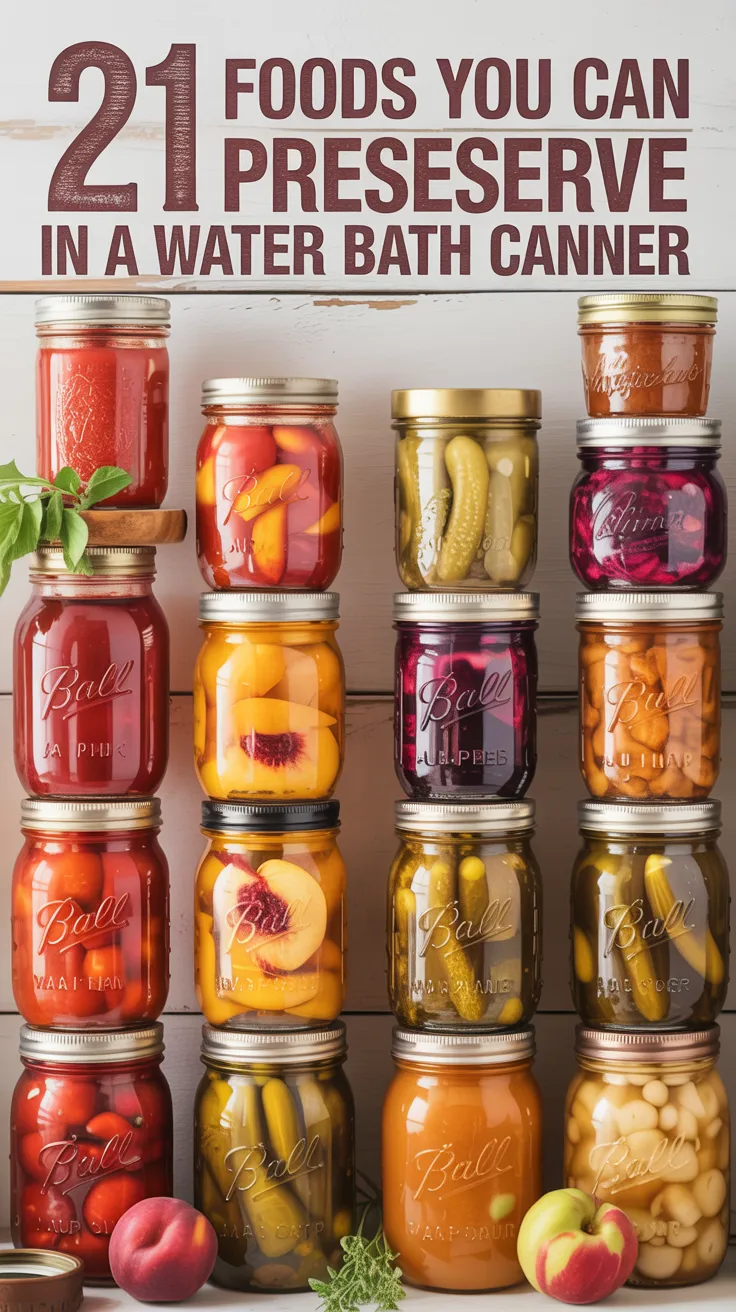
Home canning with a boiling water bath is one of the safest, most satisfying ways to stock your pantry—especially for high‑acid foods. This guide walks you through the fundamentals and gives you a curated list of 21 foods you can preserve in a water bath canner, plus pro workflow tips, troubleshooting, and trusted resources to keep your jars sealed and your family fed.
If you want deeper inspiration for long‑lasting pantry staples, check out The Lost SuperFoods for time‑tested recipes and preservation ideas that complement traditional canning approaches: The Lost SuperFoods.
Whether you’re brand‑new to canning or looking to expand your repertoire, you’ll find everything you need here to plan smart batches, avoid common mistakes, and enjoy shelf‑stable flavor all year.
Table of Contents
Why water bath canning works and which foods belong in a water bath canner
Water bath canning safely preserves high‑acid foods by bringing filled jars to a rolling boil (212°F/100°C) for a recipe‑specific time. This heat, combined with an acidic pH (≤4.6), destroys molds, yeasts, and many bacteria and forms a vacuum seal as jars cool. Low‑acid foods require higher temperatures than boiling water can deliver; that’s why pressure canning exists.
Key safety principles
- High acid only: Fruits, acidified tomatoes, most jams/jellies, pickles, relishes, chutneys, fruit syrups, and properly fermented sauerkraut are safe for a water bath canner.
- Low acid needs pressure: Plain vegetables (like green beans, carrots, corn), meats, poultry, seafood, and soups are not safe to water bath can unless they are pickled or preserved in a recipe specifically designed and tested for boiling‑water processing.
- Tested recipes matter: Always use recipes from trusted sources (e.g., National Center for Home Food Preservation, cooperative extension services, or reputable canning manuals). These recipes have validated pH, jar size, headspace, and processing times.
- Acidification when required: Tomatoes vary in acidity. Add bottled lemon juice or citric acid as directed by tested recipes. Salsas, chutneys, and relishes rely on exact vinegar ratios to keep pH safe.
- No “winging it”: Don’t change jar sizes, vinegar strengths, or thickeners. If a recipe specifies liquid pectin or Clear Jel for pie filling, use exactly that. Substituting flour, cornstarch, or low‑acid ingredients can make food unsafe.
- Headspace and venting: Correct headspace and an active boil for the full time ensure air escapes and a vacuum forms. Incomplete processing is the most common cause of failed seals.
Timing and altitude
- Start the clock only when water returns to a full rolling boil after loading the jars.
- Increase processing times for altitude. Follow the adjustment notes in your tested recipe. Typical guidance adds 5 minutes for 1,001–3,000 ft, 10 minutes for 3,001–6,000 ft, and 15 minutes above 6,000 ft.
Storage and shelf life
- Store sealed jars in a cool, dark place, ideally 50–70°F (10–21°C).
- Most high‑acid canned goods maintain best quality for about a year; safe longer if sealed and not spoiled, but flavor and texture may decline.
Essential gear and setup for reliable seals
You don’t need a specialty rig to start, but certain tools save time and prevent breakage.
Core equipment
- Boiling water canner or a deep, lidded stockpot with a rack: Needs 1–2 inches of water covering the tallest jars.
- Canning jars: Use standard, undamaged Mason‑type jars. Inspect for chips or hairline cracks.
- Two‑piece lids: New flat lids each time; bands can be reused if rust‑free and true.
- Jar lifter, canning funnel, bubble remover/headspace gauge, magnetic lid wand: Improve safety and accuracy.
- Clean towels, ladle, slotted spoon: For filling and cleanup.
- Timer and thermometer: Keep your process precise.
Water quality and mineral content
- Use potable water. Hard water can leave mineral film on jars; add a splash of vinegar (1–2 tablespoons per quart of canner water) to reduce cloudiness on the outside of jars.
- If you’re on well water or suspect off‑flavors, consider filtering water for better‑tasting brines, syrups, and delicate jams.
Jar prep
- Wash jars, lids, and bands in hot, soapy water; rinse well.
- You don’t need to pre‑sterilize jars if the processing time is 10 minutes or longer. For shorter processes, sterilize jars by boiling for 10 minutes (adjust for altitude).
- Keep jars hot until filling to prevent thermal shock.
Packing options
- Raw‑pack: Add raw produce and hot liquid; good for pickles.
- Hot‑pack: Heat food before loading; improves air removal and yield for many fruits and relishes.
Workspace tips
- Set up a clean, clutter‑free area with a “hot side” and a “clean jar side.”
- Line the counter with towels. Warm your lids per manufacturer guidance (modern lids typically do not require simmering).
- Plan a logical flow: jar staging, fill, bubble‑remove and headspace check, rim wipe, lid on, ring to fingertip‑tight, into the canner.
A step‑by‑step workflow for confident water bath canning
Follow this reliable rhythm for consistent, safe results.
- Prep your recipe
- Measure exactly. Vinegar must be at 5% acidity unless a tested recipe specifies otherwise.
- Pre‑mix spices for pickles and relishes to avoid last‑minute scrambling.
- Heat the canner
- Fill the canner with enough water to cover jars by 1–2 inches, plus extra to account for jar displacement.
- Start heating water to near‑simmer for hot‑packed foods; keep jars hot in a separate pot or the canner.
- Fill jars
- Pack food per recipe (raw or hot pack). Ladle boiling brine, syrup, or sauce over solids, leaving the specified headspace (common ranges: 1/4 inch for jams/jellies; 1/2 inch for fruits/pickles).
- Slide a bubble remover around the jar’s interior to release trapped air; recheck headspace.
- Wipe rims with a clean damp cloth (vinegar on cloth helps remove sticky residue). Center lid and apply band just until fingertip‑tight.
- Process
- Place jars on the rack in the canner. Ensure water covers them by 1–2 inches.
- Cover, bring to a vigorous rolling boil, then start your timer for the full recipe time.
- Maintain a steady, rolling boil—vigorous, not violent—to limit siphoning (liquid loss).
- Cool down
- When time is up, turn off heat. Let jars rest in the water for 5 minutes to reduce siphoning.
- Lift jars straight up and set them on a towel, leaving space between jars. Do not tip to drain water.
- Check seals
- Let jars sit undisturbed 12–24 hours. Remove bands, test seals (lids should be concave and not flex).
- Wipe jars, label with contents and date, and store without bands for easy spoilage detection.
- If a seal fails
- Refrigerate and use soon, or reprocess within 24 hours using a new lid and fresh hot liquid, observing all safety steps again.
The 21 foods you can preserve in a water bath canner
These high‑acid foods or acidified recipes are ideal for boiling‑water processing. Always use a tested recipe for the exact jar size, headspace, and time.
- Applesauce
- Naturally high acid and very forgiving. Sweeten to taste; add cinnamon or vanilla safely after canning when reheating, or choose a tested spiced recipe.
- Apple pie filling (with Clear Jel)
- Use only tested formulations with Clear Jel (a canning‑approved starch). Do not substitute flour or cornstarch.
- Apple butter
- Many tested recipes are safe for water bath canning. Cook to desired thickness before filling jars; avoid adding low‑acid ingredients.
- Peach halves or slices
- Hot pack in light syrup, juice, or water. Slip skins easily after a brief blanch and ice bath.
- Pears in syrup
- Hot pack for great texture; add a strip of lemon peel or vanilla bean for aroma (flavoring only—don’t alter acid ratios).
- Cherries (sweet or sour)
- Process pitted cherries in syrup or as jam/jelly. Sour cherries make exceptional jam with natural pectin.
- Plums
- Whole or halved, in light syrup. Great for quick desserts and compotes.
- Apricots
- Halved apricots hold texture well in hot‑pack syrup.
- Cranberry sauce
- High‑acid and pectin‑rich; jars beautifully for holidays.
- Grape jelly
- A classic jelly with reliable set and bright flavor.
- Strawberry jam
- Use tested pectin or long‑boil methods; watch set to avoid overcooking.
- Blueberry jam
- Delicious and easy; a quick pinch of acid (lemon juice) brightens flavor and helps set.
- Peach jam or preserves
- Soft‑set preserves showcase fruit texture; adhere to sugar and acid levels in tested recipes.
- Tomato sauce (acidified)
- Add bottled lemon juice or citric acid to each jar as directed. Do not thicken with flour or cornstarch.
- Tomato salsa (acidified, tested)
- Follow a tested recipe precisely—ratios of tomato to vinegar/lemon juice/onion/peppers are critical. Do not alter jar size.
- Pickled cucumbers (dill, bread‑and‑butter)
- Vinegar brine (5% acidity) keeps pH safe. Use calcium chloride (Pickle Crisp) as a safe optional additive for crunch if a tested recipe allows.
- Pickled beets
- Earthy, sweet‑sour; great candidate for spices like clove and cinnamon in tested proportions.
- Pickled carrots
- Crisp when hot‑packed properly; delicious with garlic and dill or sweet‑spiced brines.
- Pickled onions
- Pearl onions or sliced red onions take on vivid color and sweet‑tart flavor.
- Pickled peppers
- Use a tested brine and pack safely. Hot peppers add robust flavor to sandwiches and tacos.
- Pickled okra or green beans
- Low‑acid vegetables made safe by vinegar brine. Keep ratios exact and follow tested hot‑pack instructions.
Note: Fermented sauerkraut also has water bath processing methods in many tested recipes to stabilize jars after fermentation. Follow those specific directions if you choose to can kraut.
Mid‑project water reliability tip: A full day of canning can use many gallons of clean water for washing, heating, and processing. If water interruptions are a concern, having on‑hand storage and purification adds resilience. A compact option for homes and small spaces is SmartWaterBox to keep safe water ready for canning days or emergencies.
Flavor boosts, substitutions, and safe tweaks
Canning is both science and art—just keep the science intact while you play within safe boundaries.
Safe flavor accents
- Dry spices and herbs: Mustard seed, dill seed, coriander, peppercorns, chili flakes, and bay leaves are fine in pickles and relishes; use amounts the recipe allows or adjust modestly without changing liquid‑to‑veg ratios.
- Citrus zest and vanilla: Aroma boosters that don’t affect pH significantly when used sparingly.
- Whole spices in fruit: Cinnamon sticks, star anise, cloves, and cardamom pods can be simmered in syrups and removed before packing if you want a clean look.
Sugar, salt, and vinegar
- Sugar affects gel set and shelf quality in jams and jellies. Low‑ or no‑sugar pectin formulas are available—use recipes designed for them.
- Pickle salt or pure canning salt prevents cloudy brines; avoid anti‑caking agents.
- Use 5% white or apple cider vinegar as specified. Do not reduce vinegar or dilute with extra water unless the tested recipe allows.
Thickeners and texture
- Jams/jellies: Use pectin type specified (liquid vs. powdered). Don’t swap without a recipe that supports the change.
- Pie fillings: Only Clear Jel (cook‑type) is approved for canning. Flour, cornstarch, tapioca, or arrowroot can create unsafe densities.
- Crunch in pickles: Quick chill in the fridge before packing, use small firm cucumbers, trim blossom ends, and consider calcium chloride if allowed by your recipe.
Fruit acidity tips
- A splash of bottled lemon juice brightens strawberry and peach jam and aids gelling.
- Avoid adding low‑acid veggies to fruit spreads unless a tested recipe specifically includes them.
Tomatoes and salsas
- Never increase onions or peppers beyond tested ratios; they reduce acidity.
- You can safely substitute equal amounts of peppers for peppers (e.g., jalapeño for serrano) of similar heat if total volume stays the same.
Batch planning, seasonal calendar, and pantry rotation
Canning is most efficient when you plan around produce peaks, jar sizes, and time blocks.
Plan by season (example rhythm)
- Late spring to early summer: Strawberry jam, cherry compote/jam, pickled onions.
- Midsummer: Blueberry jam, dill pickles, peach halves, peach jam, pickled peppers.
- Late summer to early fall: Acidified tomato sauce, salsa, pickled beets, pickled carrots, relish.
- Fall and holidays: Applesauce, apple butter, apple pie filling, cranberry sauce/jelly, chutneys.
- Winter: Inventory, label checks, and planning next year’s seed or farm‑stand buys.
Jar sizes and serving math
- Half‑pint jars: Jams, jellies, chutneys—think “table size.”
- Pint jars: Salsas, relishes, applesauce for small households.
- Quart jars: Fruits in syrup, tomatoes for family meals.
- Aim for a 3–6 month rotation plan at first. Track what you actually eat so you scale up the right items next year.
Workflow blocks for a smooth day
- Pre‑day: Wash jars, stage spices, make labels, and thaw any frozen fruit you plan to can.
- Morning: Heat canner, cook fruit spreads or sauces first (they set well while cooling), then move into pickles and relishes.
- Afternoon: Finish final batches; leave bands off overnight after seals form for easier inspection.
Inventory and rotation
- Label each jar with product, batch date, and any notes (e.g., “less sugar”).
- Store in the dark, ideally 50–70°F (10–21°C). High temperatures degrade quality.
- First in, first out. Use older jars first and keep a simple shelf map of what’s where.
Reliability and water on hand
- Power blips or water issues can stall a canning day. Consider having backup water stored and a simple gravity‑fed or countertop system ready. If you want a modular, at‑home solution for safe water access, review Aqua Tower as a preparedness add‑on for your kitchen or pantry space.
Troubleshooting common canning problems
Even careful canners hit occasional snags. Here’s how to diagnose and fix the most common ones.
Siphoning (liquid loss from jars)
- Likely causes: Over‑vigorous boil, insufficient headspace, rushing jars from the canner, or skipping the 5‑minute rest after processing.
- Prevention: Maintain a steady—not violent—boil; use correct headspace; let jars rest in hot water 5 minutes before removing; avoid sudden temperature swings.
Cloudy brine
- Harmless cause: Hard water minerals or fine starch from produce.
- Problematic cause: Spoilage organisms.
- Fix/prevention: Use pickling/canning salt, rinse produce well, add a tablespoon of vinegar to canner water, and always follow tested recipes. If brine is milky with off‑odors or gas, discard the jar.
Soft pickles
- Causes: Overripe/large cucumbers, blossom ends not removed, waterlogged cucumbers, or too long a heat process.
- Prevention: Use small, firm cucumbers; trim blossom ends; consider calcium chloride if recipe allows; avoid overprocessing.
Jam or jelly that won’t set
- Causes: Under‑cooking, pectin type mismatch, low acidity, or overly ripe fruit (lower pectin).
- Fix: Many no‑set spreads can be recooked with additional pectin following a reputable “re‑make” method within 24–48 hours, or enjoy as syrup.
- Prevention: Measure sugar accurately, use the specified pectin type, and include required lemon juice.
Failed seals
- Causes: Food residue on rims, rings too tight or too loose, worn lids, wrong headspace, or insufficient processing.
- Fix: Reprocess within 24 hours with a new lid and fresh hot liquid; verify rim cleanliness and headspace. Otherwise, refrigerate and use promptly.
Floating fruit
- Causes: Air in fruit tissues or loose pack.
- Fix: Use a hot‑pack method for fruits; de‑bubble thoroughly; expect some float initially—often it redistributes after a few weeks.
Jar breakage
- Causes: Thermal shock or a chipped rim.
- Prevention: Keep jars hot until filling; avoid placing hot jars on cold surfaces; inspect jars for defects.
Build a safer, smarter pantry starting today
A well‑planned canning routine makes your kitchen more resilient and your meals more delicious. For a deeper library of pantry‑friendly recipes and old‑world methods that complement modern canning, explore The Lost SuperFoods. And if you value being medically prepared while cooking and preserving at home, having a plain‑language reference can bring peace of mind—consider Home Doctor as part of your household readiness kit.
Recommended resources and gear for canning and readiness
- The Lost SuperFoods: A curated collection of classic, long‑lasting food ideas to pair with your canning projects: The Lost SuperFoods
- SmartWaterBox: Compact water storage/purification to ensure clean water for brines, syrups, and sanitation on busy canning days: SmartWaterBox
- Aqua Tower: A practical, at‑home option for maintaining safe water access if your tap supply is interrupted: Aqua Tower
- Joseph’s Well: Another resource for improving household water resilience—especially useful if you rely on well water or want redundancy: Joseph’s Well
Use these resources as complements to tested canning recipes and safe kitchen practices.
Conclusion
With the right equipment, accurate recipes, and a clear workflow, there are at least 21 foods you can preserve in a water bath canner to keep your pantry colorful, flavorful, and ready for any season. Start with a couple of simple jams or pickles, get comfortable with acidified tomatoes and relishes, and build out a rotation plan that matches how your household actually eats. The combination of safe methods, clean water, and thoughtful batch planning will reward you with dependable seals and jars you’ll be proud to serve and share.
FAQ
What is water bath canning and when should I use it?
- Water bath canning uses a boiling water canner to preserve high‑acid foods like fruits, jams, jellies, pickles, relishes, chutneys, fruit syrups, and acidified tomatoes. It is not safe for low‑acid foods like plain vegetables, meats, poultry, or seafood.
Can I preserve vegetables in a water bath canner?
- Only if they are in a tested pickled recipe (with sufficient 5% vinegar) or are part of a high‑acid, tested formulation (like some relishes). Plain vegetables must be pressure canned.
Do I need to sterilize jars before canning?
- If your processing time is 10 minutes or longer (adjusted for altitude), you do not need to pre‑sterilize jars. Wash them well and keep them hot. For processes under 10 minutes, sterilize jars by boiling for 10 minutes (longer at higher altitudes).
How long do home‑canned foods last?
- For best quality, use within one year. Sealed jars may remain safe longer if stored properly in a cool, dark place, but flavors and textures can decline over time. Always inspect for signs of spoilage before consuming.
Can I safely water bath can tomato sauce and salsa?
- Yes—if you acidify tomatoes with bottled lemon juice or citric acid and follow a tested recipe for the exact jar size and processing time. Salsas must be from tested recipes; do not change the ratios of tomatoes, peppers, onions, or vinegar.
How do I adjust processing time for altitude in a water bath canner?
- Most tested recipes provide altitude adjustments. A common rule adds 5 minutes for 1,001–3,000 ft, 10 minutes for 3,001–6,000 ft, and 15 minutes for 6,001–8,000+ ft. Always follow the recipe’s specific guidance.
What should I do if a jar doesn’t seal?
- Refrigerate and use promptly, or reprocess within 24 hours with a new lid and fresh hot liquid, ensuring rims are clean, headspace is correct, and the full rolling boil time is met.
How can I keep pickles crunchy?
- Use firm, small cucumbers; trim blossom ends; follow a tested hot‑pack process; and consider calcium chloride if your recipe allows. Avoid overprocessing and keep a steady—not violent—boil.