
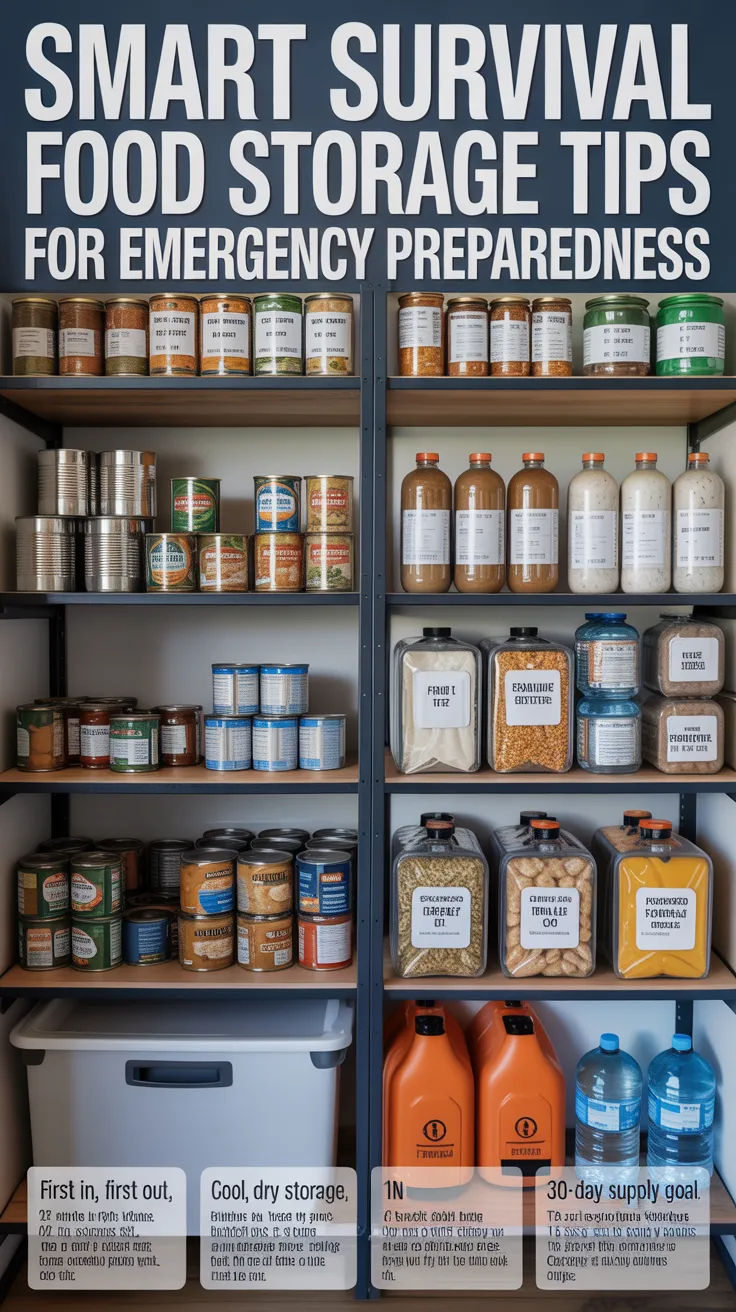
When the power goes out, roads close, or supply chains falter, a reliable pantry buys you time, options, and peace of mind. These smart survival food storage tips for emergency preparedness show you how to build a balanced, affordable, and low-waste reserve that your family will actually eat—while keeping water, nutrition, and organization front and center. As you plan, remember that water security is just as vital as food. A practical off-grid option like the Aqua Tower can complement stored water and increase your resilience when taps run dry.
Table of Contents
Smart survival food storage starts with a risk-ready plan
Before you buy a single can, define your realistic scenarios, timeline, and constraints. This step keeps your budget focused and your shelves useful rather than random.
- Map your likely emergencies: power outages, winter storms, hurricanes, wildfires, supply disruptions, job loss, or a mix. Each scenario can stress your pantry differently—no-cook foods for outages, compact items for evacuations, bulk staples for long disruptions.
- Choose a time horizon: 72 hours, two weeks, three months, six months, or a full year. Start with a week, then expand in steady increments. Your plan should grow proportionally—don’t jump straight to a one-year plan without a base.
- Calculate quantities per person: A practical target is about 2,000 calories per adult per day, adjusted for age, activity, and health. For children or seniors, lower totals may suffice. Consider extra calories for manual labor during recovery.
- List constraints: space (apartment vs. basement), climate (heat and humidity swing), dietary needs (gluten-free, low-sodium, allergies), cooking fuel, and water availability. If you can’t count on utilities, include more ready-to-eat items and shelf-stable, no-cook options.
- Decide your cooking capability: Do you have a camp stove, grill, rocket stove, or solar oven? Are you prepared with fuel and safe ventilation? Your equipment determines which foods are “actually usable” during an emergency.
- Document goals: “Two weeks of meals we already like, stored under the bed and rotated every 90 days,” is a clear target. Pair a simple budget line with each expansion phase (e.g., $20 per week to your pantry).
The outcome of planning is a working menu, a shopping list, and a storage layout. You’re not chasing doomsday fantasies—you’re building a practical buffer. Treat the pantry as insurance and a convenience: it should reduce weekly stress, cut impulse spending, and protect your family during disruptions.
Stock a smart pantry that actually gets eaten
A “prepper pantry” is most resilient when it mirrors your everyday diet. Store what you eat, eat what you store. This prevents waste, eases rotation, and keeps morale high.
- Start with familiar shelf-stables: rice, oats, pasta, beans/lentils, canned proteins (tuna, chicken, salmon), canned tomatoes, vegetables, fruit, broth, nut butters, shelf-stable milk and alternatives, oils, salt, and baking basics.
- Build complete meals: Think in modules you already cook—chili, soups, pasta sauce, stir-fry bases, curries, breakfast oats, and wraps. Each module should be cookable with minimal water and fuel.
- Include ready-to-eat backups: canned soups/stews, tuna packets, granola bars, dried fruit, jerky, crackers, and shelf-stable pouches. In a no-cook situation, these become day one essentials.
- Add comfort and morale foods: coffee/tea, chocolate, spices, hot sauce, and baking mixes. Small pleasures can stabilize routines under stress.
- Balance calories and protein: Carbs are cheap but protein sustains. Mix plant (beans, lentils, peanut butter) and animal proteins (canned meat, fish, powdered eggs). Fat sources (olive oil, ghee, canned coconut milk) add calories and flavor.
- Leverage small spaces: Slide bins under beds, use closet shelves, top-of-cabinet areas, and behind-sofa tubs. In apartments, prioritize compact items with high calories per cubic inch.
- Practice rotation effortlessly: Put new groceries behind older ones. Label tops with a marker for month/year. Meal plan from the “front” of the pantry first.
Savvy savings: buy store brands, watch seasonal sales (post-holiday baking goods, end-of-summer canning supplies), use loyalty apps, and build slowly. A $10–$20 weekly “resilience budget” grows surprisingly fast.
Extend shelf life with proven storage methods and containers
The enemies of shelf life are heat, light, moisture, oxygen, pests, and time. Tame these with the right methods and you’ll protect nutrition, flavor, and safety.
- Cool, dark, and dry: Target 50–70°F if possible. Avoid garages with large temperature swings. Use closets, interior walls, or a north-facing space. Keep items off the floor with shelves or pallets.
- Mylar bags with oxygen absorbers: Ideal for dry goods like rice, beans, wheat berries, oats, pasta, and powdered milk. Mylar blocks light and O2 absorbers reduce oxidation and insect survival. Store sealed Mylar bags in food-grade buckets or totes for rodent protection.
- Food-grade buckets and gamma lids: Buckets shield from pests; gamma lids allow easy access with a tight seal. Use a barrier bag (Mylar) inside for long-term storage.
- Vacuum sealing: Great for short-to-medium term and for dividing bulk buys into usable sizes. Pair with a desiccant if moisture is a risk, but don’t vacuum seal foods that can botulize (e.g., fresh garlic) at room temps.
- Canning and dehydrating: Home-canned goods are excellent for “heat-and-eat” meals. Learn safe canning practices and follow tested recipes from reputable sources. A dehydrator shrinks volume and weight for snacks, soups, and trail mixes.
- Freeze-dried foods: Extremely long shelf life, lightweight, and high-quality nutrition. Consider a few staple proteins (chicken, beef crumbles), veggies, and fruits for variety and quick meals.
- Oils and fats: These go rancid faster; buy smaller containers and rotate. Consider stable options like ghee or canned butter alternatives. Store oils away from heat and light.
- Inspect and repackage: Large bags from warehouse clubs are vulnerable once opened. Divide into smaller, airtight packaging to extend life and reduce waste if a portion spoils.
Budget angle: prioritize the highest return on shelf life per dollar. Dry staples in Mylar give exceptional value. Reuse jars and sturdy containers for short-term storage, but for true long-term, invest in Mylar, O2 absorbers, and rodent-proof bins.
Secure safe water alongside your food plan
Water turns dry food into meals and keeps you healthy. Plan for storage, treatment, and redundancy. Aim for at least one gallon per person per day for drinking and minimal hygiene; two to three gallons is more realistic if you’re cooking and cleaning.
- Storage basics: Use dedicated, food-safe containers. Clean with a mild bleach solution (then rinse) before filling. Store away from sunlight and chemicals. Label with the fill date and refresh every six months if not treated.
- Diversify storage sizes: Combine large containers (55-gallon drums, stacked 5–7 gallon jugs) with portable bottles and collapsible bladders for evacuation. Keep some containers in different parts of your home in case of localized damage.
- Filtration and purification: Have a gravity filter, pump filter, and chemical backup (chlorine, iodine) or UV purifier. Boil when possible. Layer methods if water is very turbid: settle → filter → disinfect.
- Conserve smartly: Plan low-water recipes (rice-to-pasta ratio favors rice; soak beans ahead if fuel allows), use one-pot cooking, and capture rinse water for non-drinking use.
- Off-grid augmentation: Complement stored water with devices designed to collect, store, or produce potable water. Compact systems like the SmartWaterBox can add flexible capacity, while solutions such as Joseph’s Well focus on reliable water access when taps fail.
Remember, hygiene matters. Without clean water, minor cuts and routine meals can become risky. Treat water storage and purification as equal partners to your food plan. Keep bleach (unscented, plain) on hand for sanitizing and emergency disinfection.
Design meals for nutrition, morale, and special diets
Calories alone aren’t enough; you need protein, fats, vitamins, and fiber to sustain energy and recovery. At the same time, morale foods keep routines intact, especially for kids.
- Build balanced meal sets: Each day should include protein (animal or plant), complex carbs (rice, oats, pasta), healthy fats (olive oil, ghee, nuts), and vegetables/fruit for micronutrients. Powdered greens or multivitamins can backstop shortfalls.
- Protein anchors: Rotate beans/lentils with canned chicken, tuna, salmon, or freeze-dried meats. Consider powdered eggs for breakfast and baking. Balance sodium by pairing canned proteins with low-salt sides.
- Vegetables and fruit: Canned tomatoes, carrots, green beans, corn, and mixed veg are versatile. Dried fruit, fruit cups in juice, applesauce, and freeze-dried fruit add fiber and quick energy.
- Flavor is fuel: Stock spices, bouillon, curry paste, soy sauce, vinegar, hot sauce, and baking basics. A dash of spice turns staples into real meals, preventing “menu fatigue.”
- Special diets: Plan specifically for gluten-free, dairy-free, vegan, low-sodium, or diabetic needs. Pre-assemble meal kits labeled for the person they serve. Avoid last-minute substitutions that could trigger allergies.
- Kids and seniors: Choose easy-to-chew options, mild flavors, and ready-to-eat items. Consider shelf-stable smoothies, puddings, instant oats, and soft canned proteins.
- Kitchen efficiency: Prioritize one-pot meals and no-bake options. Create “just add water” jars with oats, spices, and dried fruit; or rice-and-bean jars with bouillon and seasonings for quick, foolproof cooking.
- Knowledge compounds preparedness: Step-by-step guides like The Lost SuperFoods can inspire nutrient-dense, shelf-stable recipes and techniques that integrate easily into your rotation.
Test your plan: run a “pantry week” once a quarter where most meals come from your stores. You’ll discover gaps in variety, spices, or cookware and adjust before a real emergency.
Keep it organized with simple rotation and inventory systems
Great food is only useful if you can find it, trust it, and use it before it expires. Organization is your silent superpower.
- Choose a home base: Dedicate at least one shelf, closet, or corner to your core pantry. Keep related items together—grains on one shelf, proteins on another, sauces and spices grouped, snacks in bins.
- Label everything: Use a fat-tip marker to write “MM/YY” on the top and front of each item. Label bins with contents and target quantities (e.g., “12 cans chicken,” “20 lbs rice”).
- FIFO: First-in, first-out is your default. New items go behind old; pull from the front when cooking. For buckets or opaque bins, keep a dated index card with the contents and quantities.
- Visual cues: Colored dot stickers can flag items nearing their “best by” date. Place these front and center to use first.
- Track simply: A clipboard checklist or a basic spreadsheet beats an app you never open. Inventory by category quarterly. Record what you used during drills to recalibrate.
- Meal mapping: Keep a list of 10–15 quick meals you can make from your pantry with water and a single heat source. Tape it inside a cabinet. When stressed, you’ll cook instead of freeze.
- Pest prevention: Elevate food off the floor, keep it in airtight containers, and clean spills immediately. Consider bay leaves or diatomaceous earth as deterrents around storage areas, and use lidded totes where rodents are a risk.
- Redundancy zones: Store a small cache outside your main pantry—perhaps a few days’ supply in the bedroom closet. If one area is compromised, you still have food and water.
Organization turns rotation into a habit and protects your investment. It’s also how you avoid overbuying something you already had—saving real money over time.
Stretch your budget without sacrificing quality
Preparedness doesn’t have to be expensive. Apply a few tactics consistently and you’ll build a strong pantry at a calm, steady pace.
- Set a weekly micro-budget: Even $10–$20 buys a meaningful bump in calories and protein if focused on staples.
- Buy in cycles: Track sales—canned goods discount during seasonal promotions, holiday baking supplies drop in price, and warehouse clubs offer bulk deals. Stock up only on items you know you’ll eat.
- Cost-per-calorie and protein: Prioritize items that deliver both nutrition and shelf life. Rice, oats, dry beans, peanut butter, and canned fish are powerhouse values.
- Avoid false economy: Don’t buy foods your family dislikes or that require complex prep you can’t support. Waste is more expensive than paying a bit more for what you’ll actually use.
- Portion smartly: Repackage bulk into meal-sized portions to avoid spoilage once opened. Vacuum seal or Mylar small bags with O2 absorbers for long-term storage.
- DIY where it makes sense: Dehydrate in-season produce, cook double batches and can or freeze-dry if you have the equipment, and make simple mixes (pancake, biscuit, spice blends).
- Share and swap: Split bulk buys with friends or family. If your area has a community pantry group or co-op, participate to reduce costs and diversify your stores.
- Track “wins”: Keep a simple log of money saved by eating from the pantry when prices spike or during a no-spend week. Seeing progress reinforces the habit.
Remember the time value of preparedness—buying staples at today’s price can be a hedge against future price jumps, provided you store and rotate responsibly.
Recommended resilient tools and resources
Tools amplify your plan. Choose items that solve real problems in your context and integrate with your routine.
- Aqua Tower: Augment stored water and improve off-grid water resilience during outages. A sensible partner to your filtration and storage layers. Aqua Tower
- SmartWaterBox: Compact, adaptable storage that helps you expand capacity without dedicating permanent space—especially useful for apartments or small homes. SmartWaterBox
- Joseph’s Well: A practical option for securing water access when traditional supplies are unreliable, complementing your stored and filtered water. Joseph’s Well
- The Lost SuperFoods: A guide to shelf-stable, nutrient-dense recipes and preservation methods that fit rotation-friendly meal planning. The Lost SuperFoods
- Home Doctor: Handy reference for household-level medical preparedness and safe handling—valuable when clinics are overwhelmed or hard to reach. Home Doctor
- URBAN Survival Code: Focused strategies for space-challenged, city-based preparedness—useful if your storage and evacuation scenarios are apartment-centric. URBAN Survival Code
Choose only what aligns with your risks and space. Tools should reduce friction, save time, or unlock capabilities you otherwise lack.
Conclusion: Simple steps to lock in food security
Smart survival food storage tips for emergency preparedness aren’t about buying exotic rations—they’re about building a calm, nutritious, and usable pantry that matches your life. Start with a realistic plan, stock the foods you already enjoy, reinforce shelf life with proper containers and conditions, safeguard water with layered storage and purification, and keep everything organized so rotation is effortless. Add budget discipline and a few targeted tools, and you’ve built real resilience one small step at a time.
Ready to strengthen your foundation today? Consider pairing your pantry with reliable water capacity through the Aqua Tower and expanding your recipe playbook with The Lost SuperFoods. Small actions now pay huge dividends when life gets bumpy.
FAQ
How much food should I store for emergency preparedness?
Aim for at least two weeks to start, targeting about 2,000 calories per adult per day (adjusted for age, activity, and health). Expand to one to three months as budget and space allow, building meals you already eat to simplify rotation.What are the best containers for long-term survival food storage?
For dry staples, Mylar bags with oxygen absorbers placed inside food-grade buckets offer excellent protection against light, oxygen, and pests. Vacuum sealing works for medium-term and portioning, while glass jars and airtight bins are good for short-term pantry use.How do I rotate my emergency food supply without wasting anything?
Label items with month/year, store new behind old, and cook from the front. Keep a small list of go-to meals that use your stored ingredients. Inventory by category quarterly and plan “pantry weeks” to use items nearing their best-by dates.How much water do I need and how should I store it?
Plan at least one gallon per person per day for drinking and basic hygiene; two to three gallons is safer if you’ll be cooking and cleaning. Use clean, food-safe containers, store in a cool, dark place, and refresh every six months if not treated. Layer in filtration and purification.What are smart survival food storage tips for small apartments?
Focus on compact, calorie-dense foods (rice, oats, beans, canned proteins), use under-bed bins and closet shelves, repackage bulk items into smaller airtight portions, and prioritize tools that add water resilience without taking permanent space—options like the SmartWaterBox can help.