
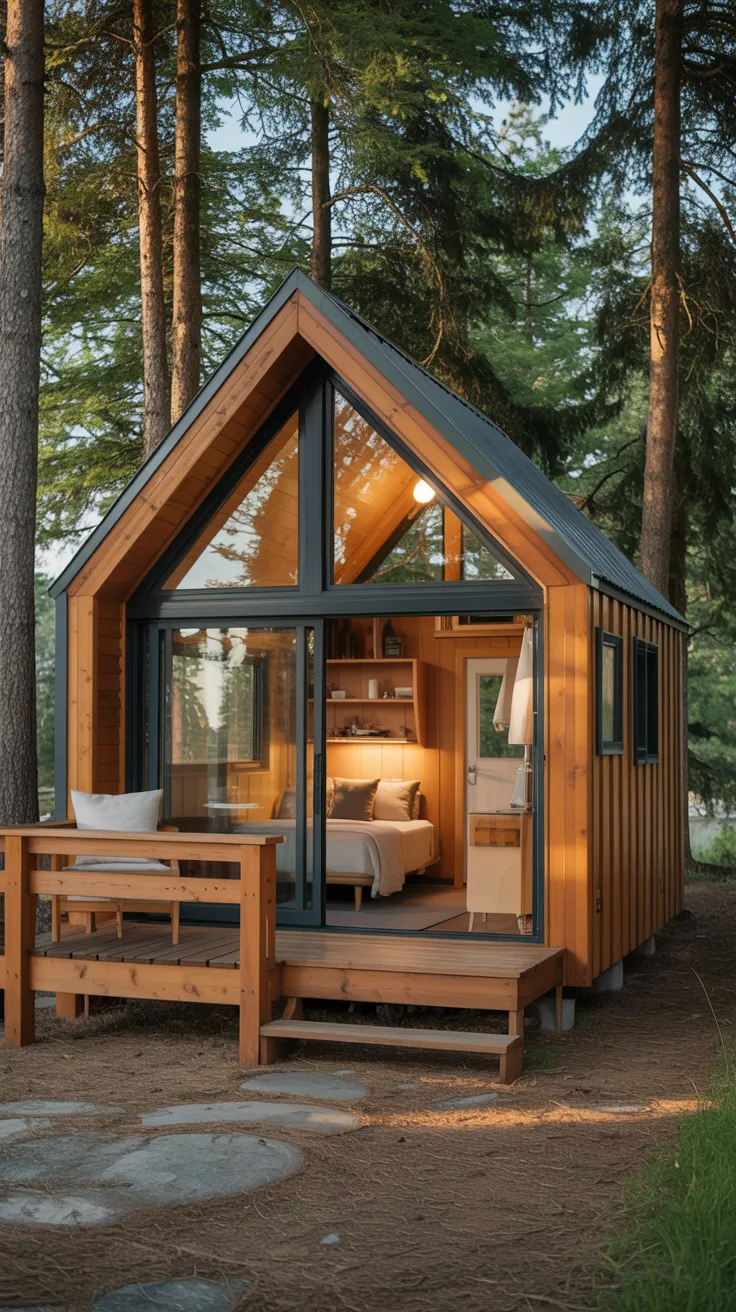
A small cabin doesn’t mean a small life. The Perfect Small Cabin House – Living Large In 600 Square Feet! is about designing a place that fits your routines, supports off-grid resilience if you want it, and feels expansive even when the footprint is compact. Whether you’re building a full-time residence or a weekend retreat, the right plan, utilities, and daily systems can deliver comfort, style, and long-term value.
If off-grid water independence is on your wishlist, consider exploring resources like SmartWaterBox, which can help you think through practical ways to capture, store, and manage water for a 600-square-foot home.
Table of Contents
A floor plan that works as hard as you do
The best 600-square-foot cabins are planned from the inside out. Begin with your non-negotiables—work-from-home desk, full-size shower, space for a wood stove, a queen bed—then back into a rectangular or L-shaped layout that prioritizes circulation and daylight.
Essentials of a great 600-square-foot floor plan:
- Clear zones: Keep the public side (entry, kitchen, living) open and contiguous, and the private side (sleeping, bath) tucked behind or above.
- One “big” space: Combine kitchen/dining/living to avoid duplicate circulation and to borrow volume and light across functions.
- One wet wall: Group kitchen, bath, and laundry along a single plumbing wall to simplify utilities and trim costs.
- A bonus loft: When codes allow, a loft adds sleeping or storage without expanding the footprint. Use alternating tread stairs or a compact switchback to save space.
- Natural light strategy: Plan for at least two exposures in the main room. Align windows for cross-breezes and choose one “hero” window or French doors to a deck.
Popular 600-square-foot configurations:
- The shotgun rectangle: Entry directly into a great room, kitchen on one side, bath near the bedroom at the rear. Simple rooflines and fast to build.
- The split rectangle: Bedroom and bath on one end, wide-open great room on the other, with a central storage spine or utility wall.
- The L-shape: Creates a wind-sheltered, sun-capturing outdoor nook for dining and lounging, effectively extending your living room.
Circulation tips:
- Keep hallway lengths short; aim for one continuous path rather than multiple corridors.
- Use partial-height partitions or open shelving to define zones without blocking sightlines.
- Consider pocket doors on bathroom and bedroom to free wall space for furniture.
Think of the design like a camera lens—remove any element that doesn’t improve the shot. The Perfect Small Cabin House shines when every square foot is tasked and beautiful.
Multipurpose living that feels luxe, not cramped
Living large in 600 square feet means every piece of furniture does double duty and every surface is active. But it should feel intentional—more boutique hotel than student dorm.
Key moves for a multipurpose great room:
- “Island as transformer”: A 24–30-inch-deep kitchen island can anchor prep, dining, and work-from-home. Add a power strip, a shallow drawer for laptops, and two stools that tuck completely beneath.
- Sofa + Murphy bed: A queen Murphy bed behind the sofa lets your living room host occasional guests without a dedicated second bedroom.
- Coffee table that grows: A lift-top table becomes a writing desk or laptop stand; a nesting trio offers extra surfaces when hosting.
- Window bench trifecta: Combine a picture window bench with storage drawers and a flip-up seat for blankets, board games, and seasonal gear.
Bedroom strategies:
- Built-in headboard wall: Integrate narrow shelves, charging cubbies, and swing-arm lamps to avoid nightstands.
- Under-bed organization: Full-extension drawers turn dead space into a “dresser” without sacrificing floor area.
- Sliding or fabric closet doors: They save swing clearance and soften acoustics.
Bath and laundry:
- One large shower beats a cramped tub. A glass panel and linear drain expand the visual width.
- A combined washer-dryer tucked into a hall closet or bathroom keeps laundry out of sight. Add a pull-out hamper and a fold-down ironing board on the door.
Tech and media:
- Wall-mount the TV on a swing arm so it serves both kitchen and sofa. Hide the router and power hub inside a ventilated cabinet.
- Use dimmable, layered lighting—cove LEDs, pendants over the island, and a floor lamp—to dial the mood without adding clutter.
When spaces flex gracefully throughout a day, you feel the luxury of choice—a hallmark of The Perfect Small Cabin House – Living Large In 600 Square Feet!
Storage architecture that disappears into the design
Storage in a compact cabin should feel built-in, quiet, and seamless. The aim is not more bins—it’s fewer, smarter places for the things you use most.
Built-ins that pay off:
- The “gear garage” wall: Dedicate 18–24 inches of depth along one interior wall to a floor-to-ceiling storage spine. Use doors that match your wall finish to keep it visually calm.
- Stair drawers and risers: If you’ve got a loft, every step can hold shoes, tools, or pantry overflow.
- Toe-kick drawers: In the kitchen and bath, these shallow drawers store trays, placemats, or cleaning supplies without stealing cabinet volume.
- Over-door transoms: Shelves over interior doors corral seldom-used items while maintaining a clean line.
Kitchen focus:
- Full-extension pantry pullouts save more than space—they save frustration. Organize by task: baking, breakfast, snacks, hydration.
- Magnetic knife bars, under-cabinet rails for mugs, and in-drawer spice racks keep counters pristine.
- A narrow rolling cart (8–12 inches) beside the fridge or range captures oils, cans, and bottles.
Bedroom and entry:
- A built-in entry bench with coat pegs and a shoe drawer prevents mess from migrating into the living area.
- In the bedroom, choose a closet system with adjustable shelves and a second, lower rod; seasonal rotation keeps the footprint minimal.
Outdoor storage:
- A compact shed or under-deck locker handles ladders, yard tools, and adventure gear. Use vertical bike mounts and ceiling hooks to keep floors clear.
Decluttering system:
- One-in, one-out rules for categories like cookware and jackets.
- A quarterly “reset day” to revisit what earns its space.
- Clear labels on concealed storage so you can find everything fast.
Smart storage is architecture, not accessories. When it’s integrated, you get the serene, uncluttered vibe that makes small-space living feel roomy.
Off-grid water, power, and heat for a 600-square-foot cabin
Even if you plan to stay on-grid, designing with off-grid resilience in mind creates redundancy and lower ongoing costs. Scale systems to your actual loads, not generic specs.
Water
- Supply: Rain catchment, a shallow well, or hauled water all work at this size. A 1–2 person household can often manage with modest storage if fixtures are efficient.
- Filtration and treatment: Pair mechanical sediment filtration with a reliable purification method to cover particulates and pathogens.
- Distribution: Keep runs short, use PEX to simplify routing, and insulate lines in cold climates.
- Greywater: In some jurisdictions, laundry and sink water can irrigate landscape plants through a permitted system.
Helpful water-planning resources to explore:
- Aqua Tower for ideas on practical, compact water capture and filtration approaches tailored to small footprints.
- Joseph’s Well for guidance on establishing reliable off-grid water sources and improving supply resilience.
- SmartWaterBox to help you think through storage, treatment, and safe, user-friendly distribution in a small home.
Power
- Solar: A 2–4 kW array often supports LED lighting, device charging, a compact fridge, and intermittent small appliances. Right-size battery storage for your usage and climate.
- Load shedding: Induction cooktops, electric kettles, and hair dryers are power-hungry; consider propane for cooking and hot water if you’re battery-limited.
- Wiring: Pre-wire for future solar, even if you start on-grid. Conduit runs and a combiner-ready panel cost little now and save a lot later.
Heat and cooling
- Primary heat: A small wood stove or a compact, cold-climate mini-split heat pump both fit 600 square feet. Wood offers independence; mini-splits offer push-button ease and cooling.
- Zoning: Ceiling fans, insulated shades, and tight air sealing let a single heater comfortably serve multiple zones.
- Ventilation: An ERV (energy recovery ventilator) maintains indoor air quality without big heat loss—important in tight envelopes.
Hot water
- On-demand (tankless) heaters save space and pairs well with smaller storage volumes. Protect from freezing and consider a mixing valve to stabilize temps.
Design goal: redundancy. If your primary cooking is electric, back it up with a portable butane or propane burner; if you heat with wood, a small space heater can double as shoulder-season support. That’s how The Perfect Small Cabin House stays comfortable through anything.
Materials, finishes, and budget strategies that stretch value
You can achieve a polished cabin without overspending by aligning materials with performance needs and choosing finishes that age gracefully.
Structure and envelope
- Foundation: Pier and beam or helical piers can reduce excavation; frost-depth footings are essential in cold climates.
- Framing: Advanced framing or structural insulated panels (SIPs) reduce thermal bridging and speed construction. Heavy insulation pays back in both comfort and energy costs.
- Exterior cladding: Durable options like fiber cement, metal siding, or treated wood (including charred shou sugi ban techniques) require minimal maintenance.
Interior finishes
- Floors: Engineered wood or tough vinyl plank handles pets and mud. Use a single floor type across most of the cabin to visually expand space.
- Walls and ceilings: Light-toned paints reflect daylight; a wood accent ceiling adds warmth and draws the eye upward.
- Counters: Butcher block or compact laminate can look high-end with good edge details and careful maintenance.
Windows and doors
- Invest in a high-performance entry door and a few well-placed, efficient windows rather than many mediocre ones. One large slider or French door can replace two medium windows and connect you to a deck.
Budget tactics
- Design to standard dimensions (4-foot wall modules, 8- or 12-foot deck lengths) to minimize waste.
- Simplify rooflines; a single-slope or simple gable is cost-effective, fast to build, and sheds water well.
- Pre-build components (stairs, cabinetry, built-ins) offsite if possible to reduce on-site labor.
- Phase noncritical upgrades: prewire for speakers, add a future awning, or rough-in for a second exterior spigot now; complete finish elements later.
Timeline planning
- Expect design/permitting to take longer than you think; lock decisions early to avoid change-order costs.
- Order lead-time items—windows, doors, specialty fixtures—upfront so they don’t stall your build.
The Perfect Small Cabin House – Living Large In 600 Square Feet! is a materials story as much as a design story. Specify what you’ll touch daily and endure weather; economize in invisible areas.
Codes, permits, and site selection without the headaches
Great small cabins start with smart sites. Before drawing plans, study your land and your local rules. You’ll avoid surprises and choose details that suit your microclimate.
Site analysis
- Solar aspect: Which side gets the best winter sun and summer shade? Orient your main glazing accordingly.
- Wind and weather: Landforms, trees, and neighboring structures shape wind patterns. Place entries on sheltered sides and design overhangs for rain and snow.
- Access: Consider snow plow routes, turning radii for deliveries, and emergency access.
Permits and codes
- Zoning: Confirm that a 600-square-foot dwelling is allowed and whether it’s considered a primary residence, accessory dwelling unit (ADU), or seasonal cabin.
- Setbacks and height: A compact footprint often unlocks better siting inside setbacks; measure carefully.
- Energy code: High R-values, sealed penetrations, and certified windows save inspection headaches and utility costs.
- Water and sanitation: Septic approvals, well permits, or municipal tie-ins can drive the schedule. Where composting toilets are allowed, ensure products meet local standards.
- Fire and egress: Sleeping areas need proper egress windows. If you have a loft, check headroom definitions and guardrail requirements.
Documentation tips
- Bring a clean, dimensioned site plan showing slopes, drainage, and distances from property lines.
- Provide product cut sheets for key fixtures and appliances when submitting plans.
- Ask for a pre-application meeting; planning staff often suggest small adjustments that ease approval.
Insurance and appraisal
- Even small cabins benefit from a build-risk policy during construction.
- Document materials and systems thoroughly; it helps with resale and insurance replacement value.
Good planning is invisible once you move in, but you’ll feel it every day—dry feet, warm rooms, steady utilities, and a cabin that’s legal, insurable, and loved.
Daily routines, safety, and resilience that make small-space life effortless
The cabin lifestyle is as much about rhythms as it is about square feet. When your daily routines flow, your home feels bigger.
Morning and evening routines
- Breakfast flow: Keep coffee, tea, and breakfast items in a single cabinet “zone.” A fast morning clears the counters for the day.
- Night lighting: Low, warm LEDs under the toe-kick or along the loft stair make midnight trips safe without waking everyone.
- Shoe and coat management: A strict “nothing past the bench” policy keeps the great room serene.
Cleaning and maintenance
- Five-minute resets after meals and before bed prevent clutter sediment.
- A central charging drawer corrals devices, cords, and visual noise.
- Weekly “deep zone” schedule: kitchen week, bath week, bedroom week, outdoor deck week—small space, big payoff.
Food security and health readiness
- Keep a compact pantry stocked with shelf-stable basics that fit your cooking style. If you’re building a preparedness cushion, consider guides like The Lost SuperFoods to help you plan durable, varied provisions without overbuying.
- For medical self-reliance—especially in remote cabin locations—resources such as Home Doctor can provide practical guidance for handling common issues when professional care isn’t immediately available.
Security and safety
- Smoke/CO detectors, fire extinguisher within easy reach of the kitchen and wood stove, and a visible house number for responders.
- A go-bag with essentials near the exit. Keep spare keys in a lockbox, not under a rock.
- Well-anchored shelving and secured tall furniture in seismic zones.
Outdoor living as square footage
- A covered porch or pergola effectively adds another “room.” Use weather-resistant rugs and cushions so it’s ready daily, not just on perfect days.
- Locate a grill station close to the kitchen and a storage deck box for outdoor plates and utensils.
When your systems support (rather than fight) your habits, The Perfect Small Cabin House really does feel like it expands to meet your day.
Action plan for building your 600-square-foot cabin
Ready to move from dreaming to doing? Keep it bite-sized and sequential so you gain momentum quickly.
- Define your top five must-haves and three nice-to-haves. Everything else is a trade.
- Sketch two plan options: a rectangle and an L-shape. Place furniture to scale; check walking paths.
- Model daylight: mark where the sun rises/sets across seasons. Decide your “hero” window and deck orientation.
- Outline utilities: grid-tied vs. off-grid hybrid. Note water source, filtration, heating choice.
- Build a cost matrix: shell, windows/doors, interior finishes, utilities, deck/landscape. Assign ranges to prioritize.
- Schedule permitting tasks and order lead-time items early.
- Mock up critical dimensions with painter’s tape in a garage or driveway—confirm bed clearance, island size, sofa distance before you lock plans.
Optional resilience boosts:
- If water autonomy is important, revisit compact, practical ideas from Aqua Tower, Joseph’s Well, or SmartWaterBox.
- For food and medical readiness that fits small spaces, see The Lost SuperFoods and Home Doctor.
Each small decision you finalize now removes friction later—and that’s the secret to living large in a small footprint.
Resource picks for small cabin self-reliance
Here are curated resources that align with small-cabin living and off-grid resilience. Explore them to deepen your plan; choose what matches your goals and climate.
- Aqua Tower: Ideas to help you think through compact water capture and filtration strategies suitable for small homes and cabins.
- Joseph’s Well: Guidance focused on establishing reliable, independent water sources and boosting supply reliability.
- SmartWaterBox: Practical concepts for water storage and distribution that fit limited space while supporting everyday use.
- The Lost SuperFoods: A useful companion for planning a compact, long-lasting pantry with variety and nutrition.
- Home Doctor: Common-sense medical knowledge for households, especially valuable when you’re far from immediate care.
Choose sparingly—two or three good resources implemented well beat a dozen you never use.
Conclusion
The Perfect Small Cabin House – Living Large In 600 Square Feet! isn’t about compromise—it’s about clarity. When your layout champions one great room, your storage is integrated, and your utilities are scaled and resilient, 600 square feet lives like twice its size. Add a sun-soaked deck, a couple of well-placed built-ins, and daily systems that support your routines, and you’ll have a cabin that is efficient, beautiful, and ready for anything.
Build with intention today, and your small home will give you back time, money, and peace for years to come.
Frequently asked questions
How do I make The Perfect Small Cabin House feel bigger without adding square footage?
Use one open great room, consistent flooring, large windows or a single “hero” slider, and integrated storage. Avoid interior walls where zones can be defined with furniture or partial-height partitions. Light wall colors and layered, dimmable lighting also expand perceived space.What utilities make sense for a 600-square-foot cabin in a cold climate?
Consider a compact, cold-climate mini-split or a small wood stove for heat, high R-values in the envelope, and an ERV for fresh air. For water, keep plumbing runs short and insulated. If you’re aiming for resilience, pair modest solar with backup heat and a reliable water treatment method.Can I really live off-grid comfortably in 600 square feet?
Yes, if you right-size loads and create redundancy. A small solar array with battery storage, propane or wood for heat and cooking, and a reliable water source can meet typical needs. Resources like Aqua Tower, Joseph’s Well, or SmartWaterBox can help you plan water resilience.What’s the best layout for a small cabin with guests?
Use a one-bedroom plan with a sleeping loft or a Murphy bed in the living room. Keep a full-size shower and an open kitchen/living space so guests can mingle. A covered deck functions as an extra room during visits.How much storage do I need in a 600-square-foot home?
Plan for built-in storage equal to roughly 10–15 percent of your floor area, distributed across an entry bench, gear wall, kitchen pantry pullouts, bedroom drawers, and a loft or shed. Integrating storage into architecture keeps the interior calm and efficient.